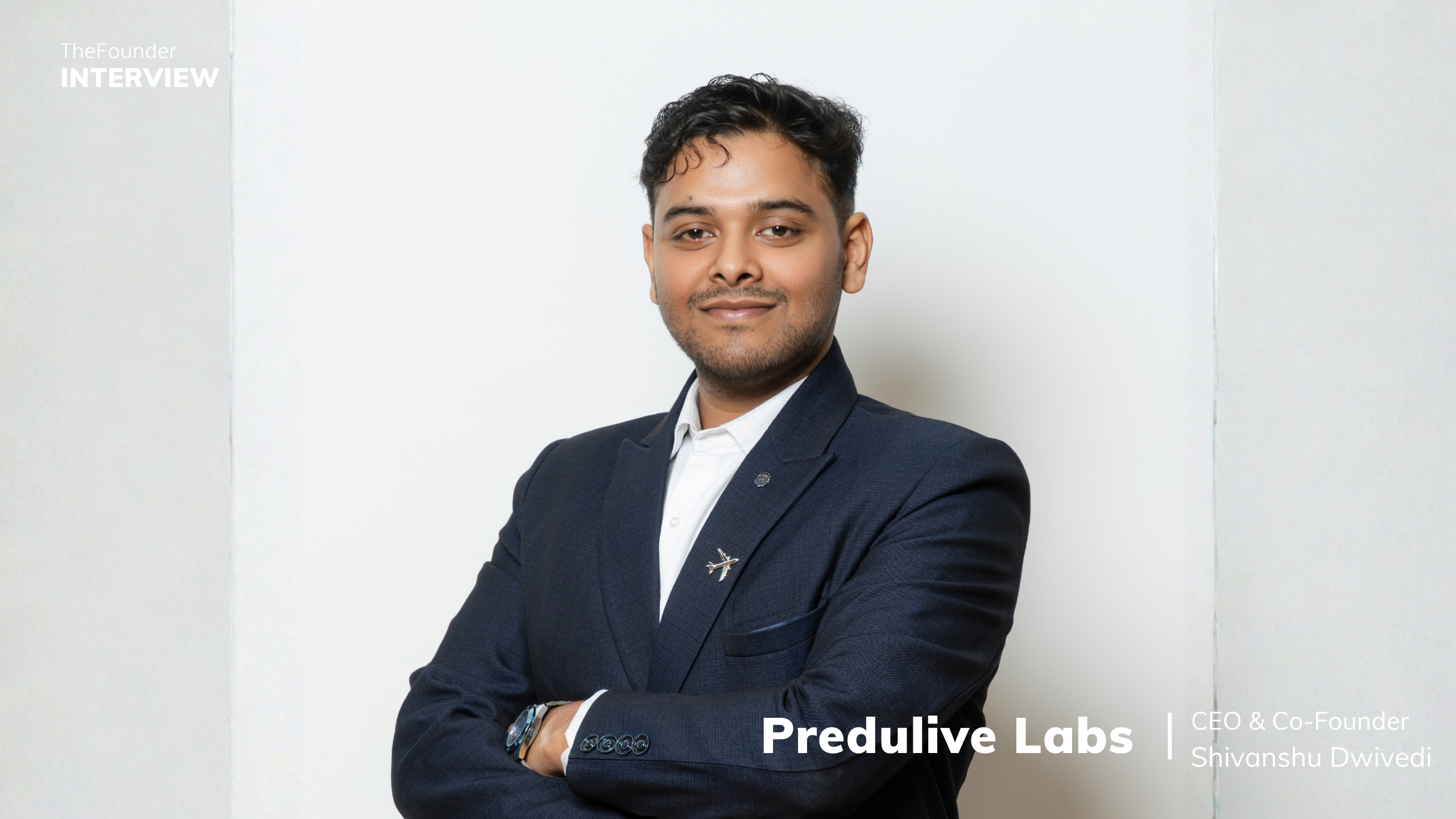
The bridges and high-rises we rely on are quietly outliving their designed lifespans. While many deploy AI drones to spot existing cracks, this 'reactive' visual diagnosis merely replaces human eyes with camera lenses. To guarantee true safety, infrastructure management must evolve from a visual 'Eye' to an understanding 'Brain'-using genuine prediction technology that calculates the laws of physics to read how a building breathes long before it breaks.
At the forefront of this innovation is Predulive Labs, an Indian deep-tech startup moving beyond simple visual AI by teaching physics to artificial intelligence. Beyond technological breakthroughs, they are driving profound social impact through initiatives like the 'Didi Drone' program, which empowers underprivileged women as tech professionals.
The recent global momentum of CEO Shivanshu Dwivedi is truly unstoppable. After successfully anchoring in Asia as a Top 5 Winner at the K-Startup Grand Challenge (KSGC) 2025, the company has officially incorporated its Korean headquarters, PIKAI Corporation. Recognizing the strict security demands of government agencies, their 'Predictive Brain' is built as an Edge-Native solution, ensuring absolute Data Sovereignty.
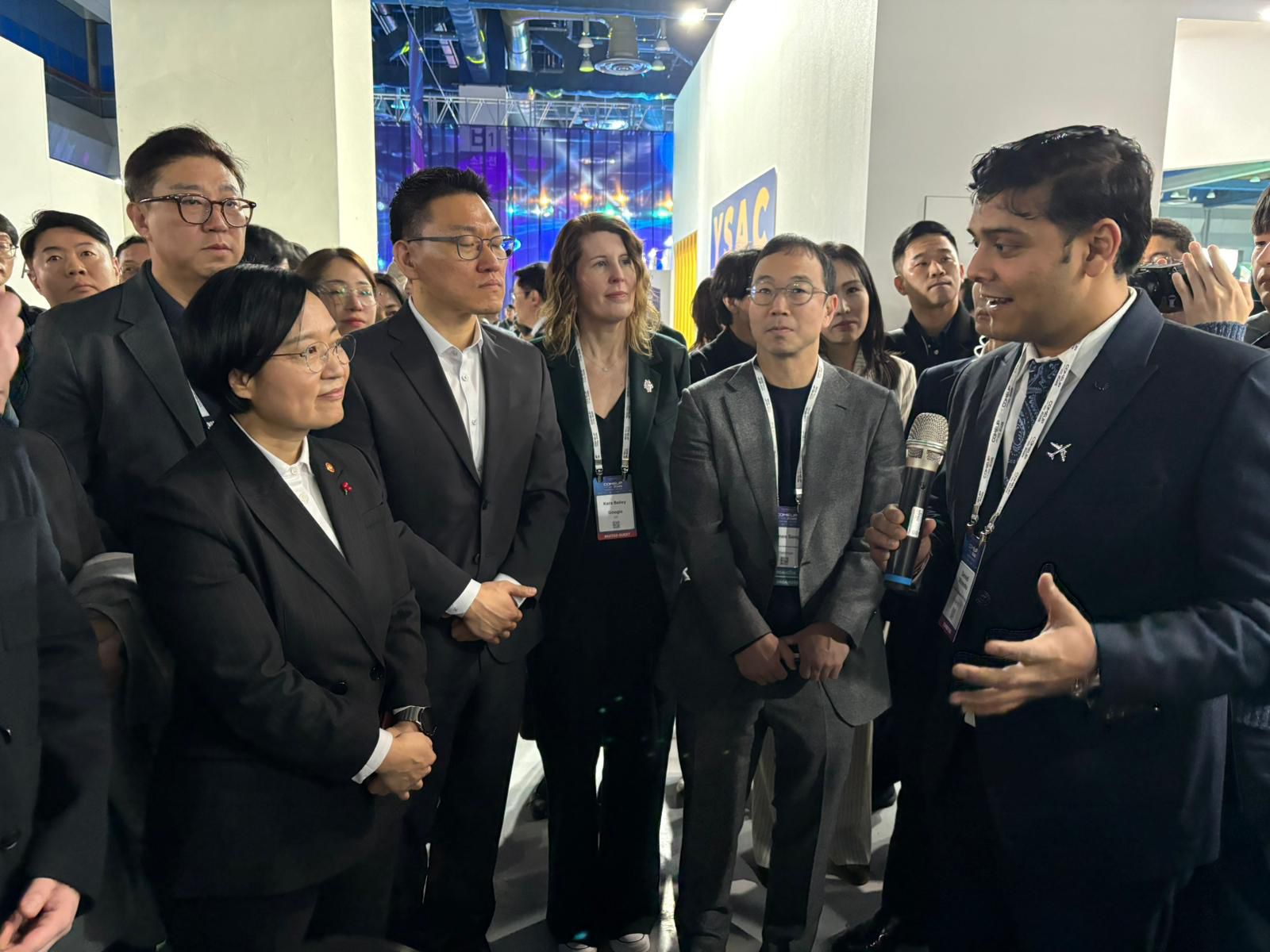
This momentum now extends to Europe. Recently invited to Spain as part of the '2025 Indian Leaders Program,' he sat down with industry giants like Airbus and CDTI to discuss R&D synergies and cross-border innovation.
We met with the visionary engineer to hear his blueprint for a safer, more inclusive future envisioned by deep tech.
Q. I understand that a project you started during your college years has grown into the deep-tech enterprise it is today. Could you share what originally inspired you to launch this startup?
It began during my college years with a simple but unsettling realization: while software was advancing rapidly, the physical world-bridges, buildings, critical infrastructure-was being managed reactively. We waited for cracks, failures, or disasters before acting. I wanted to give the physical world sight and intelligence. The idea was to build a Predictive Brain for infrastructure where safety is not a reaction to tragedy, but a mathematical certainty driven by data, physics, and AI.
Q. Your work with the 'Predulive Edutech Foundation' and the 'Drone Didi' program for training female drone engineers is deeply impressive. As the CEO of a deep-tech company, what was the personal trigger that led you to place such a strong emphasis on social impact?
I grew up in an environment where resources and ecosystem support were scarce. I know what it feels like to have the 'brilliant mind' but not the 'opportunity.' This was my trigger to create a non-profit R&D center via the Predulive Edutech Foundation for underprivileged youth- a 'school of brilliant minds' where they can build solutions for the world.
During our disaster management projects, I saw first-hand how drones and AI could save lives. Programs like 'Drone Didi' are my way of ensuring that as we build the 'Predictive Brain' for cities, we are also uplifting the human spirit and providing a stage for those who are often left behind.
Q. Many global startups typically target the U.S. or Europe as their first expansion markets. However, Predulive chose South Korea as a key hub for Asian expansion. What was the strategic reasoning behind this decision?
Korea is at the absolute top of the global 'memory' and hardware hierarchy. Since we are building the Predictive Brain for infrastructure, it is only logical to build it where the 'body' of the world's best infrastructure- high-rises, smart bridges, and advanced robotics- is located.
Furthermore, the Korean government’s support for foreign deep-tech entrepreneurs is unparalleled. We see Korea as our global validation ground; once we prove our technology in this high-standard environment, the U.S. and Europe will naturally follow.
Q. Public sector budgets worldwide are notoriously tight and conservative, often hesitating to spend on preventative measures before an accident actually occurs. Entering the unfamiliar market with no initial base and the handicap of being a foreign entity, what was your most decisive strategy for successful localization?
Our strategy was fundamentally about 'Ecosystem Embedding' rather than just simple sales.
First, we adopted a Trust-First Leadership approach. Instead of entering as a lone foreign CEO, I actively onboarded a Korean Co-founder and local partners to truly understand the unique culture of 'Jeong'-the deep connection required in B2B and B2G relations.
Second, we prioritized On-Premises Sovereignty by shifting to a 100% edge-native architecture. By ensuring that sensitive Korean infrastructure data never leaves the site or the country, we effectively removed the biggest hurdle for public sector adoption.
Lastly, we embraced a 'K-Entity' mindset by incorporating PIKAI Corporation as a domestic entity. We do not see ourselves as a foreign company visiting Korea; we are a Korean company with Indian technical roots.
Q. Concrete composition in India, high-rise architecture in Korea, and century-old steel bridges in the U.S. all possess distinct physical characteristics. How do you technically solve the 'Domain Adaptation' problem that arises when an AI model trained in one specific country needs to diagnose infrastructure in a completely different environment?
We use a Hybrid AI Framework that combines Unsupervised Domain Adaptation with Physics-based Reasoning. Instead of retraining a model from scratch for every new country, we align features from our global datasets using adversarial learning.
We don't just teach the AI to recognize "cracks"; we teach it the physics of structural fatigue. Because the laws of physics are universal-whether it's a steel bridge in the U.S. or a concrete high-rise in Seoul-our model stays reliable (97%+ accuracy) across diverse environments without needing massive new labeled datasets for every location.
Q. The development speed of global drone hardware companies is incredibly fast. What are the unique Data Assets specific to Predulive that hardware manufacturers cannot easily replicate?
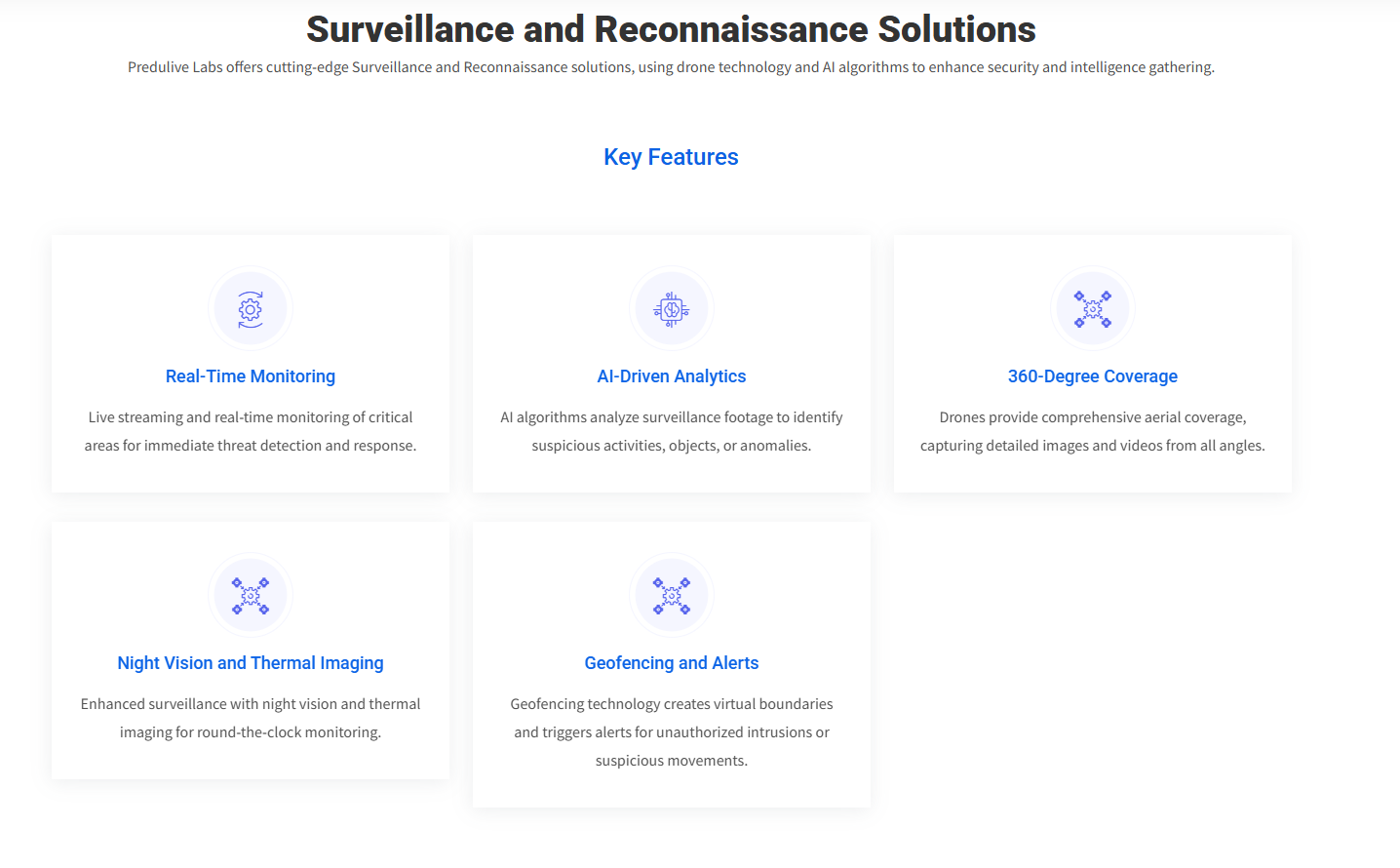
Hardware companies collect 'Vision Data'; we collect 'Failure Context Data.' Our asset is a proprietary library of edge-case structural anomalies and time-series failure patterns that we’ve gathered through years of R&D and disaster management work. A drone manufacturer builds the eye, but they don't have the memory of how a bridge breathes before it breaks.
Our moat is this deep integration of vision AI with physics simulations - a data-rich brain that is hardware-agnostic and impossible to replicate just by building a better drone.
Q. What does the landscape of 'Smart City Infrastructure Management' look like in your vision for 5 years from now?
In 5 years, cities will move from 'Diagnosis' to 'Autonomous Resilience.' We will see a 'Cognition Layer' over our cities - a decentralized network where AI-managed drones and service robots don't just find cracks; they handle the preventative maintenance (sealing, cleaning, and monitoring) before a human even knows there is a problem. Infrastructure will become an adaptive, self-healing ecosystem where 'unplanned downtime' is a relic of the past.
Q. The mantra of the startup world is often "Move fast and break things." However, the infrastructure safety industry is premised on "Zero-defect" standards where not a single error is permissible. At the intersection where these two conflicting values meet, what entrepreneurial philosophy guides your decision-making?
My philosophy is 'Innovate with Speed, Deploy with Integrity.' In the lab and in our Digital Twin simulations, we move at startup speed to break things and learn. But in the physical world, we adhere to the 'Zero-defect' mindset of the aerospace industry.
We use the speed of AI to reach a state of perfection that manual inspection can never achieve. For us, technology is the tool that makes 'Zero-defect' actually possible at scale.
Q. Could you please define what a 'Founder' means to you in a word or single sentence?
A bridge-builder, someone who turns the impossible of today into the infrastructure of tomorrow.
Predulive Labs: 3D Digital Twin company
'TheFounder' interview series features in-depth stories from visionary AI startup founders.
📩 For inquiries: [email protected]
