![[TheFounder] After a Successful Driverless Exit, Clevon’s Former CEO Returns with a $4.4M Single-Wheel Robotics Venture](https://sgogyjibcpuwvlxvxzow.supabase.co/storage/v1/object/public/blog-media/blog/images/1771979321239_hbe23u_file.png)
While the global tech ecosystem remains hyper-focused on software-centric generative AI, the next major market frontier is rapidly taking shape in the physical world: Embodied AI (Physical AI). Unlike cloud-based software, physical AI must contend with gravity, mass, and friction - making it a notoriously capital-intensive and unforgiving sector. Yet, for those who successfully integrate hardware and software, the market defensibility is unparalleled.
Navigating this high-stakes environment requires proven execution, which is precisely why the market is paying close attention to Sander Sebastian Agur. As a serial entrepreneur and a leading figure in the European mobility ecosystem, he formerly served as the CEO of Clevon. Under his leadership, Clevon secured Europe’s first public road license for driverless vehicles and achieved a successful exit to a U.S. mobility tech firm in 2025.
Instead of taking the safe route post-exit, he has returned to tackle an even more complex engineering challenge. Teaming up with renowned Estonian inventor Arno Kütt, he co-founded Rollo Robotics. After years of rigorous R&D in stealth mode, the deep-tech startup recently emerged, backed by a $4.4 million (€3.7M) pre-seed funding round. Their ambitious goal? To disrupt the suboptimal unit economics and spatial constraints of traditional multi-wheel robots by developing the world's first stable, autonomous single-wheel (monowheel) robot.
AI Market Watch recently interviewed Sander Sebastian at this exciting early milestone. In this exclusive interview, we explore the strategic reasoning behind the single-wheel form factor, the unique structural challenges of building physical AI, and his enduring philosophy on navigating the "randomness" of startup survival.
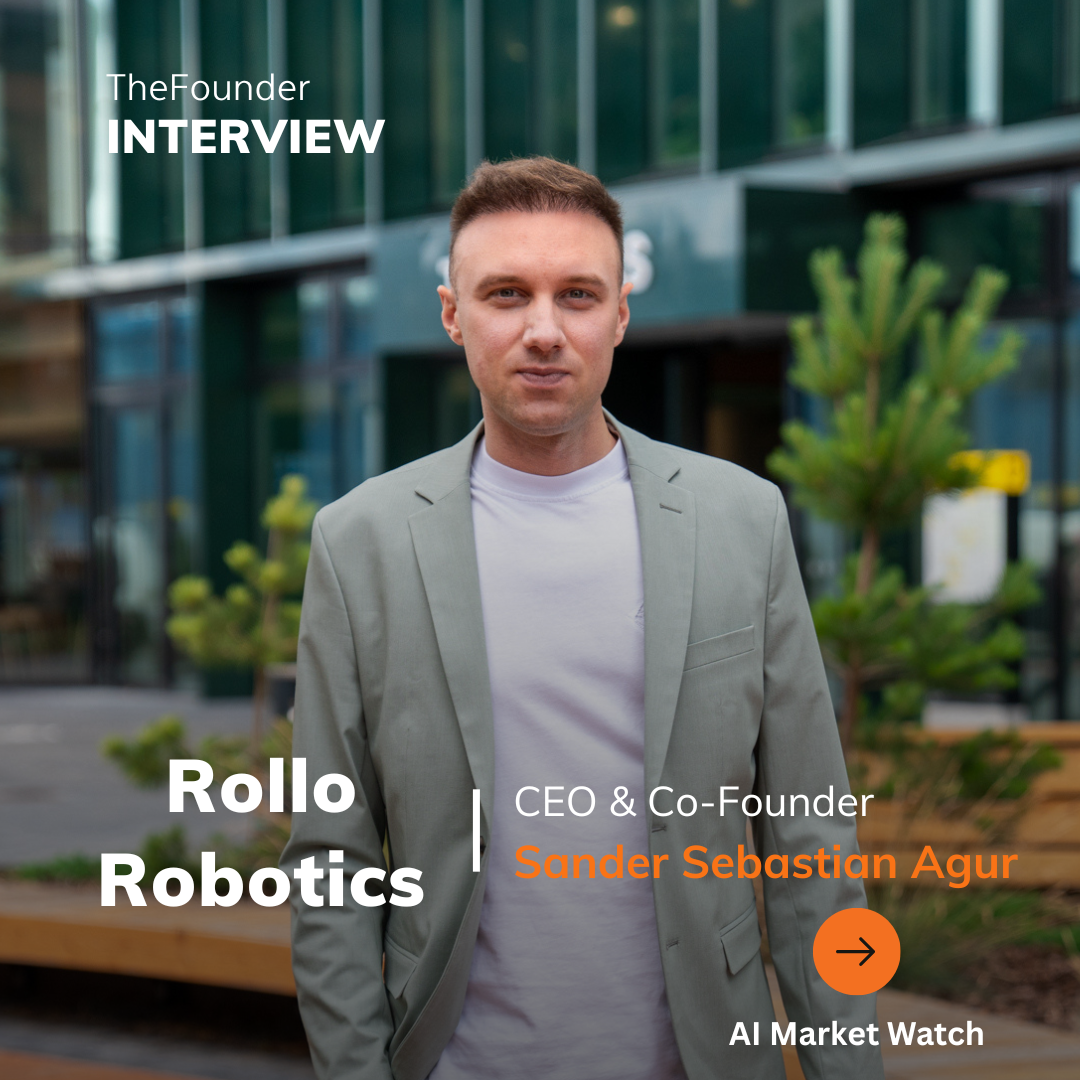
Q. First of all, congratulations on Rollo Robotics’ recent pre-seed funding round. It is a great pleasure and honor for AI Market Watch to speak with you at this exciting early milestone. What does this investment represent for you personally, and for the team as a whole?
For me personally, the $4.4M pre-seed investment is a strong signal of trust. We spent years rethinking how robots move in the world and validating the technology before talking publicly about it, so having investors back us at this stage confirms that what we created is not just a technical breakthrough, but commercially meaningful. For the team, it represents permission to go faster and scale our ambition from “can this work?” to “how big can this become?"
Q. Rollo Robotics has taken a highly distinctive technical approach with its single-wheel autonomous robot. What was the original background behind founding Rollo Robotics, and what problem made you feel this was something that absolutely had to be solved?
Rollo Robotics started from a simple observation that most mobile robots today are constrained by their form factors and prices, therefore having suboptimal unit economics. What if we could have only one touchpoint with the ground, fewer components, less cost, high speed, ultra-high energy efficiency, and maneuverability? What if we could create a true embodied AI that brings human-level presence to the physical world? Rollo is set to create robots that see, hear, speak, and move. Once we proved stability was possible with a single wheel, it felt like something that had to be built.
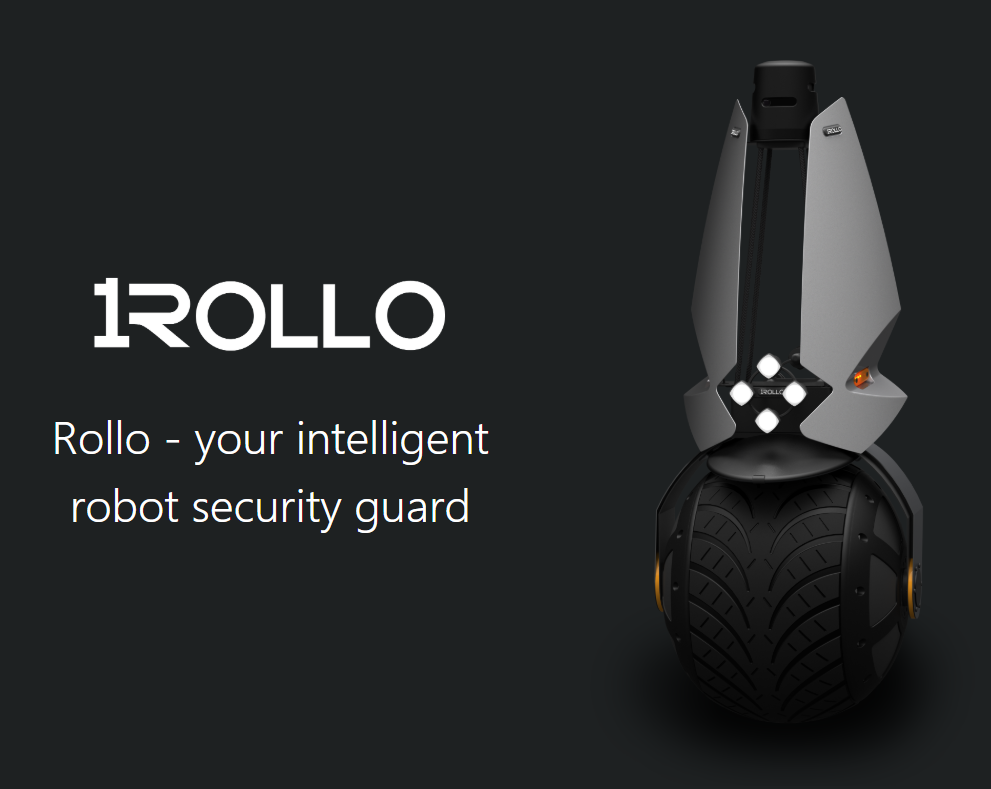
Q. Compared with other security and autonomous robotic solutions currently on the market, what do you see as Rollo Robotics’ core differentiator?
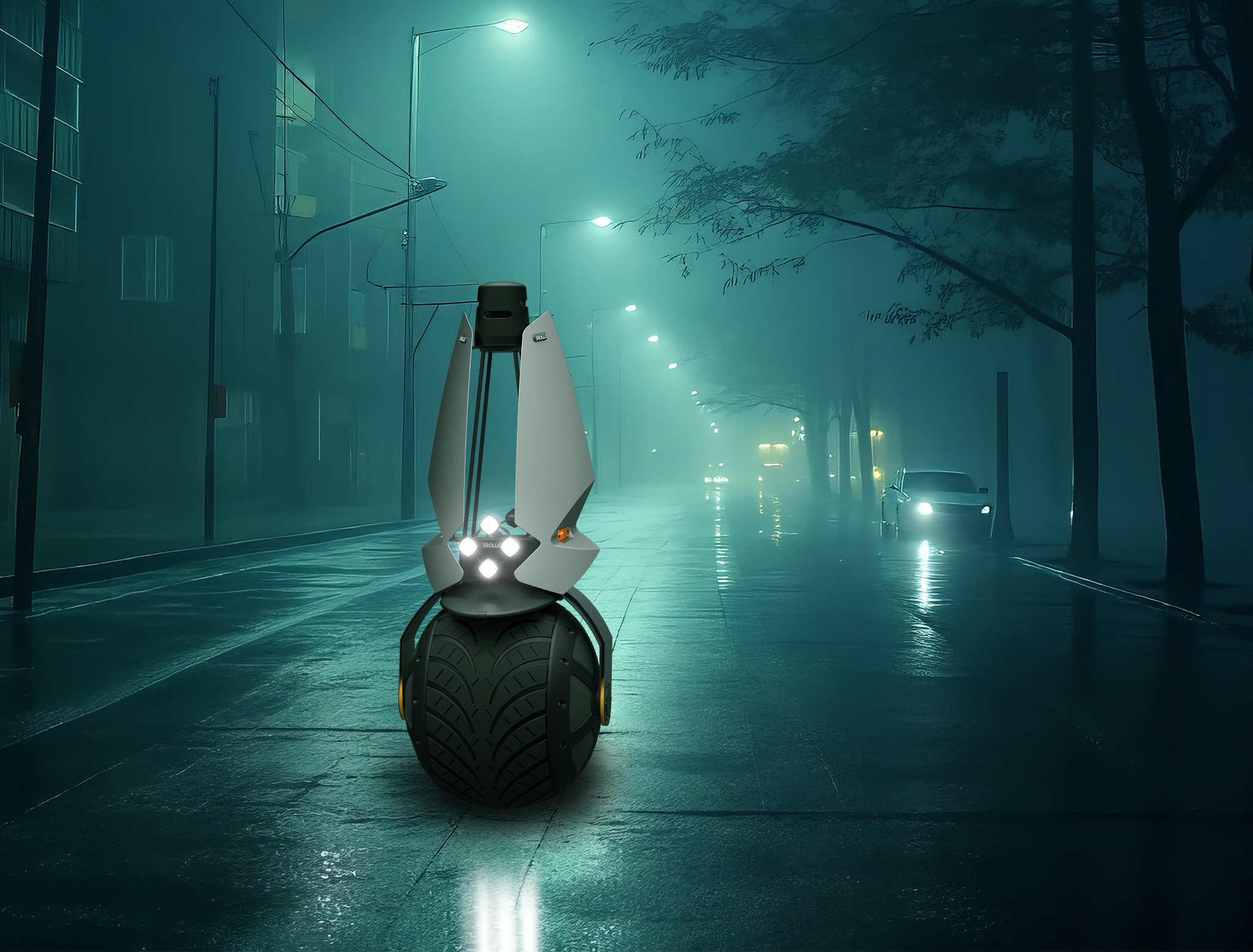
Our core differentiator is that we solved stable, autonomous mobility on a single wheel. This gives us a unique combination of mechanical simplicity, energy efficiency, and terrain capability. Most competitors optimize around software or sensor stacks on top of conventional platforms. We started by rethinking the platform itself. The result is a robot that can operate in human-scale, mixed, and challenging environments where multi-wheel or tracked robots struggle. In short: we didn’t just build another robot, we built a new class of vehicles.
Q. You developed the product in stealth mode for an extended period before unveiling the model publicly. During that stealth phase, what were the most challenging aspects of the journey?
The biggest challenge was proving that something which looks sci-fi and was previously only seen in Star Wars, could even be made. Stability, control algorithms, and hardware design all had to evolve together. Working on something that few people believe in until they see it is psychologically challenging. In stealth mode, you don’t get external validation. You only solve physics and run experiments.
Q. Much of today’s attention is focused on software-centric AI. From your perspective, what are the fundamental difficulties that are unique to robotics, where AI must operate in and interact with the physical world?
In robotics, you deal with mass, friction, and gravity. A software bug crashes an app; a robotics bug crashes a machine. Unlike cloud AI, you cannot scale instantly. Every robot must be built, tested, powered, and maintained. This makes robotics slower and harder, but also far more defensible once it works.
Q. Looking ahead five to ten years, how do you expect autonomous robots and physical AI technologies to reshape society and industrial structures?
I think robots will move from the experimental phase to infrastructure. We can see Tesla rearranging their manufacturing lines from cars to robots. Just as software became essential, physical AI will quietly take over tasks that are dangerous, repetitive, or costly and inefficient for humans.
Q. You have founded companies and successfully exited in the past. Could you share what first motivated you to become an entrepreneur, and the personal background or circumstances that led you to take that initial leap?
Ultimately, it all starts with the people and the team. You can only go far with a kick-ass team. My Co-Founder, Arno Kütt, is the best inventor and engineer in Estonia and arguably in the region. We have an amazingly talented team. We have always created the future, not predicted it. We realized early on that the risk of not trying was greater than the risk of failing. That mindset never really goes away once you experience it.
Q. As a serial entrepreneur with multiple founding experiences, has this journey with Rollo Robotics changed your role, or decision-making approach compared to your previous startups? If so, in what ways?
We are only at the beginning of the Rollo Robotics story, but I think more in terms of long-term platforms rather than short-term wins. I also trust small, deeply technical teams more than large, fast-moving ones. Robotics punishes shortcuts.
Q. Rollo Robotics is based in Estonia, a country widely recognized for its world-class startup infrastructure, including e-Residency and a fully digital government. From your firsthand experience, how have Estonia’s systems concretely supported Rollo Robotics’ speed of decision-making, execution, and growth?
Estonia is an ideal place to launch a robotics company because the government understands the importance of innovation and automation; therefore, they have made crucial investments in testing infrastructure, R&D, and export support. Enterprise Estonia has directly supported Rollo Robotics with an R&D grant. Company formation, reporting, and banking are digital and fast. For a startup, it means weeks saved every year. For a deep-tech company like Rollo Robotics, that environment matters because it lets us focus on engineering instead of bureaucracy.
Q. Finding early members who truly share your vision is rarely easy. How did you approach building the core team at Rollo Robotics?
90% of our team members have 3 to 15 years of prior experience working together. We have a team who is comfortable being wrong many times before being right once, so we are very lucky to have a seasoned core team.
Q. As AI reshapes careers, starting a business is easier than ever, but surviving is harder. What is your top advice for first-time founders starting with little more than an idea?
Build something real as fast as possible, even if it is ugly. Talk to customers early. Assume it will take longer and cost more than you think. Having experienced startup rollercoasters before, my advice is getting comfortable dealing with "random," because how you solve random problems that are thrown at you every day is what eventually defines you as a leader.
Q. Finally, if you had to define it in a single sentence, what does the word “Founder” mean to you?
Someone who persistently chases a goal while successfully navigating unknown or random problems with the aim to change reality.
![[TheFounder] After a Successful Driverless Exit, Clevon’s Former CEO Returns with a $4.4M Single-Wheel Robotics Venture](https://sgogyjibcpuwvlxvxzow.supabase.co/storage/v1/object/public/blog-media/blog/images/1771979066522_wcgmih_image.png)
Check out the full company profile on AI Market Watch:
'TheFounder' interview series features in-depth stories from visionary AI startup founders.
📩 For inquiries: [email protected]
