Avatar Robotics Raises $6.5M Seed to Expand Industrial Humanoid Deployments and Cut Remote Operator Reliance.
The AMW Read
Seed round for a new player in industrial humanoids, adds a name to the player map but does not shift the strategic baseline.
Avatar Robotics Raises $6.5M Seed to Expand Industrial Humanoid Deployments and Cut Remote Operator Reliance.
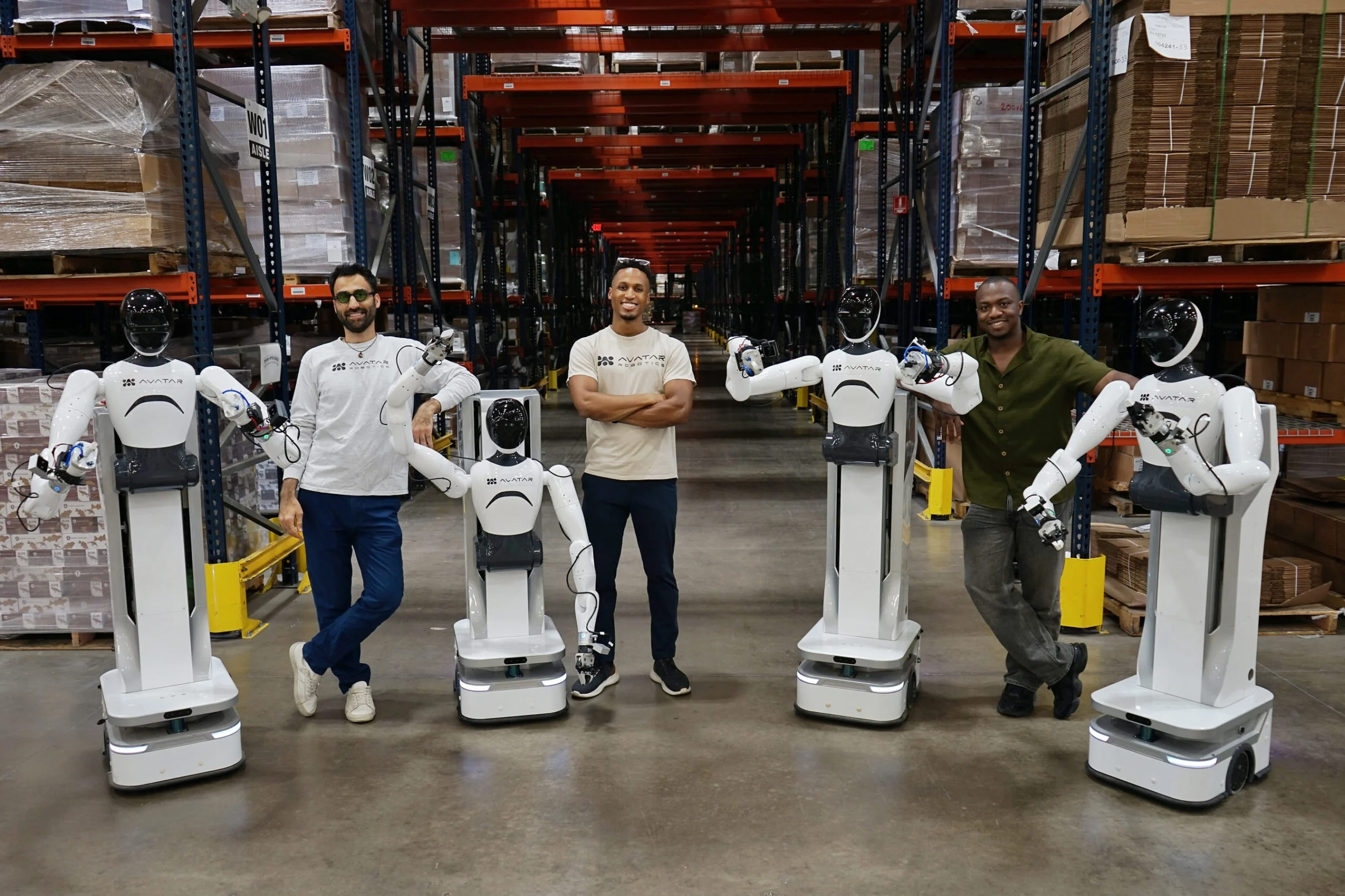
Avatar Robotics has secured $6.5 million in seed funding, led by AlleyCorp, with participation from Defy.vc, Headline, Henry Ford III, Refashiond, and others. The San Francisco-based startup, launched in December 2025, will use the capital to scale its fleet of humanoid robots for warehouse and factory tasks like picking, packing, sorting, and material movement. Since its founding, the company reports its robots have already packed, sorted, and shipped more than 900,000 products, including for a large global beauty retailer, and is now expanding beyond a pilot with a multibillion-dollar warehouse operator. Avatar’s system pairs robots with remote human operators, who step in when needed while collecting data to gradually improve autonomy, aiming for a future where one employee oversees fleets of robots.
This raise sits squarely in the robotics segment’s push toward embodied foundation models—the emerging horizontal layer that promises to generalize across tasks and settings. Avatar’s strategy of using remote operators as a bridge to full autonomy is a classic pattern in industrial robotics, where real-world deployment generates the data needed to train smarter, more autonomous systems. The company’s focus on reducing reliance on remote operators also mirrors the broader industry debate over the speed of autonomy adoption: whether the path to scalable robotics runs through incremental, human-in-the-loop learning or through pouring capital into pure AI-driven control. With a modest seed and a customer-backed track record, Avatar has positioned itself as a pragmatic player in a field increasingly crowded with well-funded competitors.
The grounded expert take is that while $6.5M is a small sum in a capital-intensive sector, the company’s approach of embedding robots in live operations—with humans as the initial glue—offers a cost-effective way to gather the high-quality, task-specific data needed to make autonomy real. This is the "data moat" of embodied AI: the more tasks a robot performs under human supervision, the better it becomes at doing them alone. If Avatar can maintain this flywheel, it may carve out a niche in industrial robotics without needing to outspend rivals, but it will need to demonstrate that its software can meaningfully reduce operator dependency before its seed runway runs out.