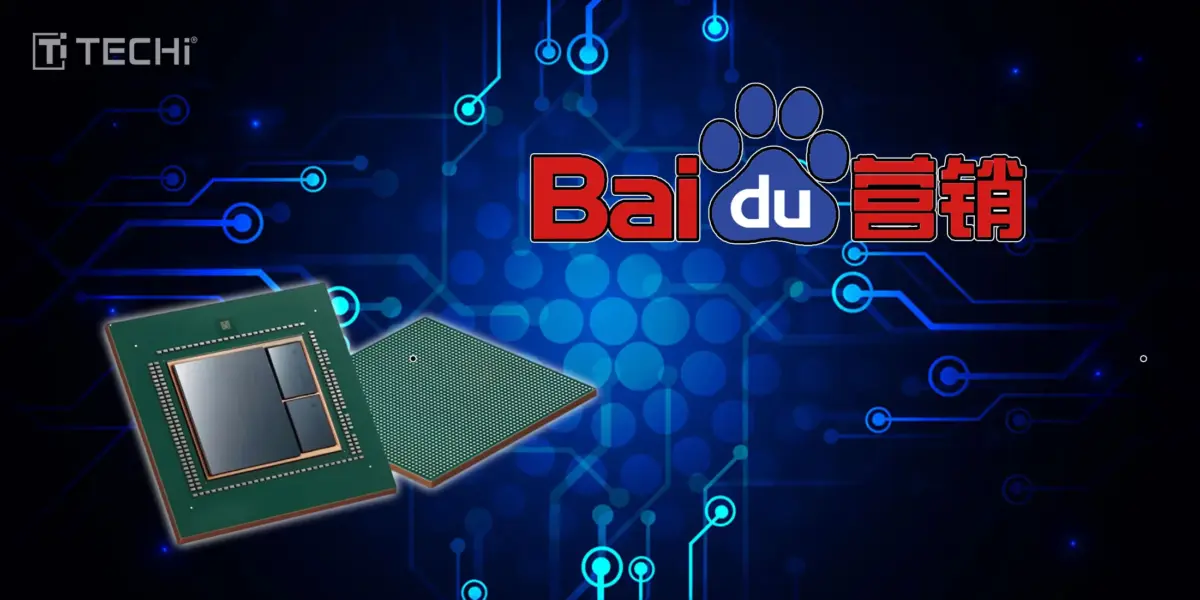
Kunlunxin (昆仑芯), Baidu's majority-owned AI chip subsidiary, has formally initiated IPO tutoring for...
The AMW Read
IPO tutoring of a major Baidu chip subsidiary updates the AI infrastructure player map (04.§2) and signals structural shifts in China's semiconductor market (cross.§H); novelty=2 as it formalizes a known trajectory; significance=2 as dual-listing strategy has segment-level implications for Chinese A

Kunlunxin (昆仑芯), Baidu's majority-owned AI chip subsidiary, has formally initiated IPO tutoring for a STAR Market listing in Shanghai, with China International Capital Corporation as sponsor, according to a May 7 CSRC filing. The tutoring period is expected to run through the second half of 2026. The company simultaneously maintains a confidential Hong Kong Stock Exchange main board listing application filed January 1 via joint sponsors, signaling a potential dual A+H listing strategy. Baidu holds 57.67% of Kunlunxin, which was spun out in April 2021 from Baidu's intelligent chip architecture team, led by chief chip architect Ouyang Jian as CEO. The company has completed Series A through D rounds with investors including BYD, CITIC CVC, Junlian Capital, and the Beijing AI Industry Investment Fund, reaching a post-D valuation of approximately RMB 21 billion (~$2.9 billion). By IDC 2025 data, Kunlunxin shipped 116,000 AI accelerators in China, ranking fifth overall and third among domestic players behind Huawei (812,000) and Alibaba's T-Head (265,000). Its P800 chip, launched in 2024, supports 10,000-card clusters; a 2026 M100 inference chip and 2027 M300 training/inference chip are on the roadmap. The move comes amid a wave of domestic AI chip IPOs: Moore Threads and Muxi have already listed on STAR, while Biren Technology listed in Hong Kong.
Why this matters in the AI market: Kunlunxin's dual-listing strategy exemplifies the capital-compression arc for Chinese AI chip firms — seeking both onshore STAR Market access (favorable domestic valuations, state fund support) and offshore Hong Kong liquidity as a geopolitical hedge. This mirrors the pattern seen with Moore Threads, Biren, and other domestic GPU aspirants navigating the US-China export control regime. Kunlunxin's valuation of ~$2.9B and its position as Baidu's captive silicon arm (powering Baidu's own inference workloads and third-party deployments) place it within the broader context of hyperscaler-owned chip subsidiaries versus independent GPU startups — a structural tension driven by compute economics and sovereign AI priorities.
Grounded expert perspective: Kunlunxin's IPO timing is strategic: the Chinese government is actively encouraging domestic AI chip champions to access public markets as a means of scaling production capacity and reducing dependence on Nvidia, especially after tightened US export controls on advanced GPUs. However, Kunlunxin's modest 3.8% share of China's AI accelerator market (versus Huawei's 20.3%) underscores the gap between stated ambition and commercial traction. The company's reliance on Baidu as both parent and primary customer raises questions about independent market validation — a risk flagged in previous Chinese chip IPO cases. Investors will watch whether the P800's 10K-card cluster capability translates into meaningful enterprise and hyperscaler adoption outside Baidu's ecosystem.