Big Value has released approximately 5.15 million pages of data across 20 categories—including natio...
The AMW Read
Big Value's move exemplifies the emerging B2AI pattern where data providers optimize for AI citation, updating the player map while signaling a structural shift in data distribution for AI.
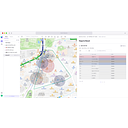
Big Value has released approximately 5.15 million pages of data across 20 categories—including nationwide businesses, commercial districts, and medical services—in a format designed to be read directly by AI. The move marks the company's full-scale launch of a Generative AI Optimization (GEO) strategy under its 'Deep & Wide' data platform approach. Rather than merely exposing products to AI, the structure enables generative AI models to understand and cite Big Value data in real-time responses to user queries.
This initiative strengthens Big Value's 'B2AI (Business to AI)' strategy, treating AI as a new customer touchpoint. The company reports early traction: monthly active users grew 185-fold from 974 to approximately 180,000 over three months without advertising, AI citations reached about 4,100 per day, and index collection for AI training hit around 100,000 per day. Co-CEO Goorum frames this as a competitive necessity: 'In an era where AI finds information before humans, how well data is read by AI is becoming a new competitive advantage.'
The significance here extends beyond a single data company. Big Value is formalizing a pattern where data providers optimize not for human search engines but for AI citation pipelines—essentially building a distribution moat around being the default answer source. By combining GEO with existing SEO, it accelerates the shift where AI itself becomes the primary gatekeeper of information. This is a clear exemplar of the recurring dynamic where companies position themselves as infrastructure for AI's knowledge base, mirroring the acqui-licensing and distribution plays seen across the broader ecosystem.