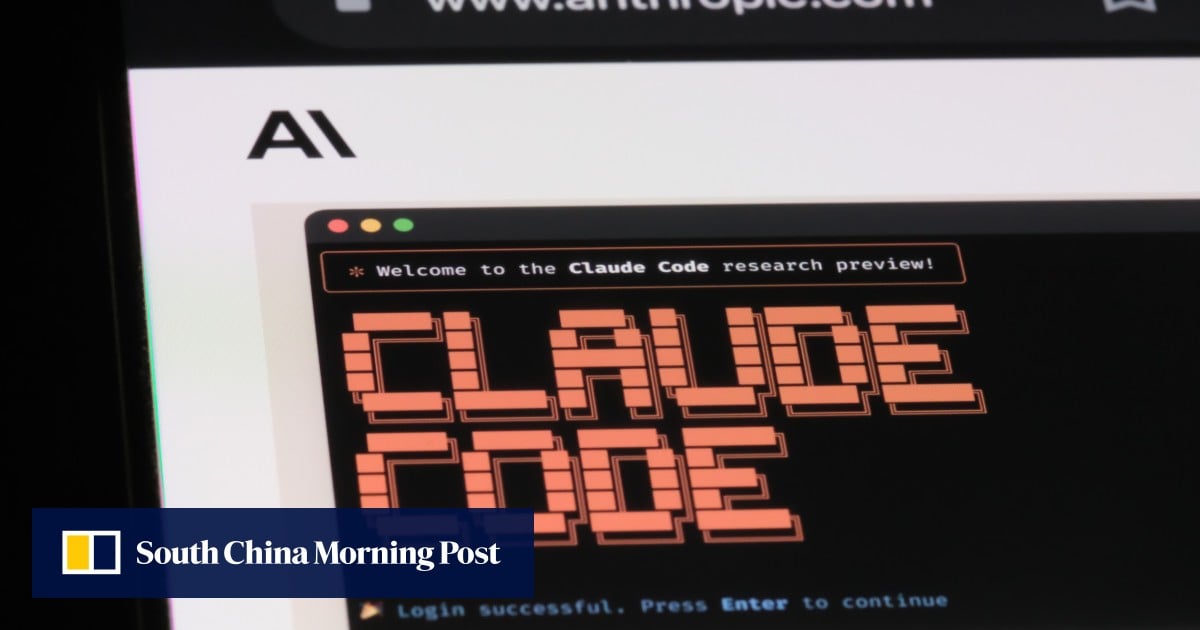
China’s National Vulnerability Database issued a security alert claiming Anthropic’s Claude Code con...
The AMW Read
News updates the player map (03.§2) by elevating ByteDance and Alibaba as coding-tool contenders, while the geopolitical decoupling signal (cross.§E) is central, not backdrop.

China’s National Vulnerability Database issued a security alert claiming Anthropic’s Claude Code contains a back door that could send user locations and identities to remote servers, urging domestic organizations to uninstall affected versions. The warning follows Anthropic’s acknowledgment it embedded tracking code to prevent model distillation, and reiterates its policy barring China-based users. In response, analysts expect Chinese developers to accelerate adoption of homegrown alternatives: ByteDance’s Trae and Alibaba’s Qoder.
This event activates the hyperscaler-distribution pattern (segment's recurring §5.2), where Chinese tech giants leverage geopolitical friction to funnel domestic developers onto their platforms. ByteDance and Alibaba are not merely offering coding tools—they are positioning Trae and Qoder as secure, sovereign infrastructure inside China’s state-directed tech self-reliance push. The security labeling by Beijing effectively creates a regulatory moat that foreign competitors cannot cross.
"More Chinese companies will abandon foreign AI tools, driven by mounting security concerns and the strategic imperative for tech self-reliance," said Cai Peng, cybersecurity partner at Zhong Lun Law Firm. The move deepens the structural decoupling of China’s AI development stack from U.S. foundation model platforms, reinforcing the country’s parallel AI ecosystem.