Cortical Labs unveils CL1 biological computer running DOOM on human brain cells
The AMW Read
Novelty 2: Advances OI from Pong to 3D game, updating the OI narrative. Significance 1: Early-stage research with limited commercial impact today.

Cortical Labs unveils CL1 biological computer running DOOM on human brain cells
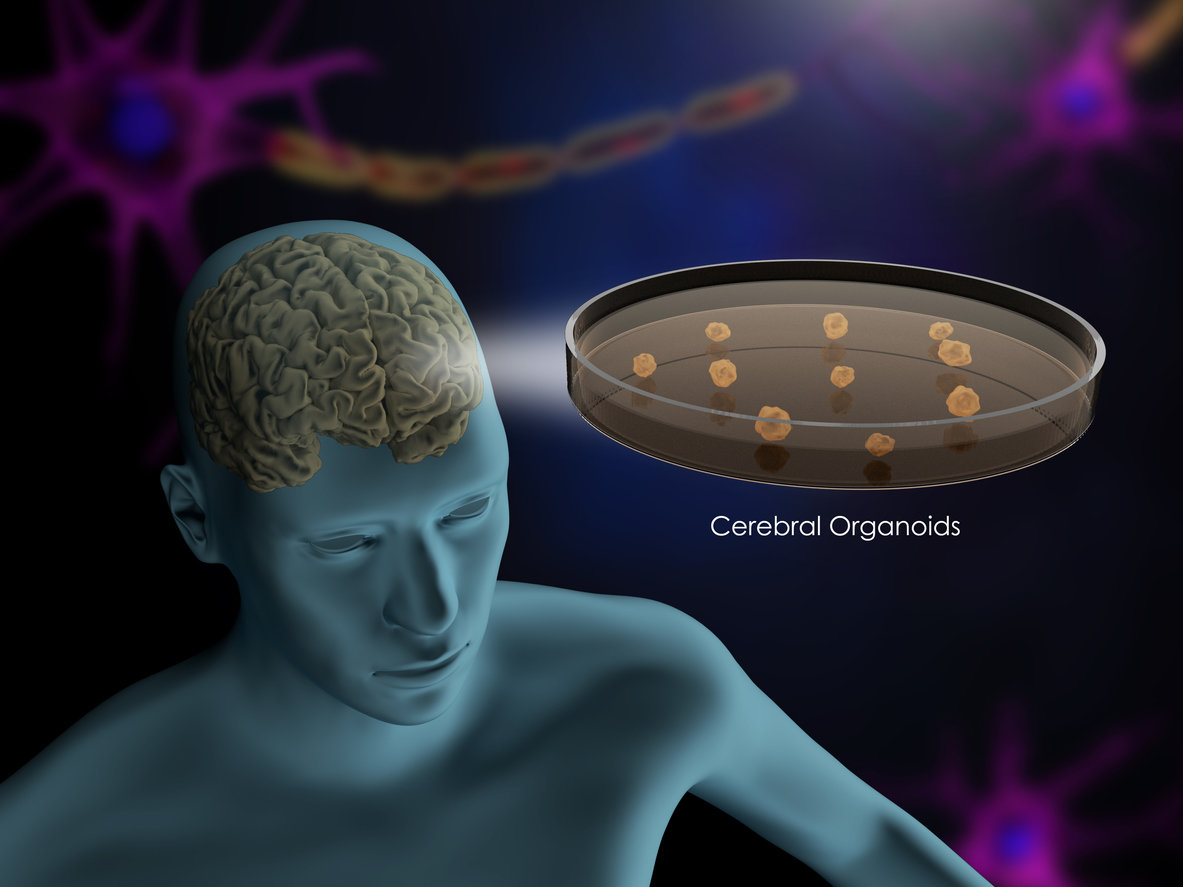
Australian biotech company Cortical Labs demonstrated its CL1 biological computer, which uses approximately 200,000 human stem-cell-derived neurons cultured on a multi-electrode array (MEA), to play the classic 1993 first-person shooter game DOOM. The system converts game visuals into electrical signals that stimulate the neurons, then interprets neural firing patterns as control inputs. This builds on the company's 2022 proof-of-concept where lab-grown neurons played Pong.
Why it matters: The CL1 represents a tangible step toward organoid intelligence (OI), a computing paradigm that leverages biological neural networks for ultra-low-energy computation. While current AI runs on energy-hungry GPUs, biological neurons are orders of magnitude more efficient. However, this is early-stage research — the system is far simpler than mammalian brains and cannot rival silicon-based AI. The demonstration updates the skepticism around OI as a viable compute substrate, pushing the boundary of what lab-grown neural networks can accomplish.
Grounded expert take: As AI scaling confronts exponential energy costs, organoid intelligence emerges as a speculative but intriguing alternative compute substrate. The CL1 does not threaten GPU dominance today, but it opens an open debate: can biological computation offer a fundamentally different scaling path? Cortical Labs remains a niche player, but with DeepSouth and other neuromorphic projects, the OI segment bears watching for long-term compute diversification. For now, treat this as a scientific milestone rather than a commercial product.
#OrganoidIntelligence #NeuromorphicComputing #CorticalLabs #BiologicalAI #ComputeAlternative