Google CEO Sundar Pichai and Google DeepMind leadership unveiled the company's most significant prod...
The AMW Read
No editorial framing yet — the pipeline re-tags recent articles periodically.
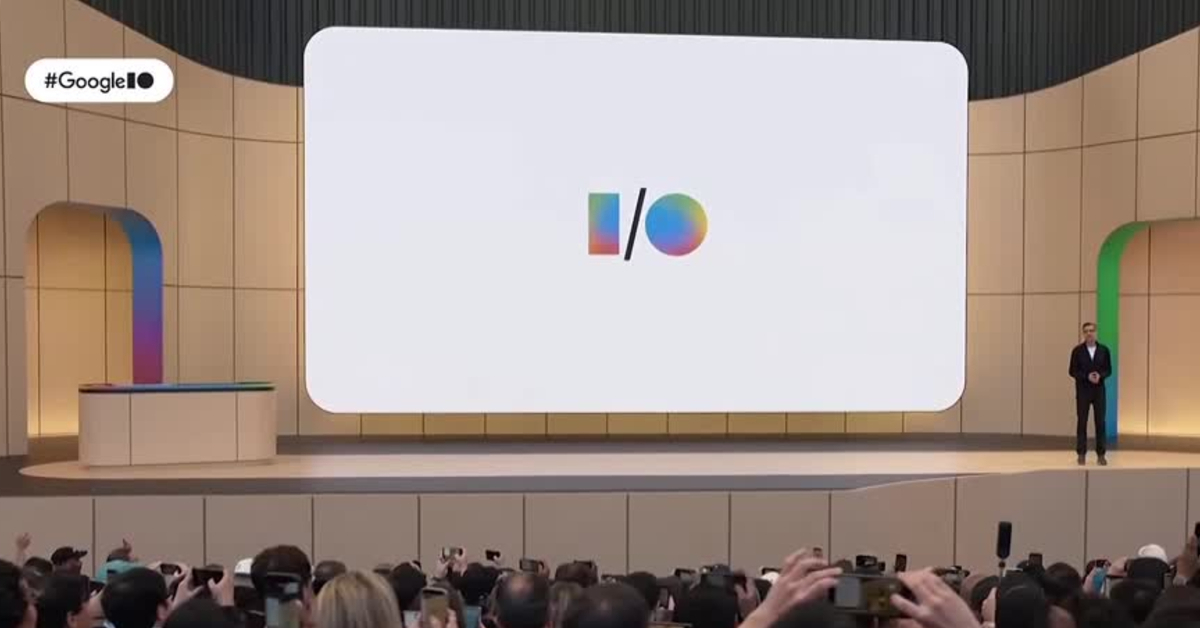
Google CEO Sundar Pichai and Google DeepMind leadership unveiled the company's most significant product refresh in 25 years at the I/O 2026 developer conference, centering on deeply embedding AI agents into Google's core search and services ecosystem. The company announced the 'Gemini 3.5' model family, launching first with 'Gemini 3.5 Flash' and previewing 'Gemini 3.5 Pro' for a June release. Google also introduced 'Gemini Spark,' a standalone agent that can autonomously compose reports and manage project workflows using live data from Gmail, Chrome, and YouTube. New coding assistants include 'Antigravity,' a direct competitor to Anthropic's 'Claude Code' and GitHub Copilot. On pricing, Google slashed its 'Google AI Ultra' subscriptions from $250 to $200 per month, and introduced a $100-per-month plan for smaller teams, explicitly claiming its models deliver comparable performance at up to one-third the cost of competitors.
Why it matters: This event updates the hyperscaler-distribution pattern (segment 01, §5.2) and the capital-compression arc (segment 01, §3.4). Google is leveraging its proprietary user graph — search, YouTube, Gmail, Chrome — to create an agent-integrated search layer that no standalone AI lab can replicate. By coupling aggressive price cuts with internally designed TPU-based inference, Google aims to squeeze competitor margins just as OpenAI and Anthropic enter their pre-IPO capital-raising phase. The 'Gemini 3.5' rollout and the 'Antigravity' coding agent signal that Google is no longer playing catch-up on capability parity but is using structural advantages — distribution reach, zero-marginal-cost first-party data, and custom silicon — to redefine the competitive terms.
Grounded take: Google is executing a deliberate strategy to commoditize its rivals' core offerings while wrapping users deeper into its own ecosystem. The simultaneous launch of an autonomous agent (Gemini Spark), a coding agent (Antigravity), and a cheaper model tier (Gemini 3.5 Flash at reduced API pricing) targets three vectors: enterprise workflows, developer lock-in, and consumer search. If Google can sustain the assertion that its models match frontier performance at one-third the cost — while embedding itself as the default agent-infrastructure layer — it may compress OpenAI and Anthropic's runway before their IPOs mature. The key open question is whether enterprise buyers will accept deeper Google dependency, or whether sovereignty concerns drive them toward the newcomers.