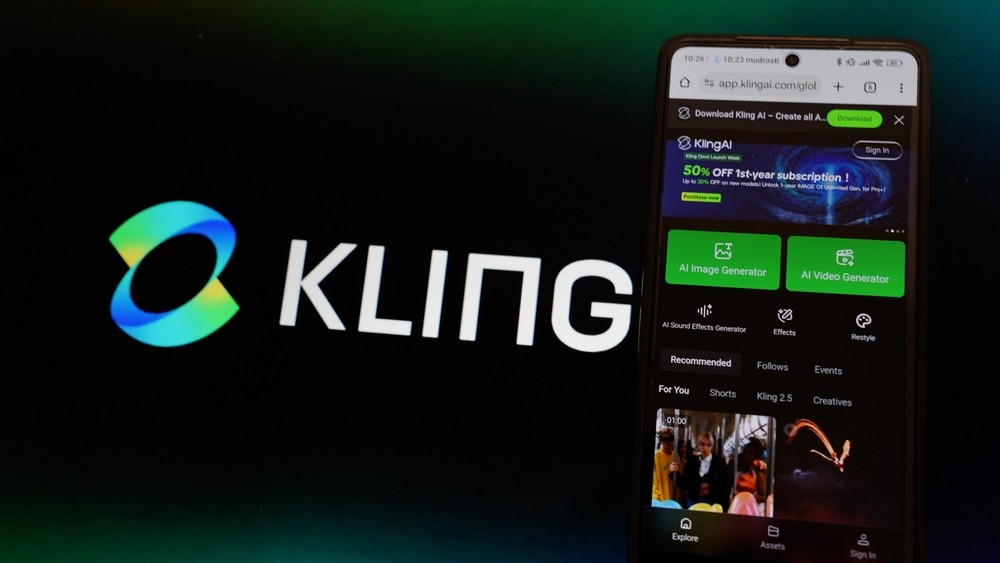
Kuaishou's Kling AI video generation model raises nearly $3 billion at $18 billion valuation.
The AMW Read
Mega-round at $3B explicitly stated, well above $500M threshold, updates the player map for generative video with a new top-tier entrant; cross-segment significance due to capital intensity and CN AI narrative.

Kuaishou's Kling AI video generation model raises nearly $3 billion at $18 billion valuation.
Kuaishou Technology has raised approximately $3 billion for its Kling AI video generation model division, valuing the unit at $18 billion, according to a report from PingWest. The funding round underscores the immense capital flowing into Chinese generative AI video startups, as Kling competes with rivals such as Zhipu AI (智谱), ByteDance's Jimeng, and emerging text-to-video platforms.
Why it matters: This mega-round signals the hyperscaler distribution moat in China's generative media segment, where platforms like Kuaishou leverage massive existing user bases and content ecosystems to drive adoption of AI video tools. The $3 billion figure also reflects the capital-compression arc in Chinese foundation model investing, where sovereign and strategic capital is concentrated into a handful of leading players. Kling's valuation at $18 billion places it among the most highly valued AI video startups globally, challenging the narrative that Chinese AI companies are structurally disadvantaged by export controls on advanced GPUs.
Grounded expert take: The round validates the thesis that generative video is a frontier application layer requiring both compute-intensive training and inference at scale, and that Chinese platforms are willing to outspend their US counterparts in this segment. However, the source article lacks detail on investor composition, revenue metrics, or product milestones, raising questions about whether this is a capital-cycle story driven more by strategic positioning than demonstrated product-market fit. The move also deepens the structural divergence between Chinese AI players, which increasingly rely on domestic compute alliances and sovereign capital, versus their US peers who tap global equity markets and export-grade silicon.