Lightelligence debuts in Hong Kong as optoelectronic computing gains traction
The AMW Read
IPO is a capital-market milestone for a niche infrastructure player, updating the player map and signaling structural shift in compute substrate, though impact remains nascent.

Lightelligence debuts in Hong Kong as optoelectronic computing gains traction
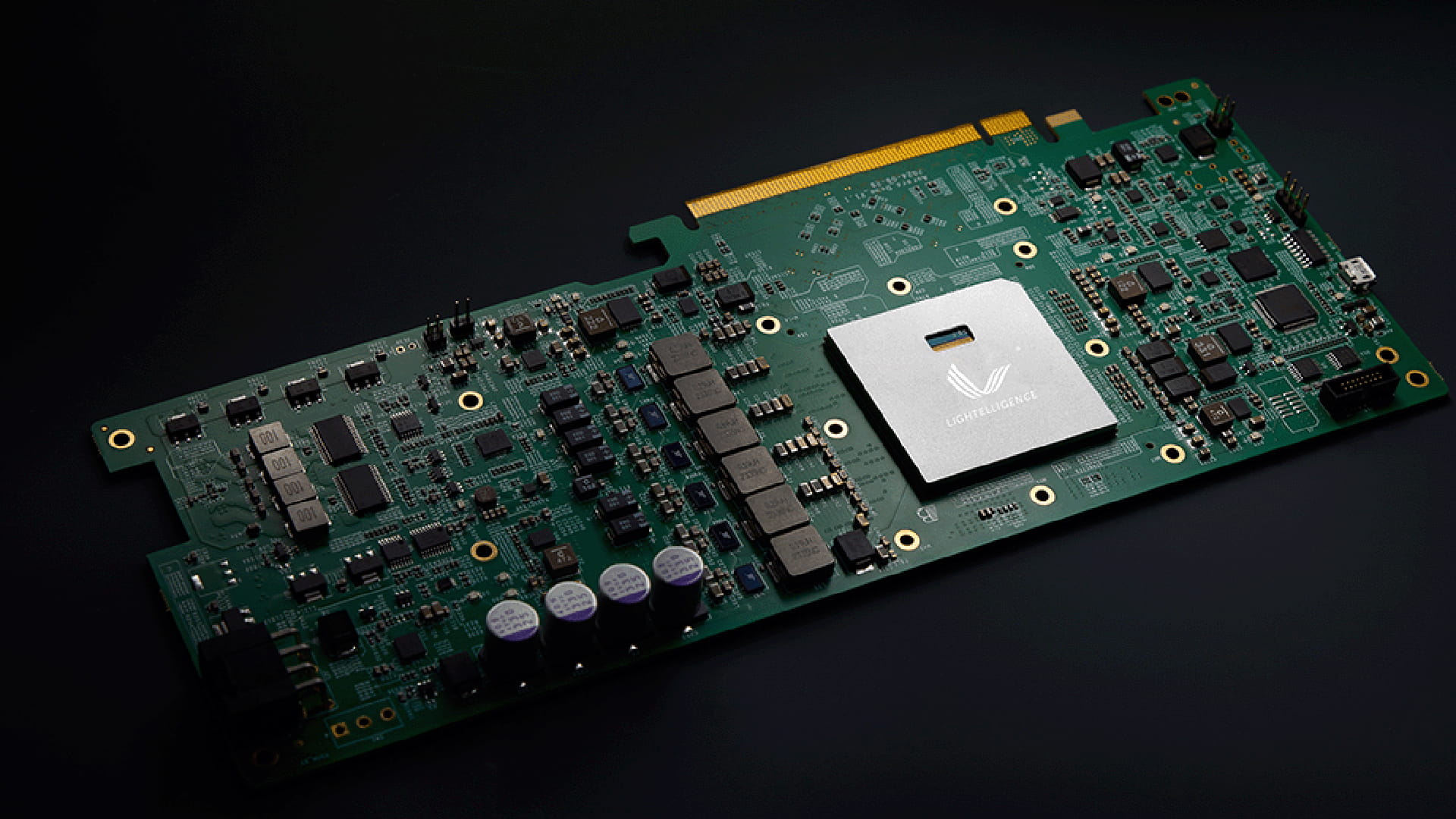
Lightelligence, a silicon photonics chip company founded in 2017 by MIT PhD Yichen Shen, listed on the Hong Kong Stock Exchange on April 28 under stock code 1879. It claims to be the world's first publicly traded company focused on silicon photonics for AI, with a market cap exceeding HKD 80 billion ($10.2 billion) by market close. The company has shipped optical computing chips globally for two consecutive years, ranking first by revenue in China's independent optical interconnect market with an 88.3% share, supporting multiple 1,000-GPU clusters.
Why it matters: Lightelligence's IPO marks a capital-inflection point for optoelectronic computing—a fringe infrastructure approach now entering public markets. This aligns with the capital-compression arc in AI infrastructure, where compute bottlenecks at scale drive investors to seek alternative physical substrates beyond silicon transistors. As front-end model progress saturates available GPU supply, the substrate layer is attracting public-market validation, a shift from purely private R&D. The listing also signals that optical interconnect has hit deployment scale in key use cases, potentially challenging traditional electronic architectures for inter-GPU communication in large clusters.
Grounded take: While photonics has long been a lab curiosity, Lightelligence's revenue leadership and IPO demonstrate that optical computing is moving from science project to commercial infrastructure. Investors like Yijing Capital explicitly cite large model demand straining power and density limits—a structural force that could reshape the compute stack. The listing provides a public benchmark for the photonics segment, offering a valuation comp for private peers. However, the technology remains niche relative to incumbents like Nvidia's NVLink, and large-scale adoption hinges on continued cost reduction and integration with existing hardware. This IPO adds a new data point to the debate about whether alternative compute substrates will become material for AI workloads in the next 3–5 years.
#Lightelligence #Optoelectronic #Photonics #AIInfrastructure #IPO #SiliconPhotonics