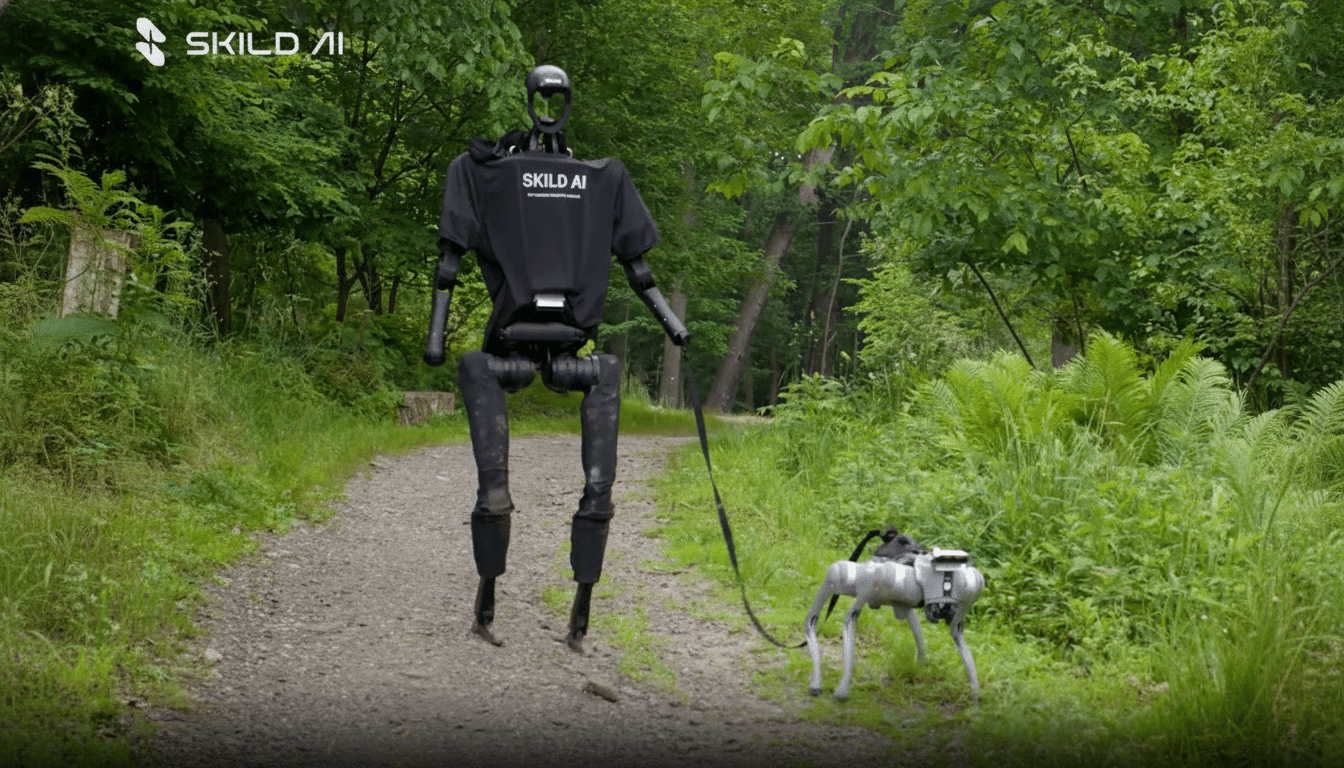
Skild AI's new learning system lets robots pick up tasks from a single demonstration video
The AMW Read
A tracked robotics foundation-model player advances one-shot video imitation learning, meaningfully addressing the segment's core data-efficiency bottleneck without resolving a debate or introducing a new entrant.

Skild AI's new learning system lets robots pick up tasks from a single demonstration video
Skild AI, the Nvidia-backed robotics foundation-model startup, introduced a robot learning approach that lets robots acquire new tasks after observing just one demonstration video, rather than requiring large teleoperation or simulation datasets. The company says the method directly targets the data and training bottlenecks that have historically slowed robot skill acquisition.
The claim speaks to the central constraint on general-purpose robotics: unlike language models, which scale on abundant internet text, embodied AI systems have no equivalent internet-scale demonstration corpus, forcing labs to collect costly first-party teleoperation data robot by robot, task by task. A system that can generalize from a single video, if it holds up outside a controlled demo, would meaningfully cut the cost of teaching robots new behaviors and narrow the gap between foundation-model ambitions and the physical data available to train them. Skild AI is tracked in the AI Market Watch index with roughly $1.83 billion to $2 billion-plus raised across all rounds (coverage, not a census), among the better-capitalized robotics foundation-model plays betting that data efficiency, not just raw compute, is the path to general-purpose robots.
The announcement lands about two weeks after Skild AI disclosed its first commercial milestone, a $100 million annualized revenue run rate against roughly $2 billion raised. Read together, the sequence suggests the company is pairing an early commercial proof point with a technical pitch aimed at customers wary of the cost and time needed to onboard new robot behaviors: for builders integrating robot foundation models, single-video task acquisition — if verified in deployed environments rather than curated demos — would lower the marginal cost of expanding a robot's task repertoire, a factor investors are likely to weigh against Skild's disclosed revenue traction as it moves from research milestones toward recurring commercial deployments.