Odyssey opens Odyssey-3 public preview, with caveats on physics benchmark claims
The AMW Read
Public access incrementally extends the previously announced model, while its shared foundation for interactive environments and controllers has segment-level relevance tempered by limited independent evaluation.

Odyssey opens Odyssey-3 public preview, with caveats on physics benchmark claims
California-based Odyssey has opened a public research preview of Odyssey-3, its interactive world model. The free demo uses Odyssey-3 Flash to generate environments from text prompts, letting users move through them, switch perspectives and trigger events in real time. Developers can apply for API access. Following the September 15 unveiling, this release adds public access, technical details and benchmark results. The model uses an autoregressive diffusion transformer to generate video frames conditioned on previous frames and user actions.
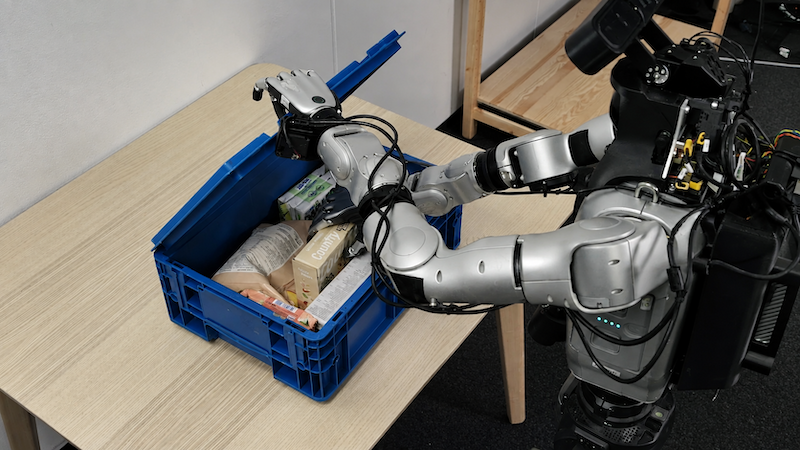
The market significance lies in positioning a world model as a shared foundation for interactive media and physical-system control. Odyssey pairs the model with specialized controllers for robotic arms, simulated drones and game characters, while working with Swiss robotics company Flexion on humanoid applications. This extends AMW's October 9 coverage with a testable public surface, but the preview currently offers environment generation. The robotics and cross-game transfer results remain company-reported demonstrations; they do not establish broad deployment reliability.
Builders and investors should distinguish interactive generation quality from evidence that predictions support reliable control. Odyssey-3 Pro's reported Physics-IQ Verified score of 66.1 used a selection method that picked one of eight generated videos per task in a single run. The benchmark requires four runs and reported standard deviation for record claims. Without selection, Pro averaged 63.37 across four runs; both results were submitted by Odyssey. The preview makes responsiveness easier to inspect, while repeatable evaluations of control accuracy and recovery from failures remain the more consequential test for robotics use.