OpenAI previews GPT-5.6 series with three-tier 'Sol/Terra/Luna' lineup, delays full release at US government request
The AMW Read
Novelty 2: GPT-5.6 is an incremental model release, but the government-mandated delay and tiered architecture update the known player dynamics significantly. Significance 3: The government coordination pattern and tiered-release model have cross-segment implications for all frontier labs and enterpr

OpenAI previews GPT-5.6 series with three-tier 'Sol/Terra/Luna' lineup, delays full release at US government request
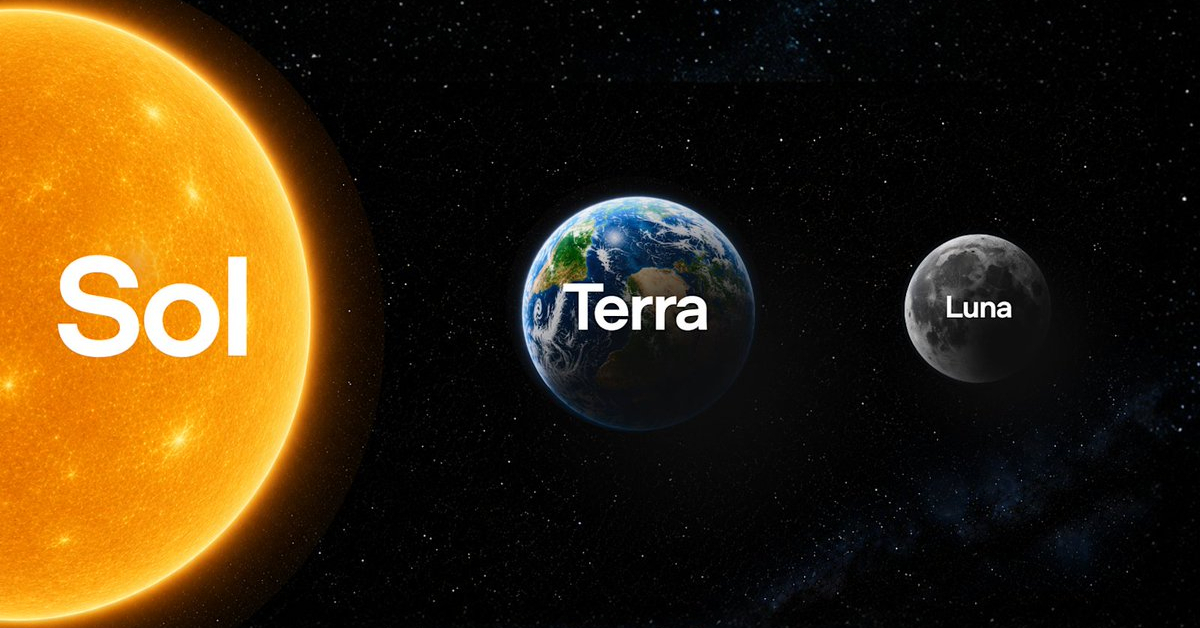
On June 26, OpenAI began previewing its next-generation AI model series, GPT-5.6, structured in three tiers: the flagship 'Sol', the balanced 'Terra', and the low-cost 'Luna'. The preview is initially limited to trusted partners via API and Codex, with wider ChatGPT rollout expected 'within weeks'. Notably, OpenAI delayed the full public release at the request of the US government, citing the model's capabilities in cybersecurity and the need for safety review under the Trump administration's June 2 executive order on 'covered frontier models'. The Biden-era order requires companies to establish a 'responsible' framework for releasing models with advanced cyber-offense abilities. Anthropic's competing 'Mythos' model also resumed limited government-authorized deployment on the same day, while its 'Fable 5' variant remains suspended.
Why it matters: This event signals a decisive shift in the frontier-model release cycle — from a market-driven launch cadence to a government-coordinated, pre-release safety review regime. OpenAI's willingness to delay its flagship product at administration request institutionalizes what was previously an ad-hoc pattern (e.g., Anthropic's Mythos suspension). The three-tier 'Sol/Terra/Luna' architecture also confirms the industry's move toward tiered model access: a premium capability-tier for partners, a balanced enterprise tier, and a low-cost edge tier — a pattern that mirrors hyperscaler distribution moats but with government oversight baked in. The pricing ($30/output token for Sol vs. $6 for Luna) and the claimed 'ExploitBench' lead over Mythos position this as the first post-scaling-law frontier where capability differentiation becomes the primary competitive axis, but under sovereign control.
Grounded expert take: The GPT-5.6 preview resolves an open debate: the 'safety-first vs. ship-fast' tension has tilted decisively toward safety-first for frontier labs. OpenAI's reference to the executive order's timeline (August 1, 2026 for the 'responsible framework') suggests the company is betting that proactive compliance will yield long-term market advantages over labs that resist regulation. The 'Sol' model's performance on Terminal-Bench 2.1 — claimed as state-of-the-art — yet its admitted failure on 'cyber-critical' benchmarks under adversarial conditions reveals the gap between controlled benchmark gains and real-world safety robustness. This is a cautionary data point for the 'agentic future' narrative: even frontier models cannot yet autonomously chain exploits at scale.