OpenAI reports chip design gains on Jalapeno and AMD hardware
The AMW Read
Reported production-design gains materially extend OpenAI's model applications into semiconductor engineering, with implications across the AI hardware stack.

OpenAI reports chip design gains on Jalapeno and AMD hardware
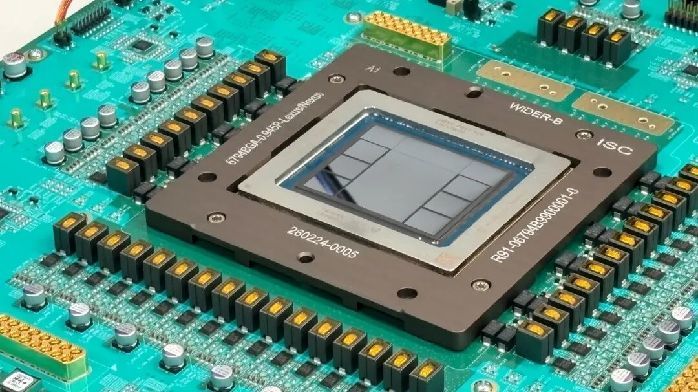
OpenAI says its models improved circuits in its Jalapeno inference chip and AMD processor designs. For Jalapeno, OpenAI estimates that model-proposed changes reduced standard-cell area by about 13% in the warp engine and 10% in the matrix unit. The company says those optimizations were validated during silicon bring-up. For AMD flagship GPU intellectual property, OpenAI reports up to 14% improvement in a combined power, performance and area measure against an optimized baseline. AMD included some changes in a design sent for manufacturing.
The results extend a foundation-model lab's role into semiconductor design, where model output must pass engineering verification. OpenAI says its models rewrote circuit descriptions and used Synopsys tools to check behavior and evaluate design trade-offs. The AMD figure applies to specific GPU intellectual property, not the performance of an entire chip. The company has not reported final silicon validation for those AMD changes.
For chip builders and investors, the test is whether model-proposed improvements survive verification and physical implementation under production constraints. OpenAI's RISC-V tests offer a separate measure of progress: GPT-6.2 Astra achieved the highest average scores across two cores and two design tasks at a comparable token budget. Those tests used simulation and estimated clock speeds, with a loose area limit. OpenAI and Synopsys also plan to develop GPT-Synopsys for using chip design tools.