Abwab.ai raises $4M seed to build AI-powered lending infrastructure for Saudi financial institutions
The AMW Read
A new fintech-AI entrant on the embedded-lending infrastructure layer with a sub-$500M seed round; validates the infrastructure-not-balance-sheet economic pattern in the vertical without changing its trajectory.

Abwab.ai raises $4M seed to build AI-powered lending infrastructure for Saudi financial institutions
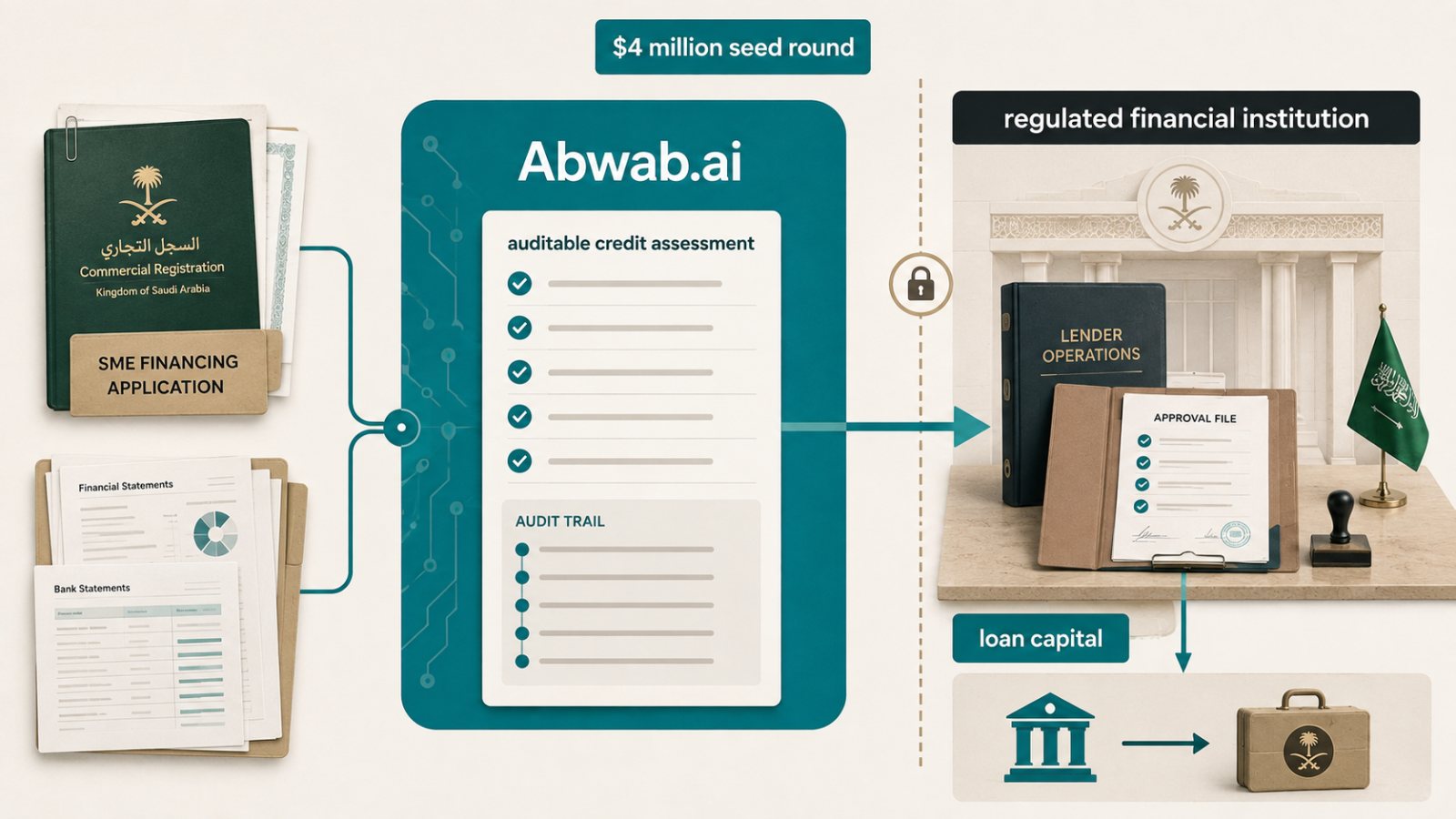
Riyadh-based Abwab.ai closed a $4 million seed round led by Middle East Venture Partners and Speedinvest, disclosed around September 3 at the LEAP conference in Riyadh. The company does not lend directly. It sells software for digital loan origination, credit decisioning, risk-based pricing, portfolio monitoring and embedded financing, connecting via API to a lender's existing loan-origination and core-banking systems while leaving approval authority and capital exposure with the regulated institution. Abwab.ai says its platform has processed more than SAR 1 billion (~$267M) in MSME loans across more than 13 financial institutions, including Saudi SME Bank, Abdul Latif Jameel Finance, Lendo, Hala Financing, Kafalah and Raqamyah, though these are company-reported totals, not audited figures, and Abwab.ai has not disclosed its fee model or revenue.
By staying off the balance sheet, Abwab.ai avoids the capital intensity and default exposure that has hurt direct online lenders, competing instead on whether regulated institutions trust its models enough for production credit decisions. That positioning fits a broader pull in AI-for-finance toward decisioning layers banks can adopt without new licensing or capital commitments. But processed volume is a workflow metric, not a performance one: it says nothing about approval rates, default rates against predicted risk, or how concentrated activity is among Abwab.ai's named partners versus spread across all 13.
For investors, the real diligence sits with the lenders, not the vendor — portfolio-level default and recovery data benchmarked against Abwab.ai's risk scores, plus approval-to-manual-review ratios, would separate genuine underwriting lift from a compliance veneer. For builders in embedded lending, the deal reinforces that an infrastructure-only model — software fees instead of credit risk — remains the standard path to scale in a tightly regulated banking market, at the cost of growth being gated entirely by institutional sales cycles.