SK Group Prepares Internal 'Token Economy' Playbook as AI Agents Push Costs Beyond Flat Subscriptions
The AMW Read
SK articulates an emerging enterprise pattern of agent-driven variable token costs requiring governance and model routing, an incremental update to known agent economics rather than a new entrant or debate resolution.
SK Group Prepares Internal 'Token Economy' Playbook as AI Agents Push Costs Beyond Flat Subscriptions
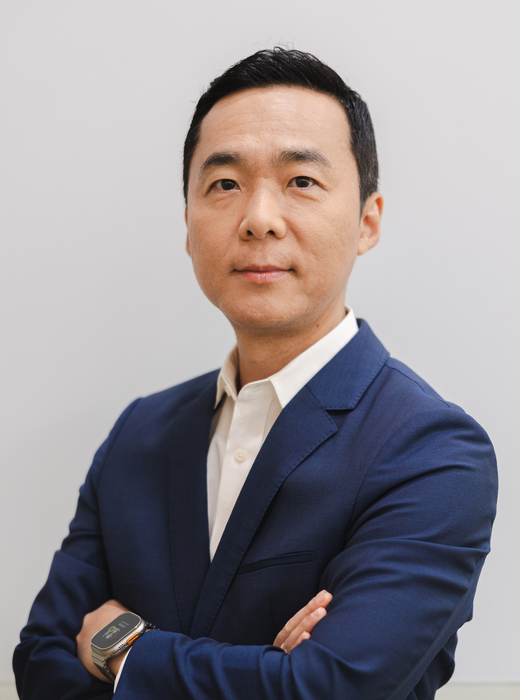
SK Group is preparing an internal book on the "token economy," led by Kim Ji-hyun, vice president of SK Supex Council's AI Committee, to help executives understand tokens as an economic unit. It is the first book the AI Committee has published directly, and it covers both sides of token economics: the supply side, defined as how cheaply and quickly a data center can produce tokens, and the demand side, which Kim separately labels "token economy" and "tokenomics." Kim argues traditional ROI is no longer sufficient for AI-driven work and proposes a "Return on Tokens" (ROT) metric, noting that AI agents leave detailed action logs that make output easier to trace against consumption than earlier generative AI tools.
The framework responds to a structural shift in enterprise AI spend. Generative AI chat tools are typically billed as flat monthly subscriptions, but agents that autonomously call databases, ERP systems, and other internal tools generate unpredictable, usage-based costs as they execute multi-step tasks. Kim says this requires "token governance" — tracking who consumes tokens, on what task, and how much — paired with company-wide usage dashboards and an LLM router that assigns cheaper models to routine work and higher-performance models to critical tasks. Kim notes US tech companies are already building similar token-tracking practices.
For enterprise AI builders, this signals emerging demand for FinOps-style tooling purpose-built for agent token spend: usage dashboards, per-task model routing, and governance controls, as budget lines shift from predictable subscriptions to variable consumption. Kim also frames the issue in national-competitiveness terms: since tokens themselves cannot be directly exported, Korea's opportunity lies in exporting AI applications, agents, models, and routers that drive foreign users to consume tokens on Korean-built infrastructure.