Stability AI releases Stability Audio 3.0, a new family of audio generation models capable of produc...
The AMW Read
Open-weight audio model releasing 2x generation length and licensed data partnership updates the multimodal media segment meaningfully; data-licensing strategy addresses an open debate about label risk for generative audio startups.

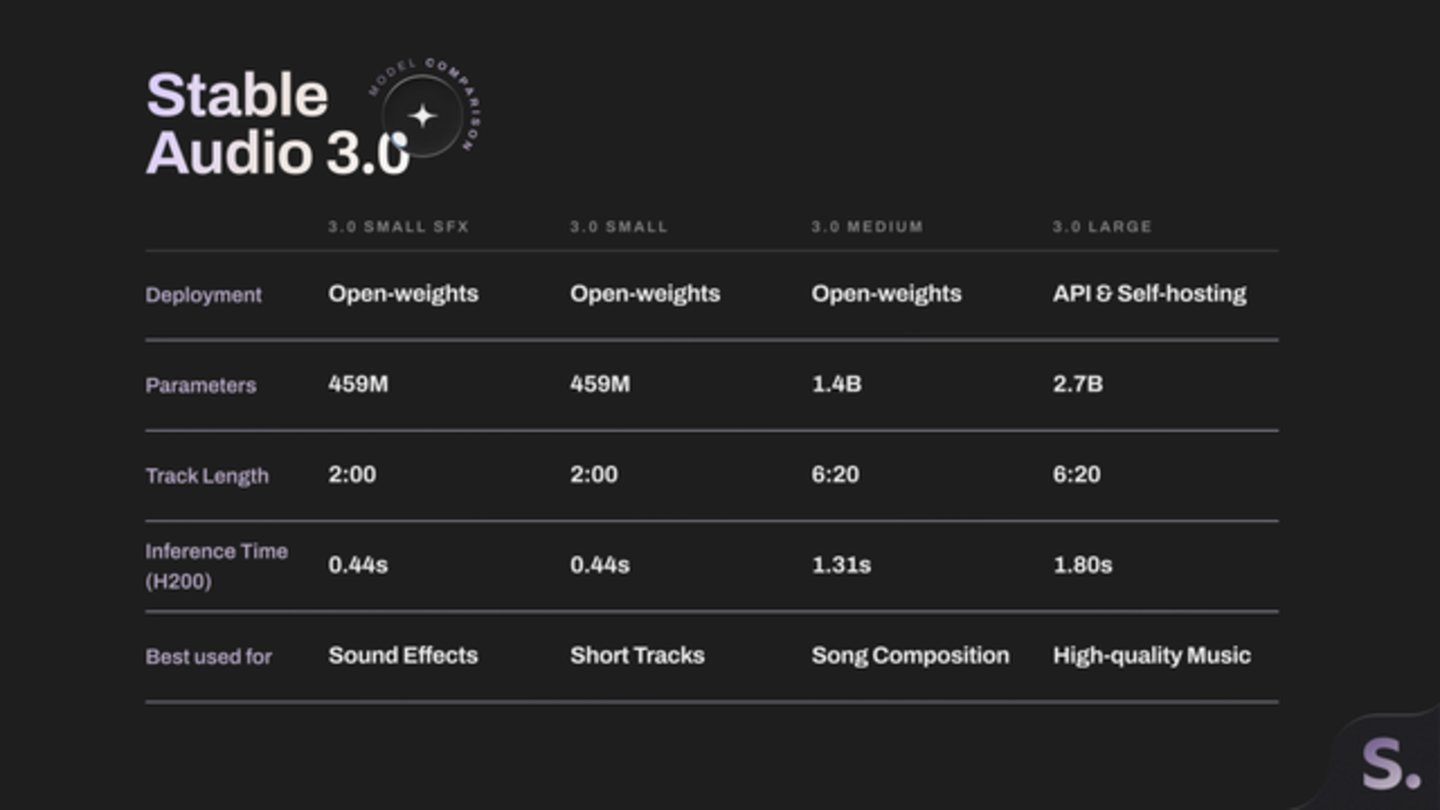
Stability AI releases Stability Audio 3.0, a new family of audio generation models capable of producing professional-grade music tracks over six minutes long. The lineup includes four models: small SFX (459M parameters), small (459M), medium (1.4B), and large (2.7B). The small models run on-device and generate up to two-minute clips; medium and large produce full compositions of 6 minutes, 20 seconds while maintaining melodic structure. The small and medium models are released under open weights. The large model is available only via API and self-hosted paid tiers, with an enterprise license required for companies exceeding $1 million in revenue. Stability AI has licensed its training data via partnerships with Warner Music Group and Universal Music Group. The company also announced the hire of Ethan Kaplan, former chief digital officer at Universal Audio and Fender, to lead a professional music offering.
Why it matters: This release updates the open-weight music generation segment, directly competing with Google and ElevenLabs while navigating the same data-licensing minefield that has drawn Suno and Udio into litigation. Stability AI’s strategy of pairing fully licensed training data with open-weight small models exemplifies the “context-engineering moat” pattern — commoditizing base generation layers while differentiating through proprietary data partnerships and professional-tier tools. The hire of a music industry executive mirrors moves by Suno and ElevenLabs, signaling that talent from legacy media is becoming a key differentiator in the generative-audio race. The addition of six-minute generation — double Stable Audio 2.0’s output — advances the multimodal generation segment toward longer-form, musically coherent output that could extend the use case from novelty clips to production workflows for musicians and content creators.
Our take: Stability AI is executing a capital-conserving playbook after its 2024 restructuring: open-weight small models buy developer mindshare and ecosystem adoption, while the large model lives behind a paid API that targets the professional music market. The fully licensed data claim is a direct response to the Suno/Udio existential risk — the industry’s open debate about whether generative music services can survive without major-label blessing. If Stability AI proves a viable licensed-data business model, it could establish a template for the entire generative-media vertical. The addition of music-industry leadership suggests Stability is betting professional tools, not consumer virality, will be the high-margin path.
#StabilityAI #AudioGeneration #GenerativeMedia #MusicAI #OpenWeights #DataLicensing