XYZ tests failure-focused training pipeline for its DEUX robot
The AMW Read
The disclosure adds task-specific results to XYZ's known training approach, but its broader impact and generalization remain unproven.

XYZ tests failure-focused training pipeline for its DEUX robot
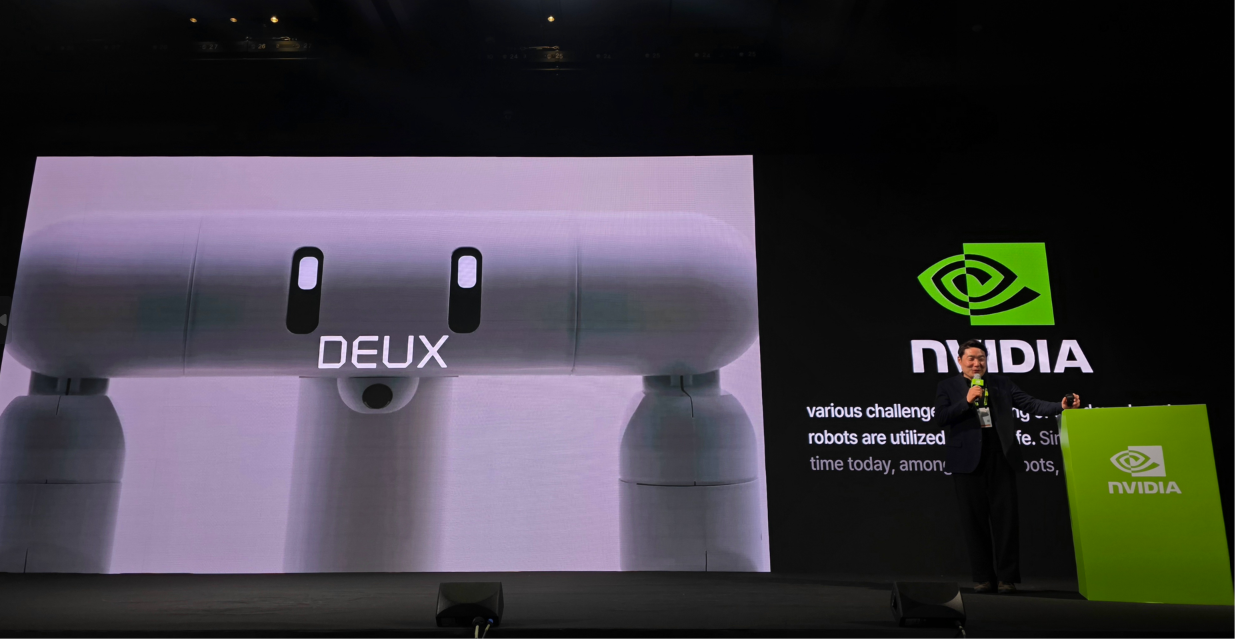
XYZ disclosed a physical AI training pipeline that identifies robot failures and adds demonstrations for those cases. In a bread-bag sorting task, its wheeled, two-armed DEUX robot first trained on 1,200 demonstrations. After roughly 200 more demonstrations for each of two failure types, recovery after a dropped bag rose from 0% to about 85%, while picking a bag rotated by roughly 90 degrees rose from about 10% to 90%.
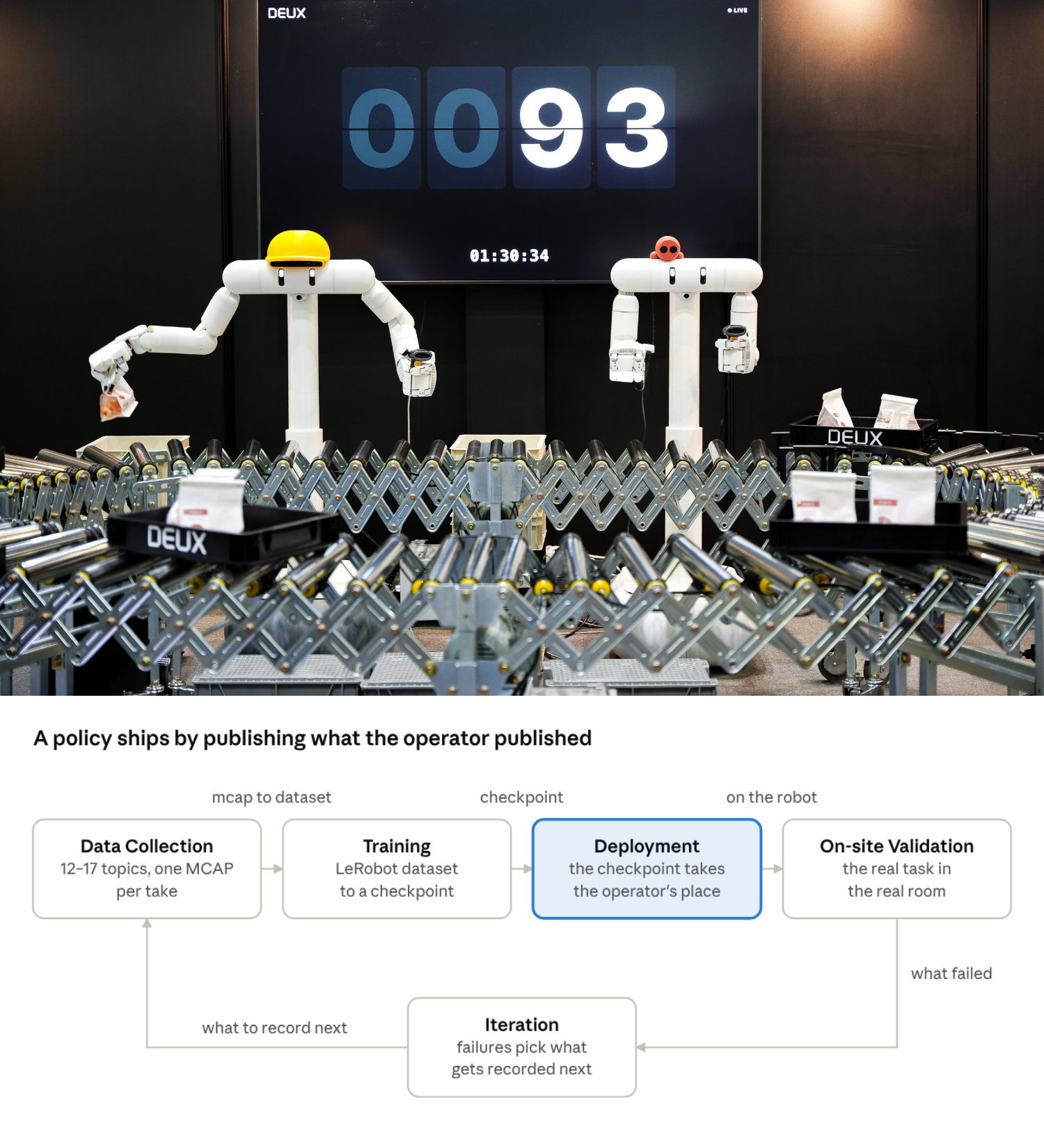
The result illustrates how a robotics company can adapt a general-purpose vision-language-action model to a specific workflow using targeted real-world data. XYZ fine-tuned Nvidia's Isaac GR00T N1.7 on DEUX demonstrations and connected data collection, training, deployment, and validation in a loop. This extends our earlier coverage of XYZ's training approach using data from operating sites. The reported gains concern two defined failure cases, not general performance across tasks or environments.
For builders and investors, the key test is whether targeted improvements transfer to conditions that received less training data. XYZ reported no clear improvement for diagonally oriented bags in an offline evaluation based on recorded data. Its system also records joint-level commands during human teleoperation and uses the same control path when the model takes over. That design gives teams a concrete way to test repeated training and deployment, while leaving broader reliability to further validation.