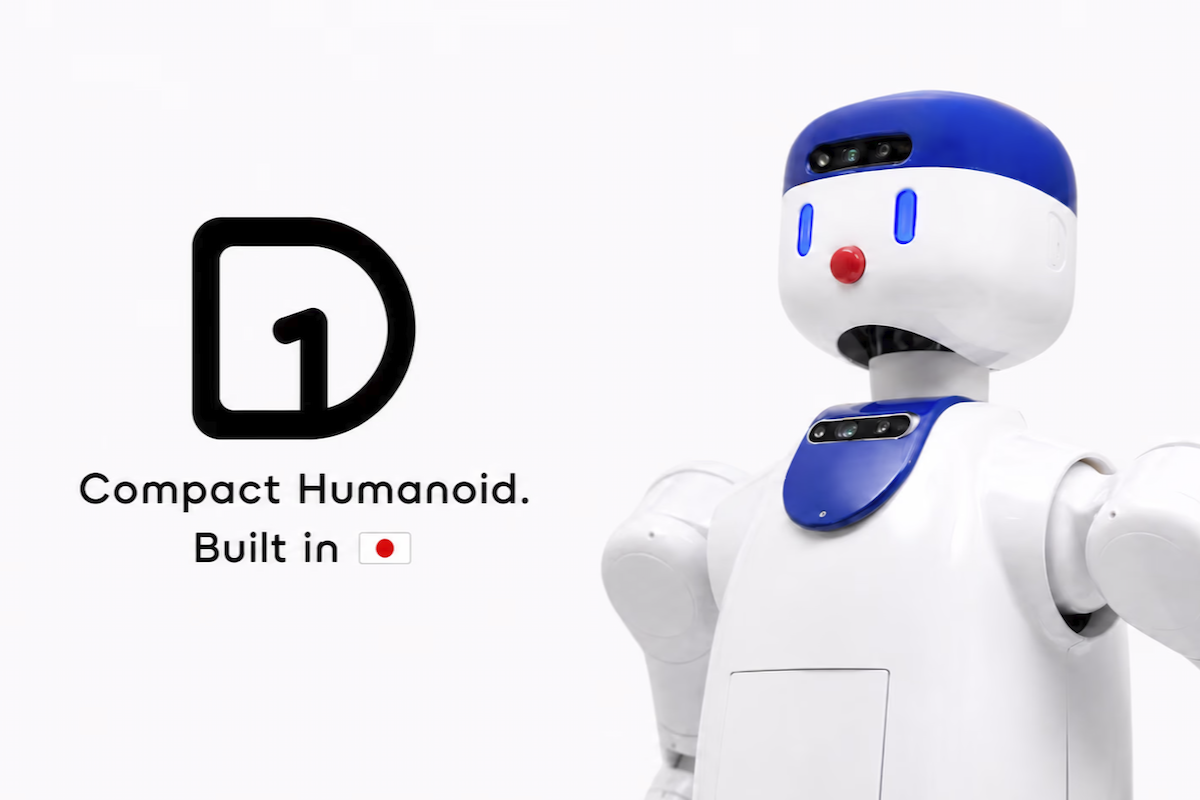
Zeals (ZEALS) unveiled its quasi-domestic humanoid robot, the D1, on August 5, 2026, with orders ope...
The AMW Read
Novel quasi-domestic humanoid with a low price point and insurance partnership updates the robotics player map and signals a cost-competitive strategy, but the event is a product launch rather than a breakthrough in capability.

Zeals (ZEALS) unveiled its quasi-domestic humanoid robot, the D1, on August 5, 2026, with orders opening the same day. Priced from ¥5 million (approximately $39,000) per unit, the D1 is designed for indoor environments such as medical and care facilities, manufacturing, logistics, and hotels. Standing at 129.3 cm tall—the same height as the anime character Doraemon—the compact robot requires no major facility modifications or dedicated environments, easing deployment. The D1 handles conversational tasks like dialogue and guidance, as well as physical work using its dual arms, including item preparation, meal service assistance, weighing, and transport. Zeals has partnered with Mitsui Sumitomo Insurance to offer insurance coverage for risks associated with D1 usage. The company explains that the D1 is a 'quasi-domestic' model because it incorporates overseas components to achieve a price that makes continuous real-world operation feasible, while AI, software, control, and assembly are led by Japan to balance world-class performance with practical pricing.
This launch exemplifies a new wave of Japanese humanoid robotics aimed at domestic market adoption, prioritizing affordability and safety over frontier capability. The D1's quasi-domestic approach—blending Japanese leadership in AI and software with cost-effective overseas parts—reflects a pragmatic strategy to overcome the high costs that have hindered humanoid commercialization. At ¥5 million, the D1 undercuts many global competitors, positioning it as a realistic option for labor-strapped sectors like elder care, where automation demand is rising. The partnership with an insurer also signals an emerging ecosystem for robot liability, addressing a key barrier to enterprise adoption. This move aligns with broader trends in embodied AI, where Japan leverages its manufacturing and hardware strengths to compete against US and Chinese rivals.
For investors, the D1's launch validates the market for sub-$50,000 humanoids targeting service industries, potentially accelerating adoption in Japan's aging society. Builders in the robotics space should note the hybrid sourcing model as a playbook for cost reduction without sacrificing performance. However, the D1's compact form factor and 500,000-yen price point remain unproven in real-world deployments; the true test lies in whether it can deliver reliable, continuous operation in demanding care and logistics settings. The company's focus on insurance and safety suggests a mature approach to commercial deployment, but skeptics will watch for evidence of sustained use cases.