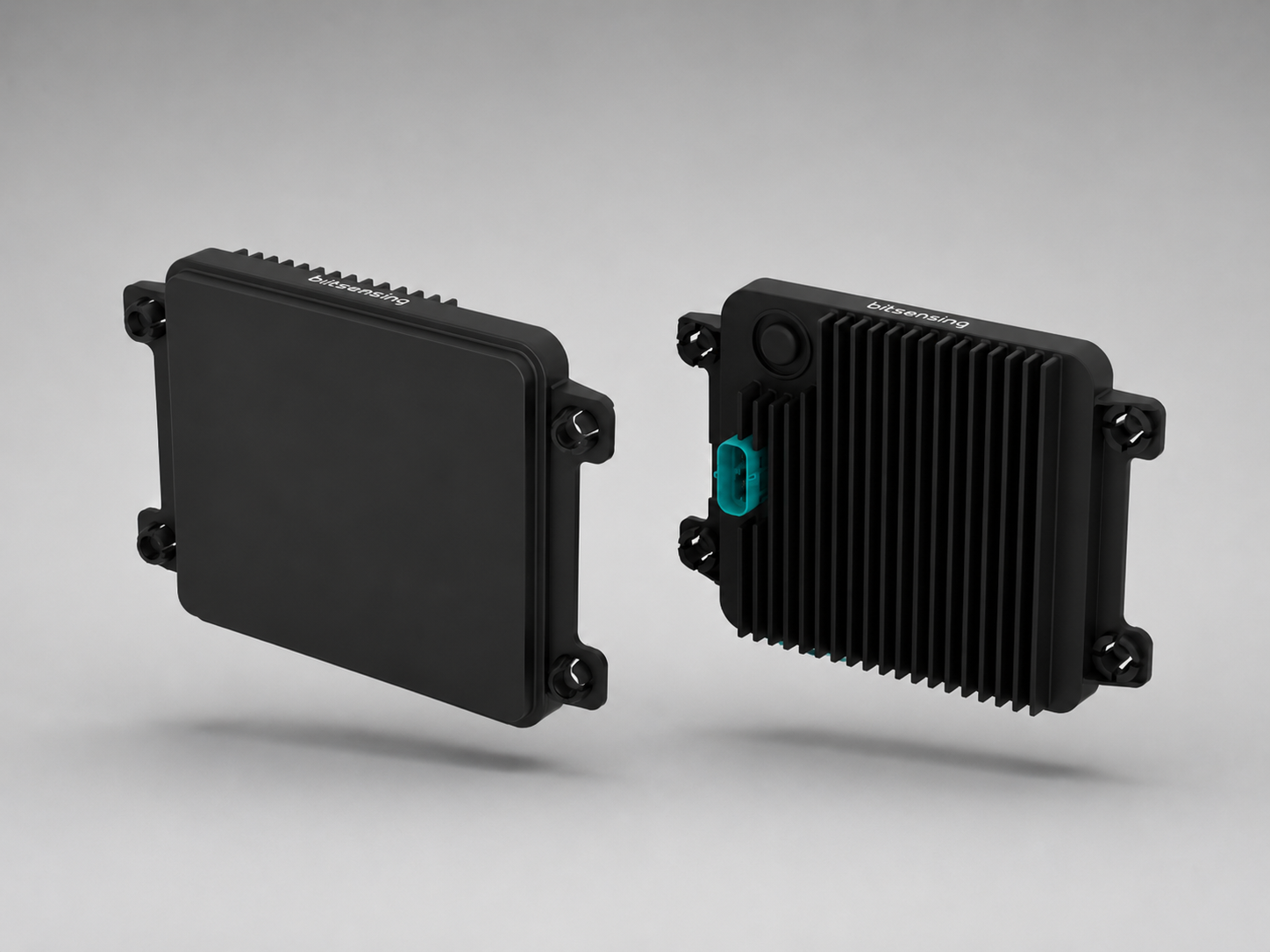
Bitsensing (비트센싱), a South Korean radar solutions company, today announced the release of its AIR4D...
The AMW Read
Incremental product launch in a well-understood autonomous vehicle sensor subsegment; no announced partnerships or funding details.

Bitsensing (비트센싱), a South Korean radar solutions company, today announced the release of its AIR4D 4D imaging radar purpose-built for autonomous driving. The AIR4D differentiates itself from existing 4D radars by offering expanded raw data accessibility, including high-resolution point cloud and Doppler data alongside radar raw data output. This open architecture allows autonomous driving companies to freely develop and validate perception algorithms and AI models, in contrast to the closed designs of most 4D radars currently on the market. Key specifications include real-time per-object velocity measurement, detection range up to 300 meters, robust performance in low-light and adverse weather, and compatibility with camera-radar sensor fusion architectures.
Why it matters: The AIR4D update signals a shift in the autonomous vehicle sensor stack toward openness and data flexibility. Bitsensing is positioning itself against incumbents like Mobileye and Nvidia's Drive ecosystem. The elimination of closed sensor architectures could accelerate client AI model development by removing data format bottlenecks. The company's emphasis on reducing per-vehicle sensor costs through camera-radar fusion aligns with the industry-wide push toward L4 commercial deployment, exemplified by recent moves from companies like Motional and Waymo. However, Bitsensing faces stiff competition from established sensor suppliers and stringent automotive safety requirements.
Expert take: Bitsensing's choice to offer raw data will appeal to autonomous driving teams that want to train purpose-built perception models rather than adapt to vendor-supplied features, but the real test is sensor reliability validation for production. Without announced partnerships or integration endorsements from major automakers or Tier-1 suppliers, AIR4D remains an unproven addition to an increasingly crowded sensor market. The company must prove that its open data approach can overcome reliability, cost, and assembly hurdles better than established competitors.