Hippo Harvest, a California-based agri-robotics startup, has raised $30 million in Series C funding...
The AMW Read
Updates the robotics segment with a capital-efficient greenhouse approach that diverges from collapsed vertical farm models; signals a potential capital-cycle shift in controlled-environment agriculture.

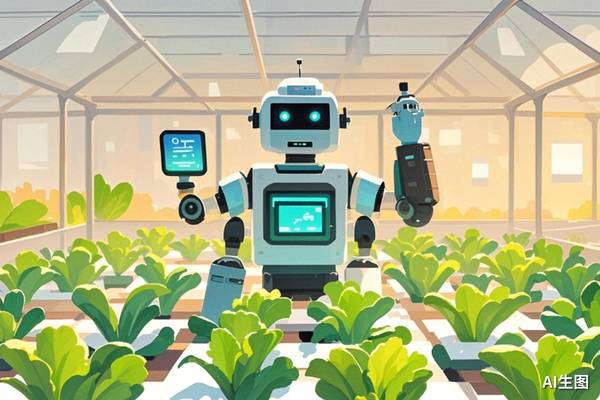
Hippo Harvest, a California-based agri-robotics startup, has raised $30 million in Series C funding led by Cox Farms, a major North American greenhouse operator, with participation from Congruent Ventures and Hawthorne Food Ventures. The company uses autonomous mobile robots, a closed-loop fertigation system, and machine learning to manage greenhouse vegetable production. It claims 92% less water usage, 94% less land, and 55% less fertilizer compared to conventional agriculture, and says its organic lettuce and spinach are now priced competitively with field-grown produce. The funds will expand its growing area from 1 acre to a planned 30-acre facility in Hollister, California, and advance next-generation robotic planting systems.
Why it matters: This round is a rare signal of capital-cycle resilience in a segment that has seen a wave of bankruptcies — AeroFarms, AppHarvest, and Bowery Farming all collapsed after raising hundreds of millions. Hippo Harvest's approach diverges from the capital-intensive, fully enclosed vertical farm model that dominated the last cycle. Instead, it uses greenhouses (not full LED reliance), off-the-shelf robot chassis, and precision fertigation to keep hardware and energy costs lower. The pattern here is less about radical technology breakthrough and more about capital-efficient iteration: treating the greenhouse as a semi-automated factory floor rather than a cleanroom. The involvement of Cox Farms — a strategic investor and operator with 700+ acres of greenhouse capacity — provides a distribution and scaling moat that pure-play venture investors cannot offer. The open debate remains whether this unit economics can hold at 30x scale, but the strategy is one of the most credible paths yet for controlled-environment agriculture to reach commodity pricing.
Grounded expert take: Hippo Harvest is a test case for whether AI-driven robotics can solve the fundamental cost problem in indoor agriculture, not just the novelty problem. The previous wave of vertical farming proved that technology alone cannot override the physics of energy and labor. By choosing a greenhouse substrate, using simpler robots, and targeting a large commodity market (US lettuce and spinach combined ~$51 billion in farm value), Hippo Harvest is running a deliberate experiment: can incremental automation, rather than total environmental control, achieve the cost curve needed to compete with open-field production? The next 24 months — the 30-acre build-out, unit-cost disclosure, and retail repeat orders — will determine whether this is a real alternative or just another capital-efficient failure.
#AgriRobotics #GreenhouseAutomation #ControlledEnvironmentAgriculture #IndoorFarming #PrecisionAgriculture #AIFarming