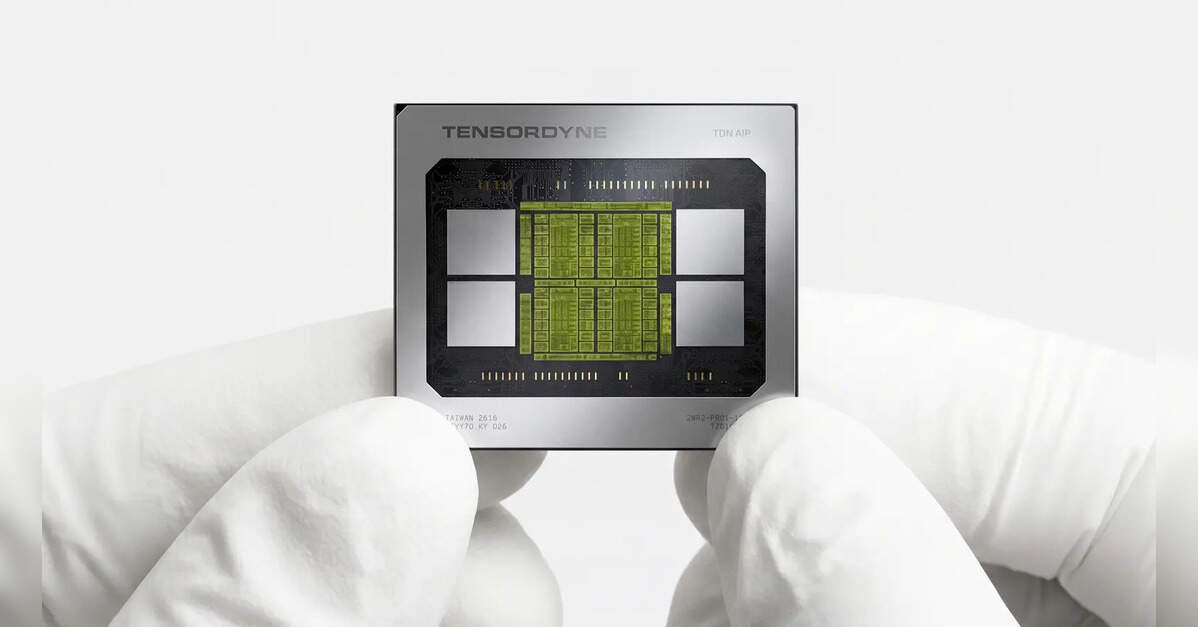
Tensordyne expects $200 million in orders for new inference system to rival Nvidia
The AMW Read
Tensordyne's Napier chip is a new inference competitor with partner-driven development (Broadcom/HPE), updating the AI infrastructure player map; significance is sub-segment as the product has not yet shipped at volume.

Tensordyne expects $200 million in orders for new inference system to rival Nvidia
Tensordyne, a Sunnyvale, California-based AI chip startup founded in 2017 as Recogni and rebranded last year, said on Monday it expects more than $200 million in forecasted demand for its new Tensor dyne Napier inference system. Developed with Broadcom and HPE-owned Juniper Networks, and manufactured by TSMC, the chip targets AI inference speed, power efficiency, and rack density improvements amid surging generative AI demand. CEO Marc Bolitho told Reuters the startup has over a dozen letters of intent and interest from AI infrastructure providers Cirrascale and BlueSky Compute, along with large technology companies and AI cloud service providers. Tensordyne has raised roughly $176 million from investors including Celesta Capital, GreatPoint Ventures, and Juniper Networks, and is preparing for a Series D round later this year.
Why it matters: This entry exemplifies the emerging "inference silicon challenger" pattern, where a new generation of startups — sparked by the limits of Nvidia's general-purpose GPU architecture for dedicated inference workloads — aims to capture a slice of the fastest-growing segment in AI infrastructure. The joint development model (Tensordyne + Broadcom + Juniper/HPE) mirrors the acqui-licensing pattern seen in other hardware plays, where startups lean on established partners for manufacturing, networking, and distribution. The $200 million demand forecast, while still pre-revenue, places Tensordyne in a cohort of inference-specialized chip companies trying to break into a market dominated by Nvidia's CUDA moat and hyperscaler-scale supply chains.
Expert take: Tensordyne's pitch — better inference density per watt — addresses a real pain point as AI deployment shifts from training to inference at scale. However, the critical barrier is not just chip performance; it is the software ecosystem and developer lock-in around Nvidia's stack. Letters of intent from infrastructure providers are promising, but converting those into volume deployments requires overcoming the integration friction that has stalled many previous Nvidia challengers. The planned Series D will be a key signal: investors will need to see whether these orders translate into revenue and whether the Broadcom/TSMC manufacturing relationship can deliver competitive unit economics at volume. #AIChipp #Inference #Nvidia #Hardware #Semiconductors