Ando Raises $20M for an AI-Agent-Native Team Messaging Platform
The AMW Read
Ando is an incremental but notable new entrant in agentic workplace collaboration, with funding to test whether agent-native coordination becomes a distinct enterprise software layer.

Ando Raises $20M for an AI-Agent-Native Team Messaging Platform
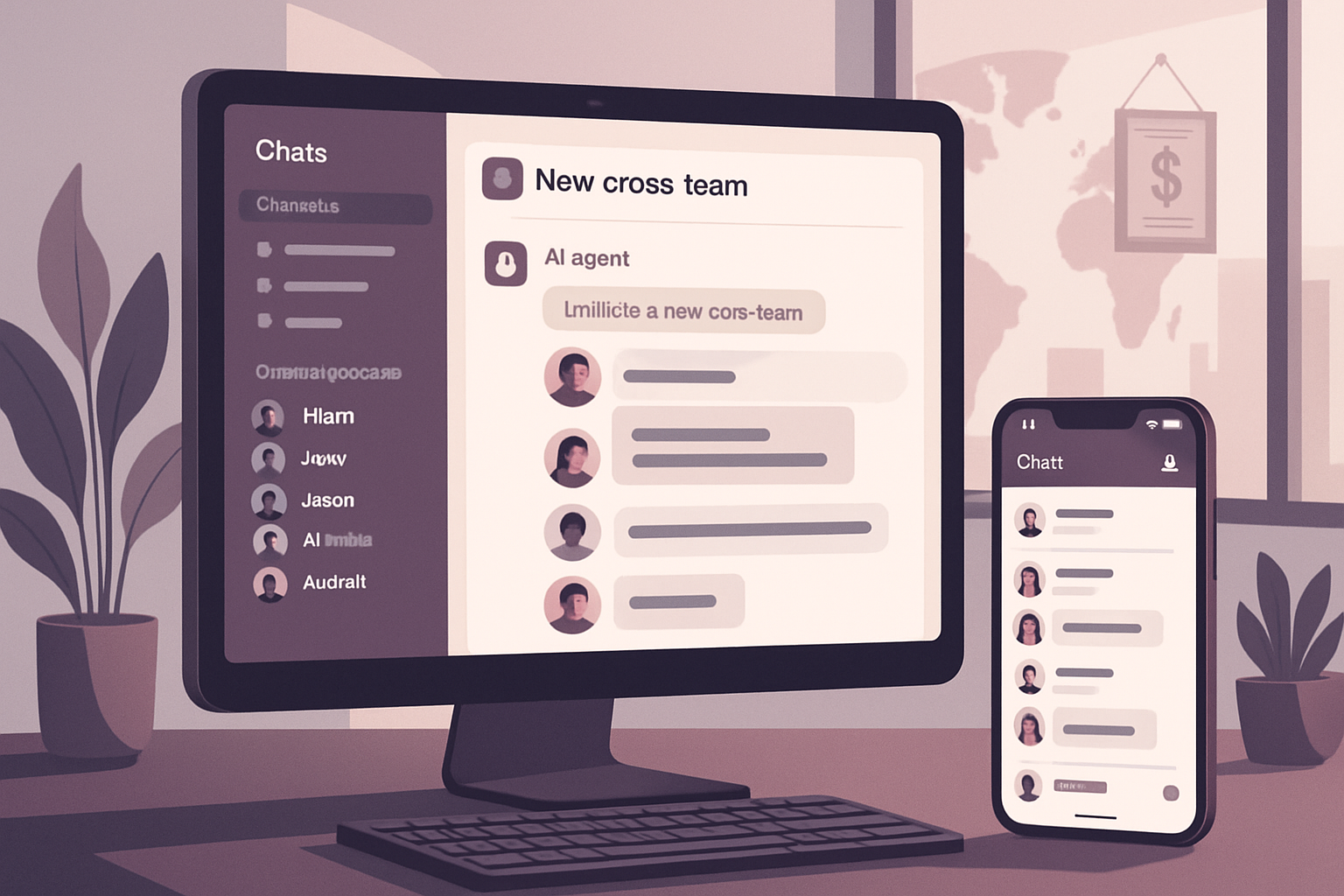
Ando has raised $20 million from investors including Accel, Index Ventures, and Emergence to build workplace messaging designed for humans and AI agents to operate in the same workspace. The product includes channels, direct messages, group conversations, and calls, but gives agents their own identities and inboxes. Agents can select channels, communicate with people or other agents, and begin work without a direct mention. Ando says it can connect systems such as Codex, Claude, and Devin, while also offering a hosted environment for teams without their own agent infrastructure. The company is initially serving teams of two to 40 people and is gradually admitting waitlist users.
The strategic question is not whether another messaging interface can displace Slack or Teams immediately; Ando itself says it is not yet positioning as a direct replacement. Its more consequential bet is that agent adoption changes the unit of collaboration from a human sending prompts to a shared operational space where agents receive context, coordinate work, and intervene proactively. That makes attention management and permission boundaries product-defining rather than secondary settings. Ando says agents cannot access private messages unless a human explicitly shares the relevant context, and that its system aims to distinguish interruptions that warrant attention from work that should remain in the background.
For builders, the product highlights a practical integration challenge: reliable agent collaboration requires identity, scoped access, shared context, and rules for resolving simultaneous agent activity, not merely a chat interface with a model attached. For investors, the $20 million financing supports an early wager on an agent-native collaboration layer, but the company will need to demonstrate that proactive agents reduce coordination overhead without creating notification noise, privacy failures, or new workflow complexity. Its human-seat pricing is also a deliberate attempt to remove per-action cost anxiety as teams experiment with more autonomous systems.

