AMD EPYC processors become the host layer for Google Cloud's TPU 8tx with hardware-enforced confidential computing
The AMW Read
Host-CPU and TPU attestation architecture is the primary subject, so cross.§H is added to the AI Infrastructure player-map ref; no funding, GPU-supply or policy signal is present.
AMD EPYC processors become the host layer for Google Cloud's TPU 8tx with hardware-enforced confidential computing
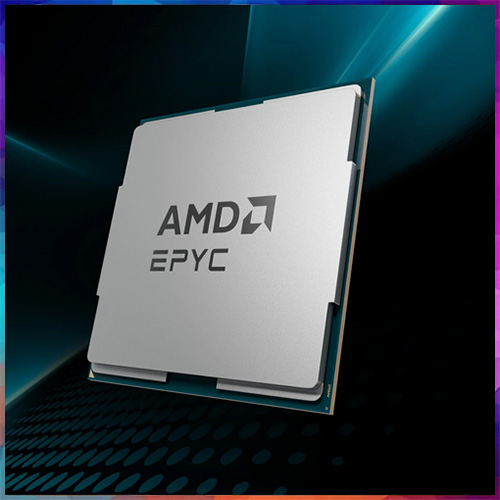
AMD said its fifth-generation EPYC processors are powering the host infrastructure for Google Cloud's TPU 8tx accelerators, which AMD describes as the first cloud TPU platform to offer hardware-enforced confidential computing. The EPYC processors prepare data, coordinate workloads and manage communication with the TPUs, while AMD Secure Encrypted Virtualization (SEV) and security features in the TPU extend protection from the host to connected accelerators. The system verifies an accelerator's identity and security configuration before granting access to protected memory. Google Cloud is positioning the platform inside its AI Hypercomputer for inference, fine-tuning and reinforcement learning.
The more important point is where the confidentiality boundary now sits. AMD says customer prompts, model weights and intermediate data stay encrypted in host memory and during host-to-accelerator transfers, which moves protection for sensitive models from contractual assurance toward silicon-level attestation. The deployment also extends an established relationship: EPYC already underpins Compute Engine families including C4D, N4D, H4D, Z4D and G4, and SEV supports Confidential VMs, Confidential GKE and Confidential Dataflow. Per the AI Market Watch index, this is the only item name-matched to 'AMD EPYC' in the last 90 days, though that count covers pipeline-ingested sources only.
For builders, the practical question is whether regulated or IP-sensitive workloads can now run agents, fine-tuning or RL jobs on TPUs with attested protection across both hosts and accelerators. The announcement gives no pricing, regional availability or general-availability date for TPU 8tx, and it describes the protections without detailing the attestation tooling customers would use, so those details should be confirmed before planning production migrations.