Anthropic's Wet Lab Claims First Discovery: A Novel Enzyme System It Compares to CRISPR
The AMW Read
First tangible (if unverified) output from Anthropic's newly confirmed wet lab extends the company's case-study trajectory into a bio-vertical entry ahead of its IPO, but practical significance remains unproven.

Anthropic's Wet Lab Claims First Discovery: A Novel Enzyme System It Compares to CRISPR
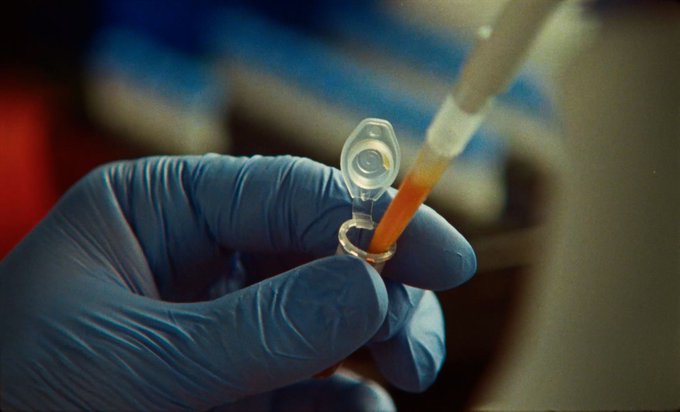
Anthropic said Claude agents autonomously identified a previously uncharacterized enzyme system in bacteriophages, the viruses that infect bacteria, and is comparing the finding's potential to Crispr's gene-editing machinery. According to the company, nearly 950 Claude agents spent 21 hours processing 210 million tokens while searching a large DNA-sequence database until one flagged an unusual repeating pattern for human review; scientists then ran lab tests to confirm the pattern was a real enzyme system. Anthropic said its own scientists' involvement was limited to the initial prompt and the physical lab work, and it does not yet know what the enzyme system does. This is the first announced result from the Bay Area wet lab Anthropic confirmed operating days earlier, tied to its Coefficient Bio acquisition and framed around AI-directed biology experiments.
The announcement lands inside a dense run of pre-IPO messaging: in the same week Anthropic cut Claude Opus 5.5 API pricing 60%, said Claude now leads 26% of its own frontier-model R&D, and shipped ten enterprise tools spanning coding, cybersecurity, HR, and banking. Per the AI Market Watch index, Anthropic-related items in our pipeline ran 297 over the trailing 90 days versus 271 prior (name-matched, pipeline-ingested sources only), consistent with a company stacking capability claims ahead of a public listing rather than one isolated event. Anthropic itself called the announcement premature, and it remains unclear whether the enzyme system has any practical use, let alone Crispr-scale impact — the comparison is doing more narrative work than the science currently supports.
For investors and biotech operators, the discovery's standalone value is unproven until independent characterization or peer review lands; the more durable signal is Anthropic building physical wet-lab capacity and pitching agentic search over sequence databases as a genuine science workflow, not just a chat or coding tool. Drug-discovery and bio-vertical companies should watch whether Anthropic pursues its own IP on findings like this or positions the lab as a proof point to sell Claude into biotech R&D pipelines instead.