Antioch raises $8.5M to accelerate simulation-based autonomy development
The AMW Read
Novelty is incremental — another seed-stage simulation platform in a crowded space. Significance is sub-segment-level: affects robotics testing tooling but not yet a structural force.

Antioch raises $8.5M to accelerate simulation-based autonomy development
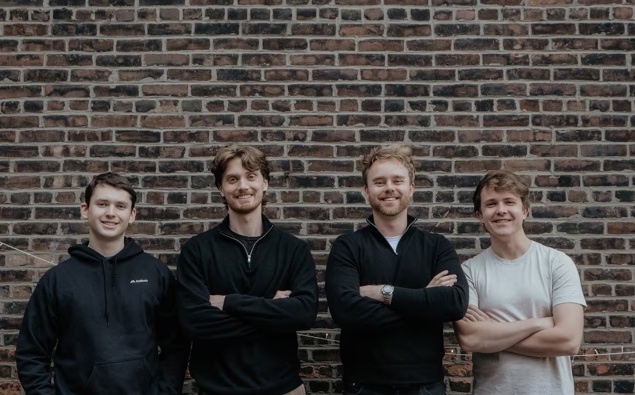
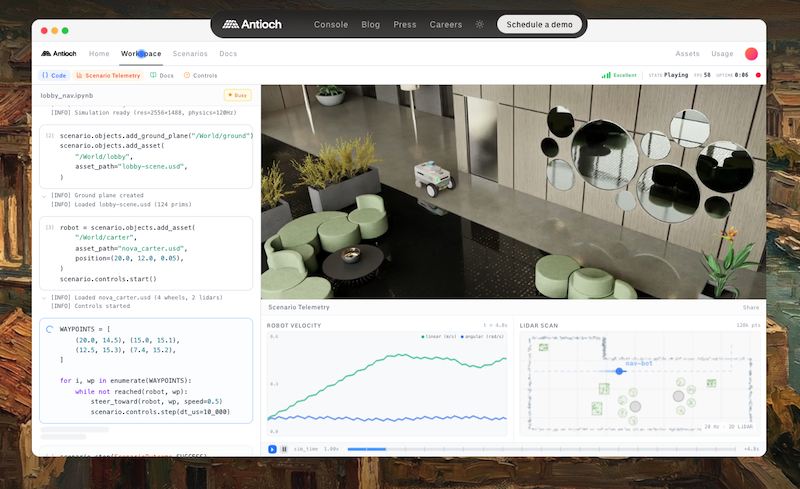
Antioch, a cloud simulation platform for robotics and autonomous systems, has raised $8.5 million in seed funding led by A* and Category Ventures, with participation from MaC Venture Capital, Abstract, Box Group, Icehouse Ventures, and angel investors including Shyam Sankar and Adrian Macneil. Founded in May 2025 and headquartered in New York, the company aims to replace costly physical testing with software-based simulation, allowing robotics teams to validate autonomous systems across infinite scenarios deterministically. The co-founding team includes alumni from Tesla's Autopilot team, Google DeepMind, Meta Reality Labs, and Chainalysis-acquired Transpose.
Why it matters: This funding fits the recurring pattern of verticalized simulation infrastructure emerging as a rate-limiting step for Physical AI deployment. Antioch is building what might be called a 'developer interface for simulation,' analogous to how Cursor abstracts model complexity for coding — a play to capture the tooling layer between physics engines (Nvidia, World Labs) and autonomy teams. The raise also signals early capital-cycle validation for the thesis that Physical AI will be larger than the LLM wave, a claim increasingly tested against the reality of fragmented tooling and hardware costs. If simulation platforms like Antioch can collapse testing cycles, they become the infrastructure bottleneck — and thus a potential acqui-licensing target for hyperscalers or robotics OEMs seeking a distribution moat in physical-world AI.
Expert take: The founding team's blend of autonomy (Tesla), safety-critical AI (DeepMind), and intelligence-platform experience (Transpose/Chainalysis) gives Antioch credibility on two fronts: scaling simulation to enterprise reliability and navigating government/defense use cases. The $8.5M seed is modest but signal-rich — it suggests VCs are placing bets on the 'picks and shovels' layer of robotics infrastructure, even as end-market deployment remains nascent. The claim that 'AI penetration in physical industries is basically zero' underlines both opportunity and execution risk: winning Fortune 500 logistics customers requires more than a slick simulator.
#Robotics #Simulation #AutonomousSystems #PhysicalAI #Infrastructure #SeedFunding