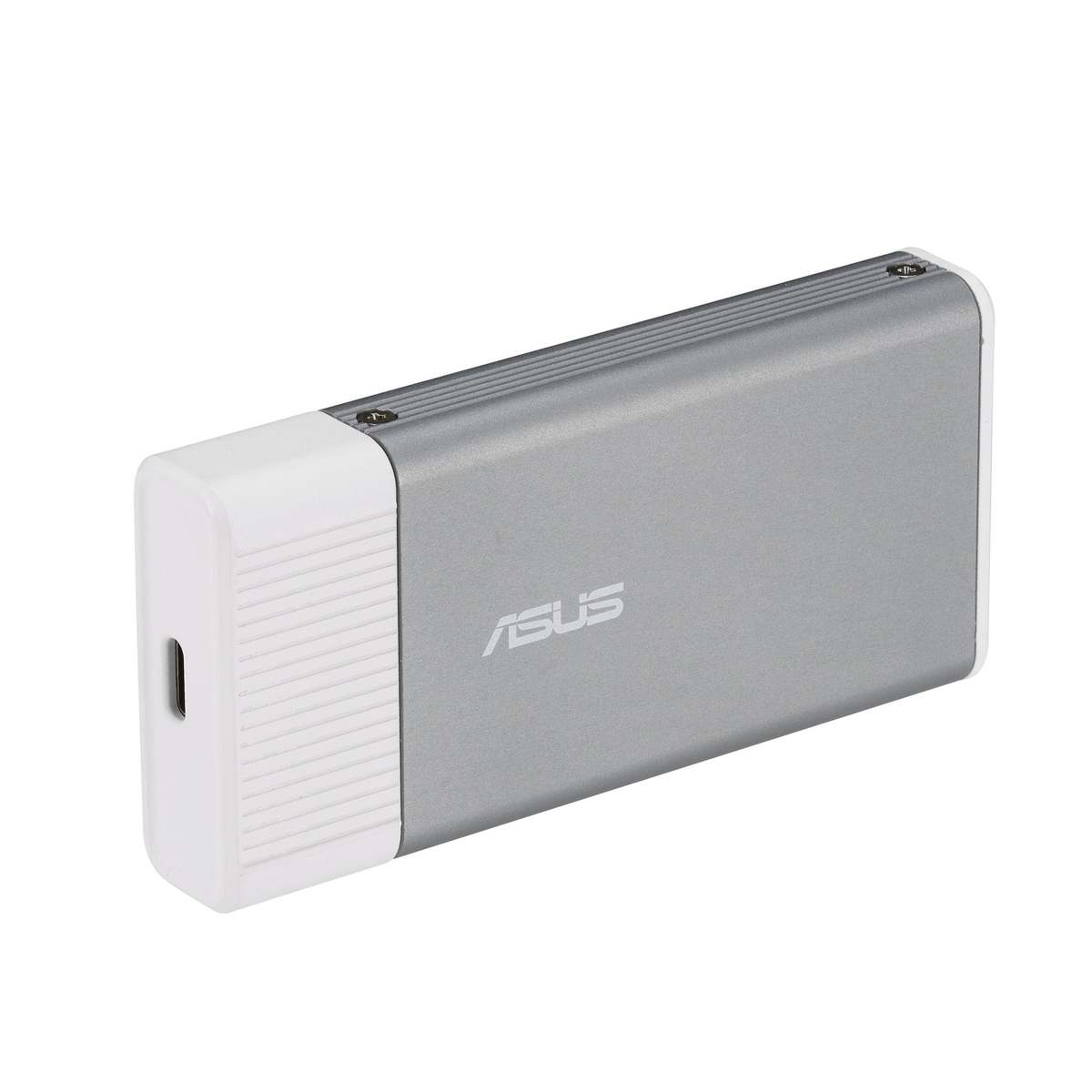
ASUS brings Hailo-powered local AI inference to USB and M.2 devices
The AMW Read
The launch incrementally expands ASUS's edge inference hardware lineup through Hailo-based USB and M.2 accelerators, with impact concentrated in local AI deployment.

ASUS brings Hailo-powered local AI inference to USB and M.2 devices
ASUS Japan announced three UGen300 accelerators and one lower-cost UGen200 model, with sales starting October 16. The UGen300 range uses Hailo-10H silicon, offering up to 40 TOPS at INT4 precision and stated typical power consumption of 2.5W. Prices range from 29,980 yen for the 2GB M.2 version to 49,800 yen for the 8GB USB model; the 8GB M.2 version costs 45,980 yen. Dedicated LPDDR4/4X memory supports local workloads including LLMs, vision-language models and Whisper speech recognition. The UGen200 costs 24,980 yen and uses Hailo-8L, delivering up to 13 TOPS at INT8 for conventional vision tasks.
The market significance is the packaging of specialized inference silicon as an upgrade for existing computers and embedded devices. USB 3.2 Gen 2 Type-C and M.2 2280 options give developers different installation paths for workloads where local processing can reduce cloud dependence or address latency requirements. This places ASUS in the deployment layer of AI infrastructure, where hardware access and software compatibility influence adoption. The two headline performance figures use different numerical precisions, however, so 40 TOPS versus 13 TOPS is not a direct comparison of application performance.
For builders, the concrete next step is a workload-specific proof of concept before selecting a module. ASUS lists Windows, Linux and B2B Android support across x86 and ARM, plus more than 150 pretrained models and sample code through UGen Utility and GitHub. Those resources provide a starting point, but the announcement supplies no application-level latency or throughput results. Buyers should test their target model, memory requirements and host configuration before treating peak TOPS as evidence of deployment readiness.