AWS opens Alexa for Shopping agent to external retailers as Agentic Shopping solution
The AMW Read
Productizing an internally proven agent for external retailers is a structural play that updates the hyperscaler-distribution pattern (05.§3.5) and meaningfully expands the agent market map (02.§2) beyond any single retailer.
AWS opens Alexa for Shopping agent to external retailers as Agentic Shopping solution
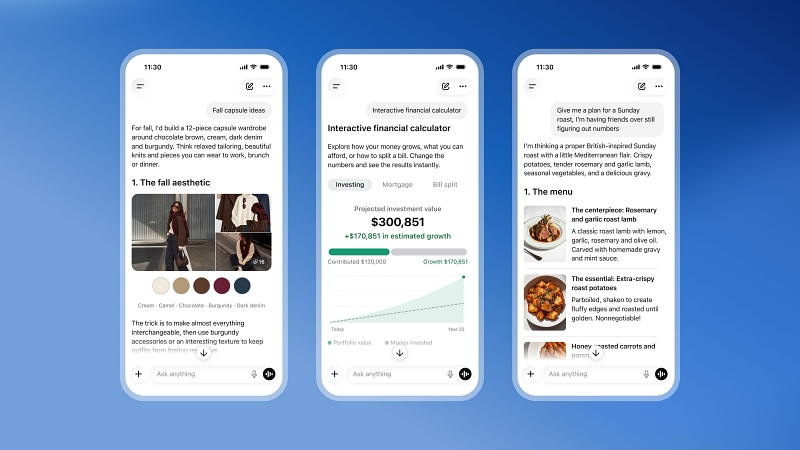
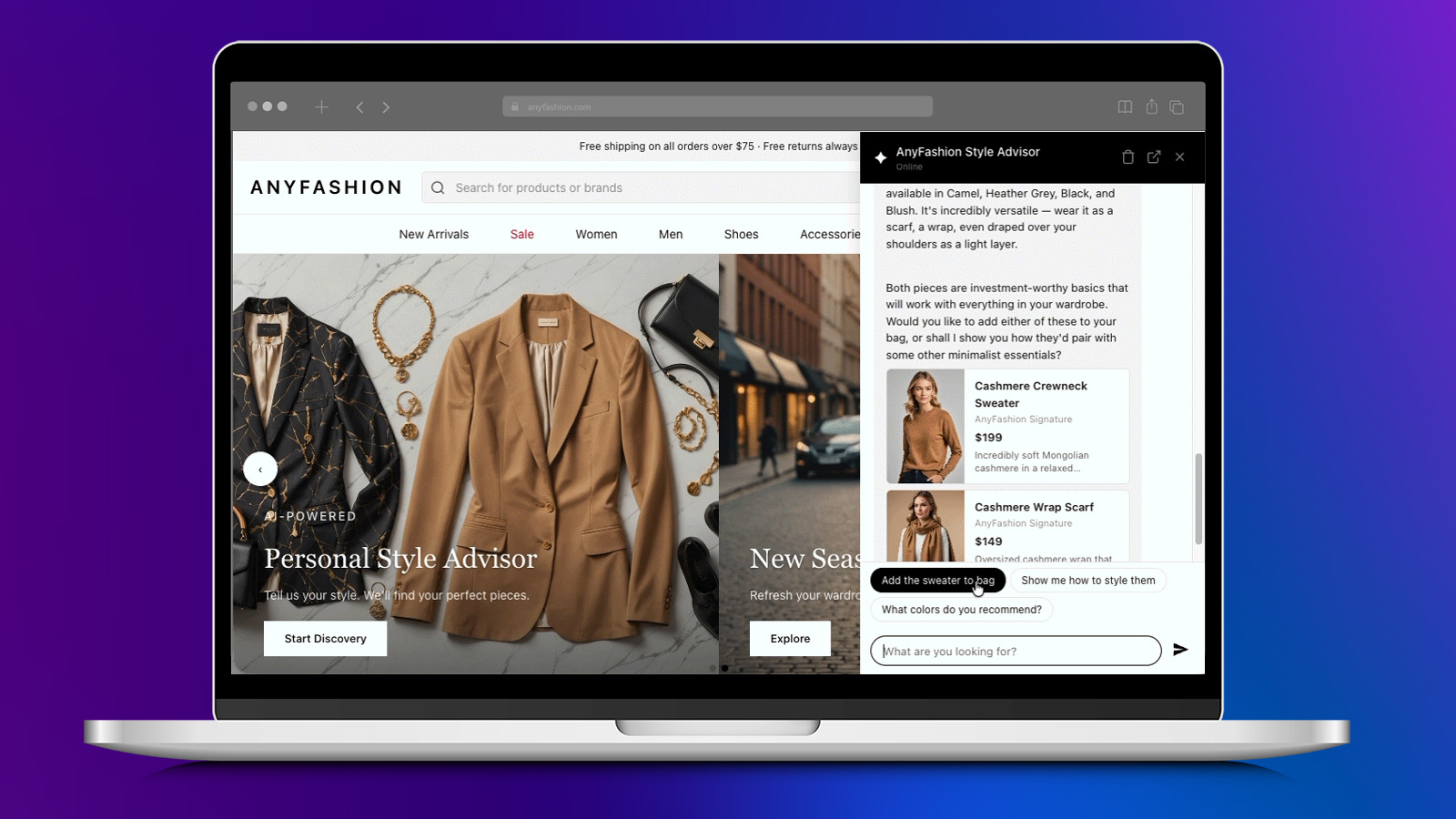
Amazon Web Services has launched AWS Agentic Shopping Assistant (AWS ASA), a turnkey solution that makes the technology behind Amazon's Alexa for Shopping available to third-party retailers for the first time. Built on Amazon Bedrock, AgentCore, and OpenSearch — components proven across billions of shopping interactions on Amazon.com — the offering provides reference architecture and starter code that enables retailers to deploy a custom conversational shopping agent in approximately 60 days. Early adopter Kate Spade used AWS ASA with Anthropic Haiku 4.5 to build an AI Gift Concierge, and AWS reports that conversational shopping sessions convert at 3.5x the rate of keyword search, with Amazon's own AI shopping assistant driving approximately $12 billion in incremental revenue last year.
This is a textbook hyperscaler-distribution play, a recurring pattern where a cloud giant takes an internally validated agent capability and productizes it for enterprise customers. AWS is effectively licensing its shopping-agent moat — built on proprietary interaction data and inference infrastructure — rather than keeping it exclusive to Amazon Retail. The move bypasses the need for retailers to build their own agent stack from scratch, compressing development time from months to weeks and embedding AWS deeper into the retail technology substrate. It also exemplifies the context-engineering moat: AWS ASA's differentiation comes not from a frontier model but from operational data and workflow logic refined on Amazon's own trillion-scale shopping graph.
For the AI agent segment, this is a structural signal. Hyperscalers are now packaging agentic capabilities as vertical SaaS-like products, blurring the line between cloud infrastructure and application-layer AI. Retail competitors using AWS ASA may struggle to differentiate if they all draw from the same underlying agent architecture, but the faster path to a working assistant may outweigh that risk. The $12 billion incremental revenue figure, if generalizable, suggests that conversational shopping agents are reaching escape velocity in e-commerce — a data point that validates the thesis that agents drive measurable revenue lift, not just engagement metrics.
#AWS #AgenticShopping #RetailAI #ConversationalCommerce #HyperscalerDistribution