BioNexus, a South Korean biotech R&D startup, has secured seed funding from Base Ventures and SMB In...
The AMW Read
Seed funding for an AI scientist agent startup in biotech is an incremental update to a known trajectory, with sub-segment impact.

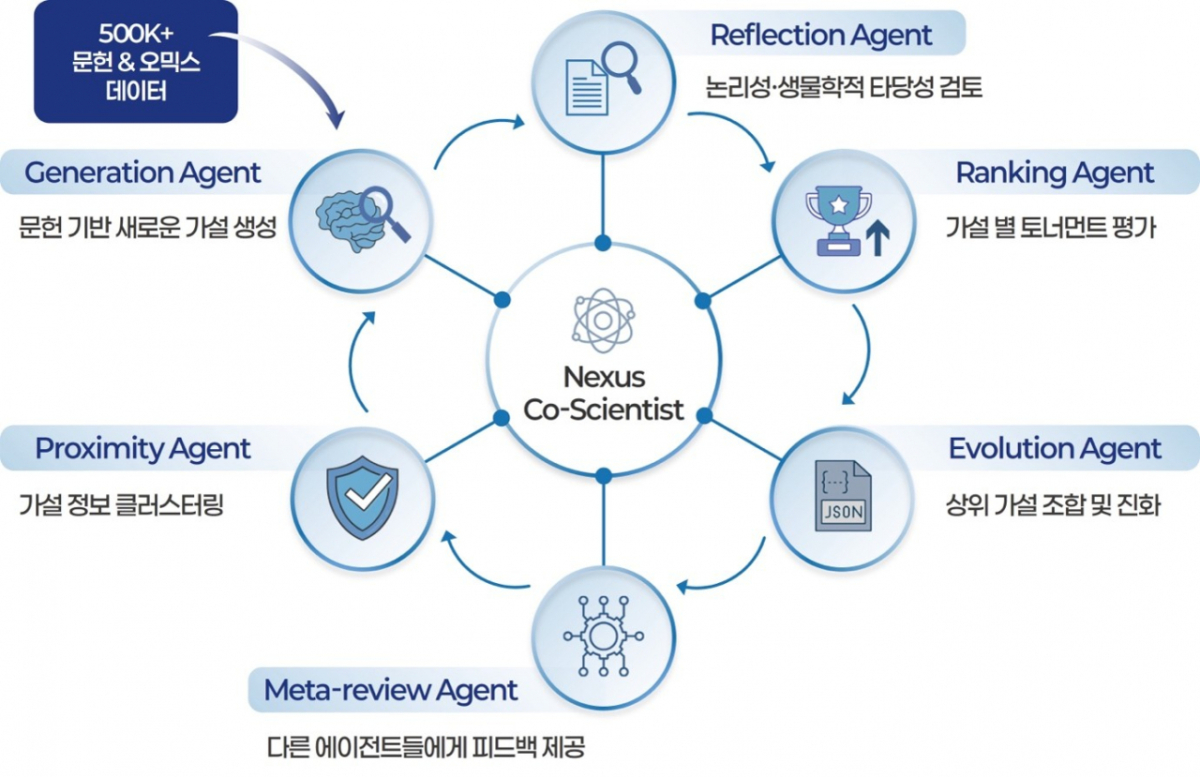
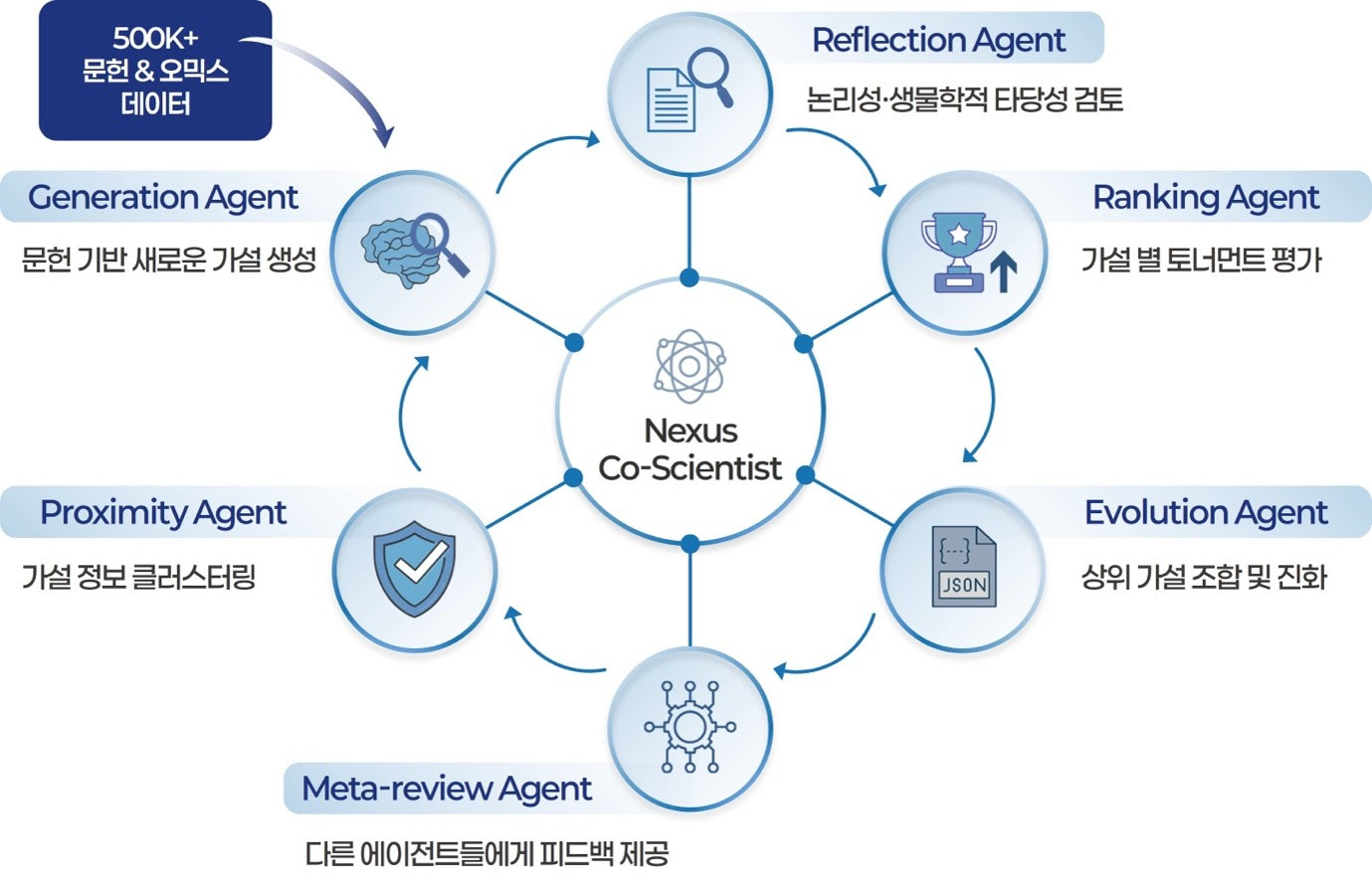
BioNexus, a South Korean biotech R&D startup, has secured seed funding from Base Ventures and SMB Investment Partners, with the investment amount undisclosed. The company is developing AI systems that replicate the researcher's thought process, with its flagship platform, Nexus Co-Scientist, reading large volumes of papers and biodata related to specific diseases or research topics to generate new hypotheses. The platform uses multiple AI agents that divide roles across information retrieval, hypothesis generation, review, and evaluation, extending to data analysis, validation, and experimental design. It runs on the company's proprietary NexusScience engine, which structures the scientific research process, and is complemented by NexusRAG, a research search tool, and NexusDrugLab, a drug and target analysis platform.
This funding underscores the growing momentum behind AI scientist agents in the biotech sector, a space where startups are increasingly automating hypothesis generation and experimental design to accelerate drug discovery. BioNexus has already completed over 30 research projects and built a collaborative network with 15 institutions, including the Korea Basic Science Institute, the National Primate Center, and the Korea Institute of Ocean Science and Technology. The company's CEO, Kim Tae-hyung, brings two decades of experience in bio big data analysis, having previously led the bioinformatics division at Theragen Bio and contributed to Korean and whale genome mapping projects. The R&D team comprises PhD-level bioinformaticians, AI and LLM engineers, and drug development, clinical, and omics experts.
For investors and builders, this signals a continued shift toward multi-agent systems that not only generate hypotheses but also validate them, potentially compressing the early stages of drug discovery. The focus on structured research workflows, rather than single-purpose models, suggests a moat built on domain-specific data integration and agent orchestration. As AI scientist agents mature, expect more partnerships with research institutions and a push toward measurable productivity gains in biotech R&D.