CadLingo 2.0 adds multi-part modeling to natural-language CAD design
The AMW Read
Multi-part modeling incrementally extends a generative 3D design product, with impact limited to prototype workflows and no reported adoption or manufacturing-validation evidence.

CadLingo 2.0 adds multi-part modeling to natural-language CAD design
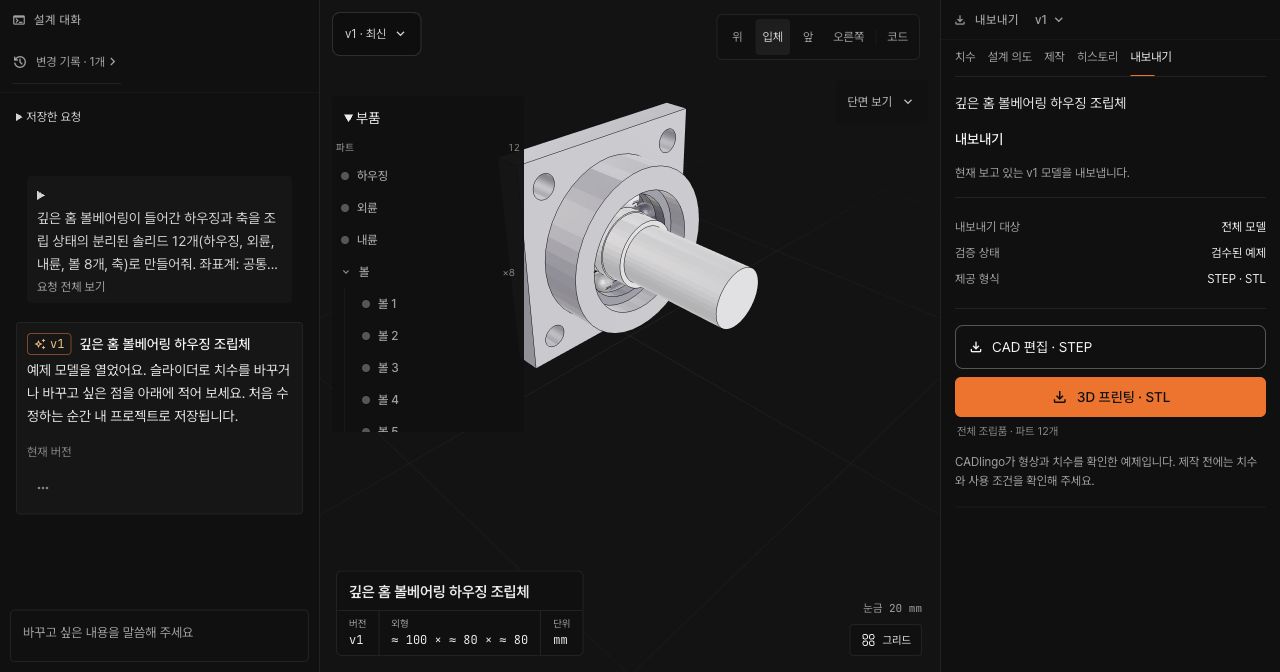
Weekly Ventures launched CadLingo 2.0 on October 1, expanding its browser-based AI design service for functional prototypes. Users describe an object, its purpose, key dimensions, and constraints to generate a parametric 3D model whose geometry changes when dimensions are adjusted. They can revise designs through numerical edits or natural-language requests, then export STEP files for continued work in other CAD software or STL files for 3D-printing preparation. The update adds modeling of multiple components in one operation and separate exports for individual parts, alongside changes to design-intent interpretation and workflow.
The release places CadLingo in the generative 3D market, with an emphasis on editable engineering geometry rather than appearance alone. That distinction matters because prototype design requires dimensions and components that users can revise and transfer into existing production workflows. STEP and STL exports provide concrete connections to CAD tools and printing preparation. The competitive question is therefore less about producing an appealing shape than whether generated models remain useful through successive design changes. The report describes these capabilities but provides no accuracy measurements, manufacturing validation, or customer adoption figures.
For builders and investors, the concrete diligence step is to test a multi-part prototype from initial prompt through revision and export. Check whether changing a dimension preserves the intended relationships between components and whether exported parts remain usable in the next CAD or printing step. Weekly Ventures positions the service for founders and product planners seeking to lower the entry barrier to physical product development; evidence of fewer manual corrections would make that proposition more persuasive.