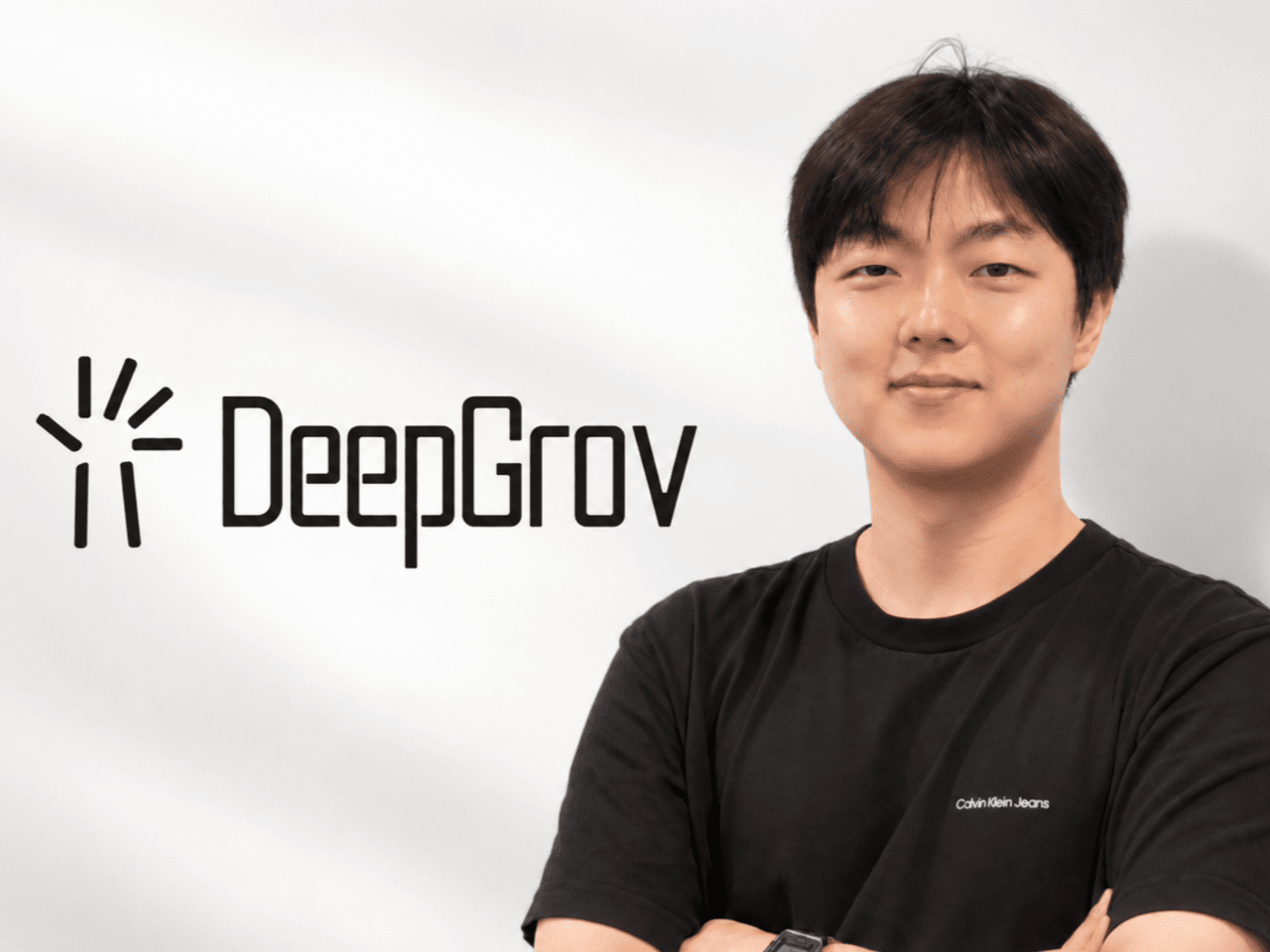
DeepGrove launches Frontia as a soft-tone AI companion story game
The AMW Read
Seed-stage Korean character-chat entrant with Crack/Iruda product talent updates the generative-media player map but remains a sub-segment product launch without structural capital or debate impact.

DeepGrove launches Frontia as a soft-tone AI companion story game
DeepGrove, a Korean startup led by CEO Na Bong-min and staffed by alumni of Wrtn's Crack and ScatterLab's Iruda character-chat products, is putting Frontia at the center of its market push. Frontia is framed as an "AI cinematic play" companion: user choices drive a dynamic story engine that can branch into more than 10,000 paths, with voice, image, and video layered on top of chat rather than text alone. The company closed a 1.5 billion won (~$1.1M) seed round in July and is packaging the experience as soft-tone "artificial love," using dating-show formats familiar to Korean audiences to pull in mainstream users.
That launch matters because Korea's character-chat lane already has live proof points in ScatterLab's Zeta and Wrtn's Crack. DeepGrove is not competing as a foundation-model lab; it is competing on retention, narrative memory, and multimodal immersion inside generative entertainment. It also opens creation to users via Frontia Studio Engine: about 1,000 creators are active, and some are reported to earn 6 million won (~$4,400) a month within two months of launch. The strategic wager is long-horizon relationship and story depth over short-dopamine chat, with soft-tone content meant to stay broadly acceptable while the category grows.
For builders and investors, the near-term read is talent recycling plus creator economics in a still-early interactive entertainment market. Watch whether overseas early engagement and creator payouts scale before multimodal memory and video costs strain a seed-stage balance sheet. Management also states longer-term ambitions toward VR, world-model experiences, and eventual robotics linkage—ambitious relative to current size, and useful mainly as a signal of where companion apps want to migrate once narrative retention works.