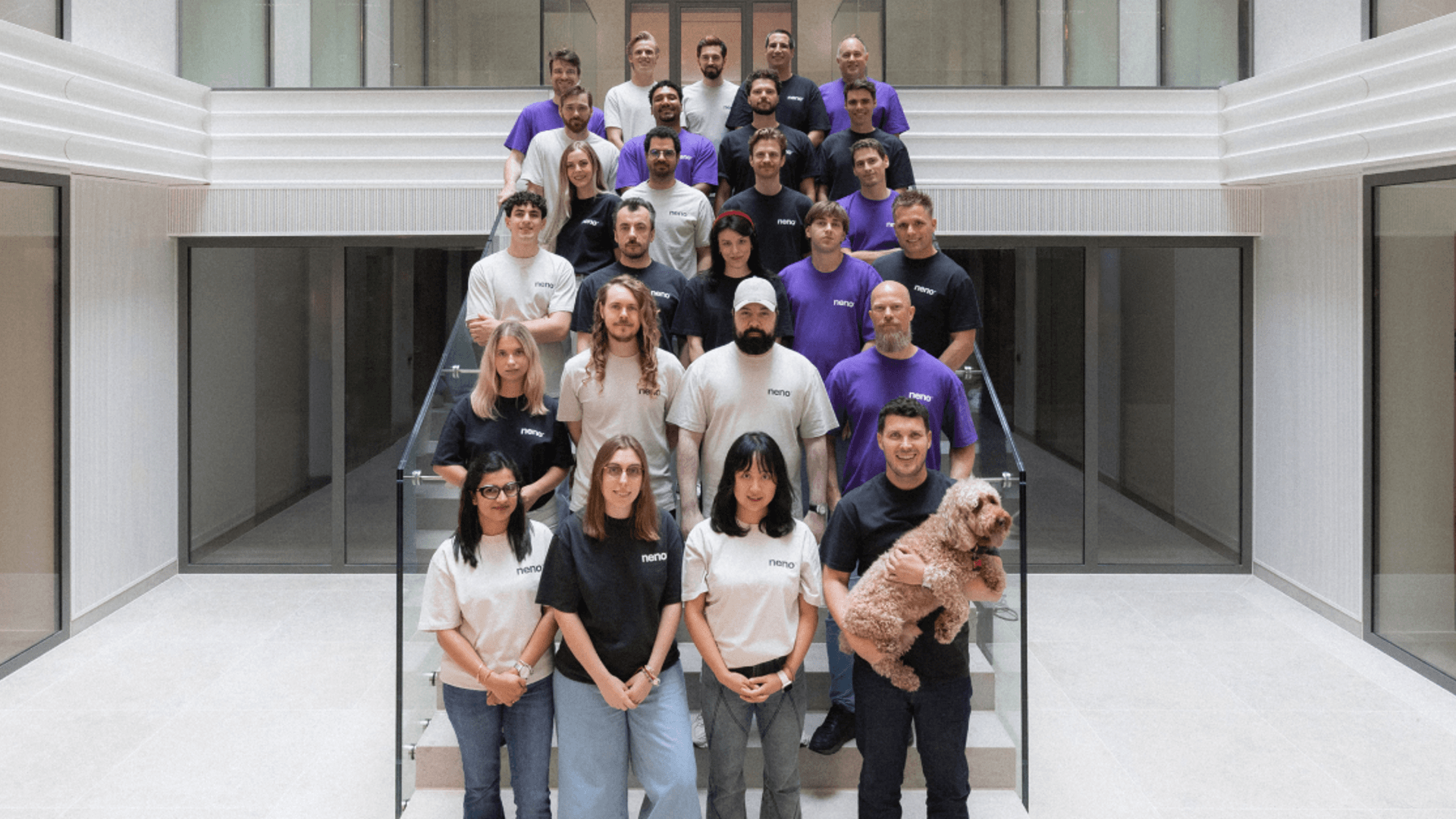
Neno raises €6.6M seed round to expand its AI-native SME finance platform in Europe.
The AMW Read
Neno is an early entrant in AI-enabled SME finance services, and its seed round plus initial customer traction incrementally expands the Finance/Ops player map.

Neno raises €6.6M seed round to expand its AI-native SME finance platform in Europe.
Amsterdam-based Neno has raised €6.6 million in seed funding led by AlleyCorp, with Motive Partners, Firstminute Capital, and angels including executives from Hugging Face, Mollie, Deel, Miro, Coinbase, PayPal, and Navro participating. Launched in the first quarter of 2026, the company combines accounting, tax, and financial administration for small and medium-sized businesses; it says it has nearly 200 customers. The capital will fund technology development, expanded accounting and tax capacity, go-to-market hiring, Neno Labs research on Ambient AI, and preparation for European expansion in 2027.
Neno’s core product is a real-time agentic general ledger that consolidates data from bank accounts, corporate cards, bill payments, and receivables into one system of record for accountants. The company is targeting a sizable but operationally fragmented market: more than half of Europe’s 26 million SMEs outsource accounting, payroll, and tax work, creating pressure as accounting talent remains scarce. Its model is not to eliminate accountants, but to increase the number of clients each professional can support through automated reconciliation, VAT preparation, compliance, and reporting. Neno says these workflows can be completed up to five times faster, while customers save an average of eight administrative hours per month and about 20% on annual accounting fees.
For builders, the relevant test is whether automation is anchored in reliable financial records and reviewable workflows rather than a conversational interface layered over disconnected systems. For investors, Neno’s early customer count is a useful adoption signal, but the next proof points are service quality at scale, accuracy across tax regimes, and whether its unified operating model can travel beyond the Netherlands without rebuilding its workflows market by market.