Google adds a Gemini 3-powered GenTabs feature to its experimental Disco browser, letting users gene...
The AMW Read
Extends the Gemini 3 case study into a new browser surface (GenTabs) but remains an incremental, limited-rollout product feature, not a structural shift.
Google adds a Gemini 3-powered GenTabs feature to its experimental Disco browser, letting users generate single-use web apps from their browsing context.
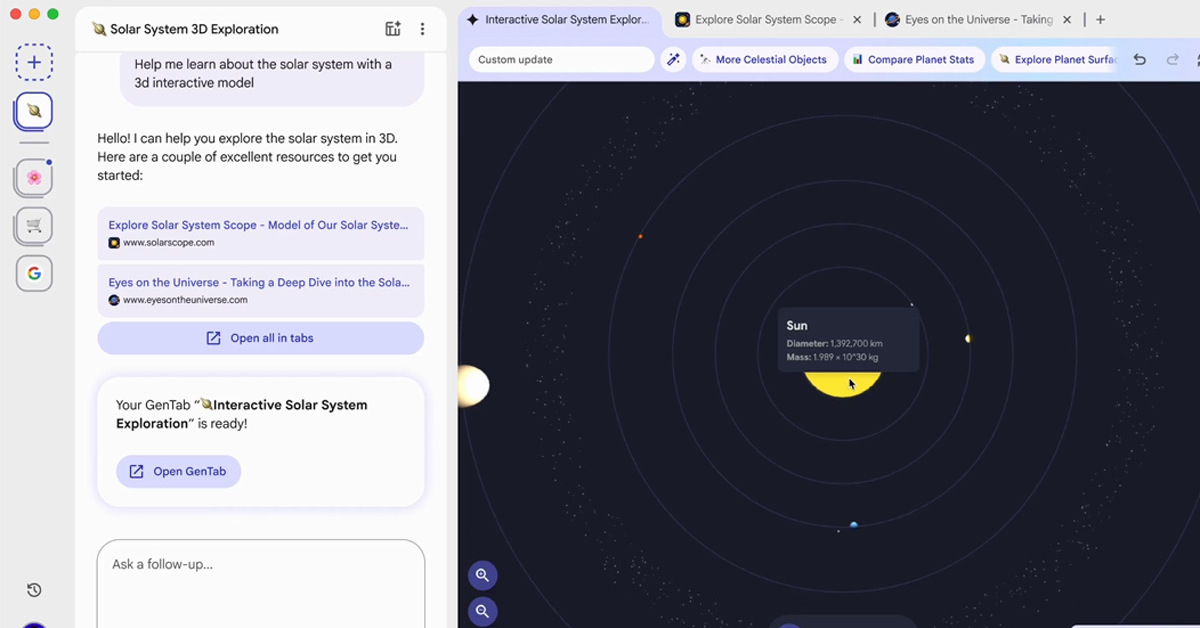
Google's experimental Disco browser, first unveiled in December 2025, has gained a new feature called GenTabs, built on the Gemini 3 model. GenTabs turns a user's open tabs and chat context into a purpose-built interactive web app rather than a pile of scattered tabs, aimed at multi-step tasks such as drafting a weekly meal plan, mapping a domestic travel itinerary, or tracking foreign-language listening practice. Users describe what they need in natural language instead of writing code, and Disco selects the tools and assembles the app on the fly, keeping links back to the original web sources. The feature is currently limited to macOS and gated behind a waitlist signup.
Google is positioning Disco and GenTabs as a separate "sandbox track" for rethinking browsing, apart from its main Search and Gemini app lines — a bet that the browser itself becomes a surface for disposable, task-specific software generated on demand rather than static pages or one-size-fits-all web apps. Per the AI Market Watch index, Google-related items in AMW's news pipeline reached roughly 240 in the past 90 days, up from about 170 in the prior period (name-matched over ingested sources only), one signal of how much product surface Google is now shipping across simultaneously.
For builders, GenTabs signals that Google sees generative, single-use app creation as a way to keep users and tasks inside its own browser rather than routing them to third-party tools or extensions. For investors, it's a reminder that distribution at the browser layer could pressure independent startups building similar "describe it, get an app" experiences — though the macOS-only, waitlist-gated rollout keeps the near-term competitive threat limited.