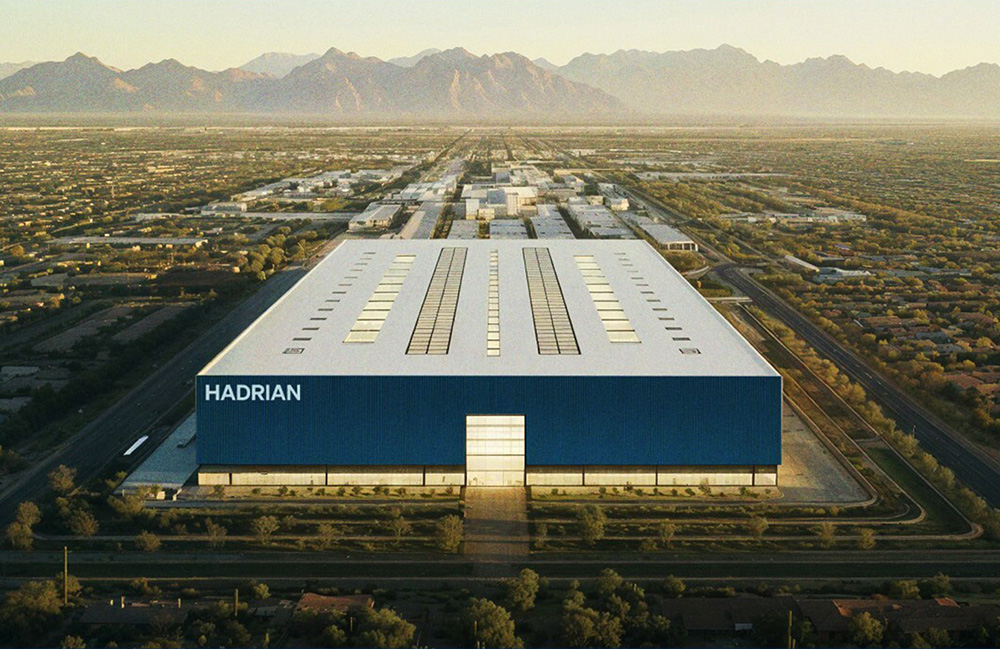
Hadrian, the Los Angeles-based automated defense manufacturing company, has raised $1.37 billion in...
The AMW Read
The $1.37B raise (explicitly stated) at a $7.87B valuation triggers cross.§D; it significantly updates the player map in robotics/defense and signals a structural capital shift.
Hadrian, the Los Angeles-based automated defense manufacturing company, has raised $1.37 billion in a Series D round co-led by WCM Investment Management, Washington Harbour Partners, Valor Equity Partners, 137 Ventures, and Baillie Gifford. The round, which values Hadrian at $7.87 billion, also attracted participation from 1789 Capital, Morgan Stanley Wealth Management, Apollo, T. Rowe Price, CapitalG, Andreessen Horowitz, Founders Fund, Lux Capital, Altimeter, Construct Capital, and existing investors. This follows Hadrian's $260 million Series C and brings its total funding to over $1.98 billion, per the AI Market Watch index, which tracks about 5,000 companies.
This is one of the largest private financings in the defense manufacturing and robotics sector, signaling a powerful convergence of AI-driven automation, national security priorities, and industrial policy. Hadrian's model—combining software, robotics, and vertically integrated manufacturing—directly addresses the U.S. push to rebuild domestic supply chains for aerospace and defense. The capital will fund new factories and expand production capabilities for rockets, satellites, aircraft, and naval systems, reflecting a broader trend where AI-native companies are becoming critical infrastructure for national security. The participation of major investors across public and private markets underscores confidence in this thesis, and the valuation validates the market's appetite for physical AI companies with government-aligned revenue streams.
For builders and investors: This signals that defense and aerospace are becoming a major growth vertical for AI and robotics startups, akin to the commercial cloud boom. Startups should explore partnering with or supplying Hadrian's Factory-as-a-Service model, which allows customers to outsource complete system production. Investors should note that while the sector is highly capital-intensive, the alignment with government spending and geopolitical tailwinds can support outsized valuations and rapid scaling. The involvement of firms like Washington Harbour Partners, which focuses on national security and aerospace, suggests a deep-pocketed investor base will continue to back similar ventures.