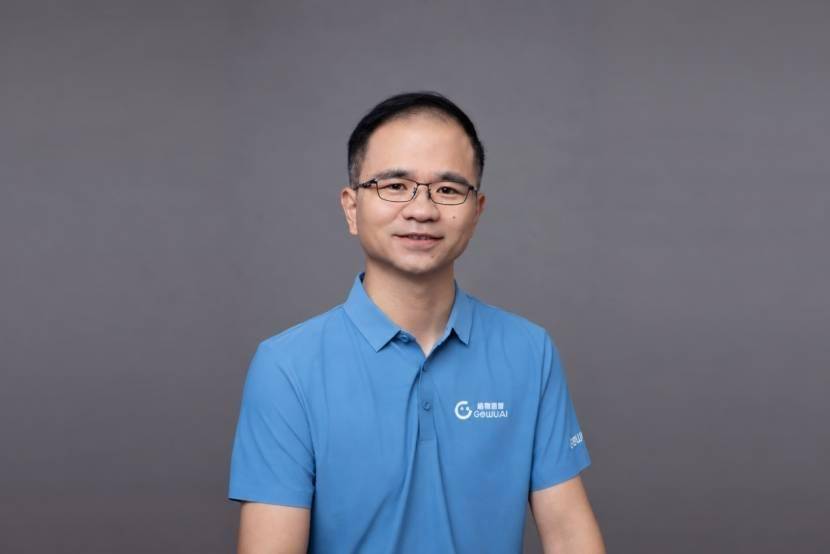
Gewu Tongzhi raises nearly RMB 100M to develop factory-focused robotic manipulation
The AMW Read
An early-stage entrant adds a tactile world-model approach to industrial manipulation, but pending PoC delivery and absent performance results limit its demonstrated impact.

Gewu Tongzhi raises nearly RMB 100M to develop factory-focused robotic manipulation
Hangzhou-based Gewu Tongzhi has raised nearly RMB 100 million in angel funding, HardKr reported. Founded in August 2026, the company is led by Cai Jia, a former Huawei automotive world-model leader. Investors include Peak Investment, Hongfu Asset, Hangzhou Capital and Hangzhou Talent Group. Proceeds will support world-model pretraining, hardware development, hiring and customer trials. The startup is pursuing joint proof-of-concept projects in textiles, optical modules and automotive components, with its first PoC delivery expected by year-end 2026.
The company sits in the emerging embodied-model layer, targeting contact-rich manipulation rather than a particular robot form factor. Its proposed approach combines a physical-inversion world model with a PSI physical self-evolution system: infer contact and force information from video, calibrate it against real tactile feedback, then use operating experience to improve manipulation policies. The market question is whether factory deployment can generate reusable learning that lowers the cost of serving subsequent workstations. The source provides no measured results establishing that transfer; reconstructed tactile data and broader generalization remain technical claims awaiting validation.
For investors and industrial buyers, the concrete checkpoint is the first customer acceptance test. Peak Investment has signed a strategic cooperation agreement focused on footwear manufacturing, where flexible materials and submillimeter precision create demanding requirements. Buyers should look for task success, cycle time, operating reliability and the effort required to adapt to another workstation. Cai identifies repeat purchases as the key commercial metric. That makes paid reuse a stronger test of the deployment-and-learning proposition than a successful demonstration alone.