Hong Kong Cyberport launches 3,000 PFLOPS AI supercomputer, $3.6B fund to boost Chinese AI globalization
The AMW Read
Novelty 2: Hong Kong Cyberport is a new entrant in the AI infrastructure segment with a large compute+fund package. Significance 3: This is a structural, cross-segment move that could alter the competitive dynamics of Chinese AI globalization and the hyperscaler-distribution moat.
Hong Kong Cyberport launches 3,000 PFLOPS AI supercomputer, $3.6B fund to boost Chinese AI globalization
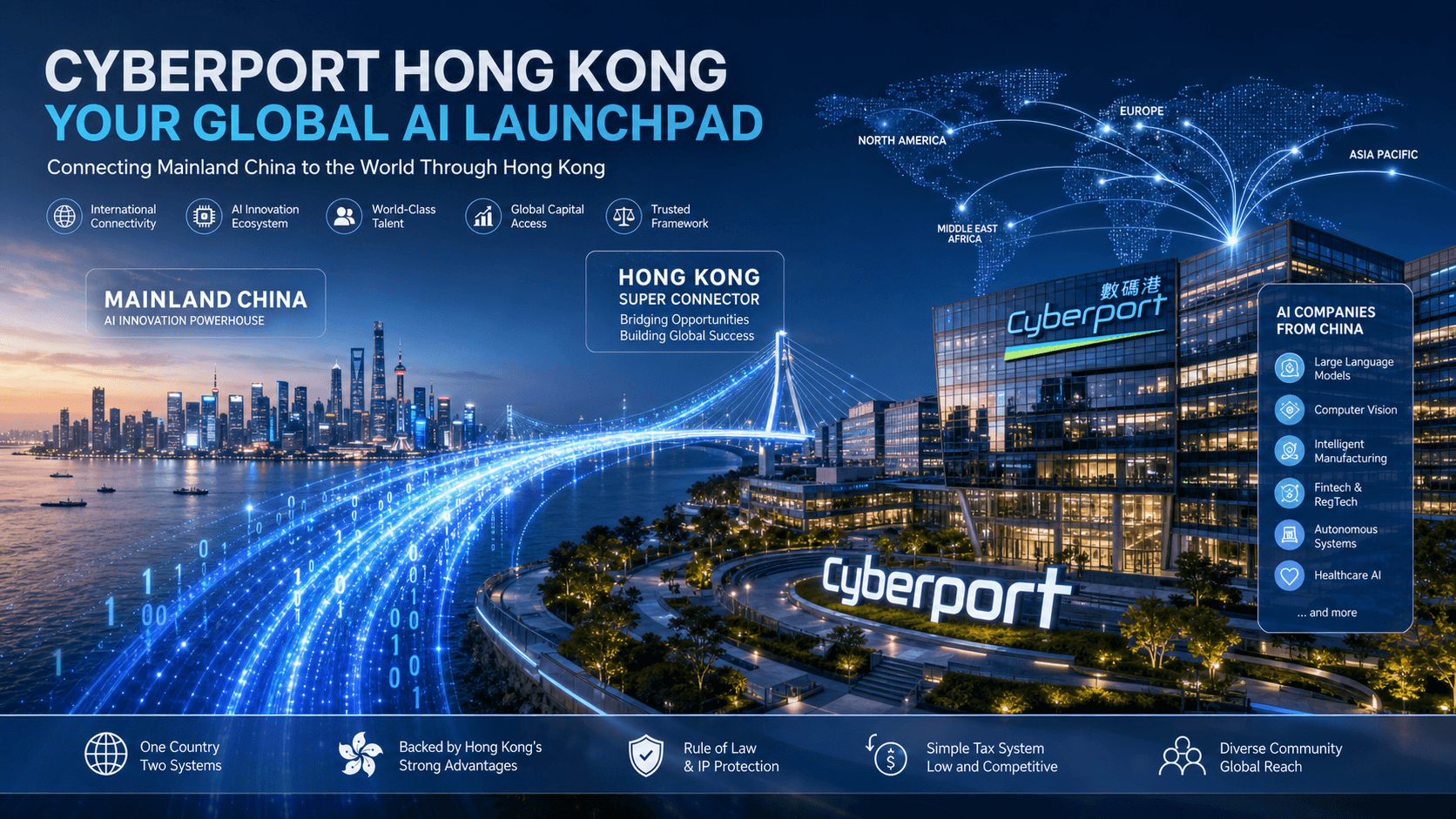
Hong Kong Cyberport, the city’s flagship digital technology hub, has activated a 3,000 PFLOPS AI supercomputing center and established a 30 billion HKD (~$3.6 billion) fund. The initiative is explicitly positioned as a springboard for Chinese AI companies expanding into global markets, combining massive compute infrastructure with dedicated capital to support cross-border deployment, standardization efforts, and market access for Chinese AI firms.
Why it matters: This event signals a new phase in the capital-compression arc for Chinese AI, where state-backed compute clusters and sovereign funds are being deployed not just for domestic development but as a platform for global expansion. The Cyberport model mirrors the hyperscaler-distribution moat pattern seen in the West — but with the Hong Kong SAR as a neutral, finance-friendly bridgehead. It also updates the geopolitical frame around Chinese AI globalization: rather than relying solely on export-controlled chips, Beijing is building compute sovereignty in a jurisdiction with looser capital controls and international market linkages.
Grounded expert take: The 3,000 PFLOPS capacity places Cyberport’s facility among the top-tier AI compute centers globally, comparable to some of the largest U.S. and Chinese cloud clusters. The co-location of a $3.6B fund with a dedicated supercomputer creates a vertically integrated model — compute-as-a-service plus capital — that lowers the barrier for Chinese AI startups to serve international customers while staying within a regulatory framework acceptable to both Beijing and Western partners. This is a structural move that could reshape competitive dynamics: if Chinese AI companies can now tap HK-based compute and funding without the same export-control friction, the hyperscaler-distribution moat of Western labs may narrow.