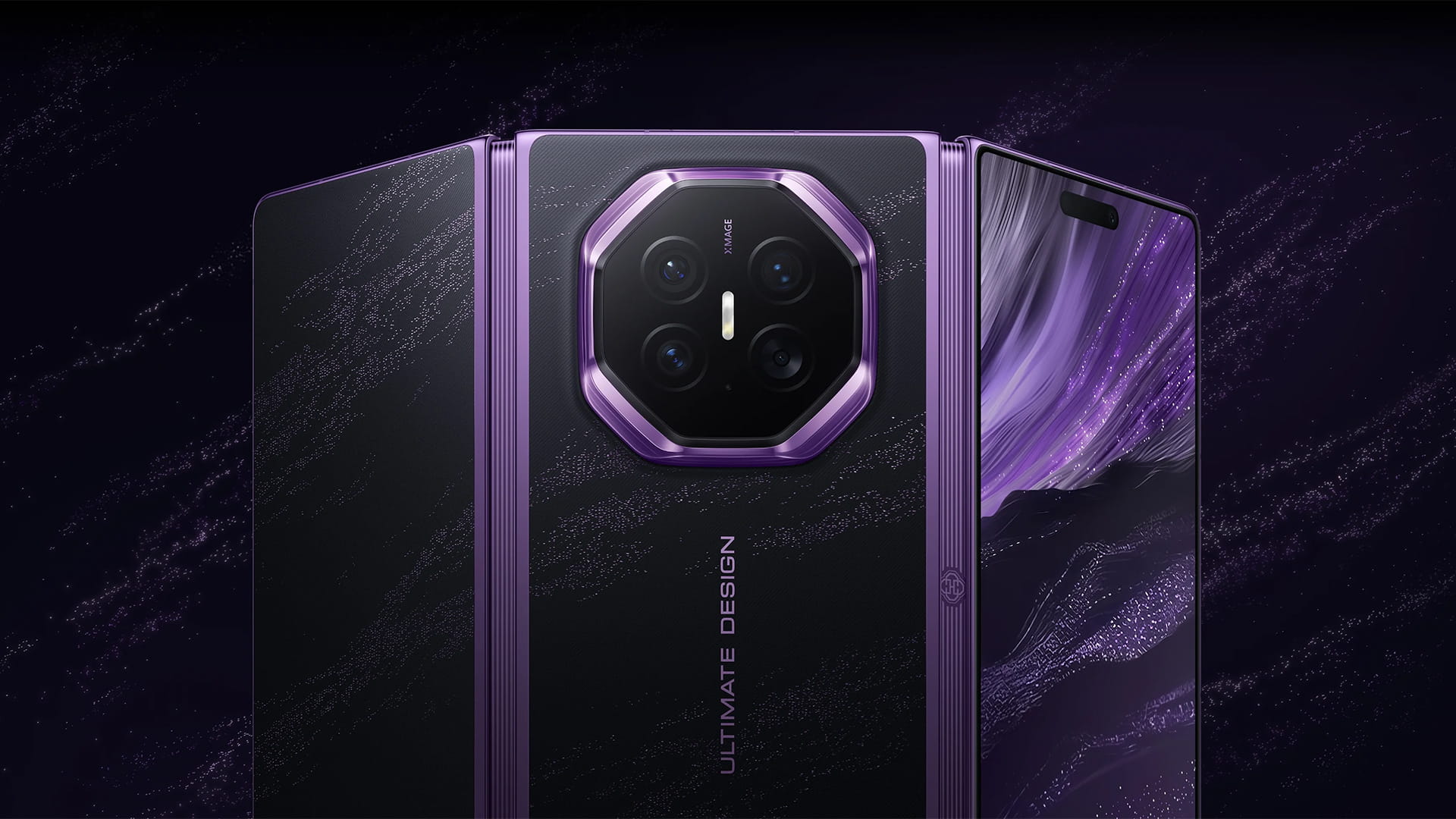
Huawei launches Kirin 9050 Pro, first commercial chip on its Tau scaling architecture, in Mate XT 2 trifold phone.
The AMW Read
First commercial device on Huawei's LogicFolding/Tau scaling chip architecture, a Moore's-law alternative developed partly to offset export-controlled lithography access.
Huawei launches Kirin 9050 Pro, first commercial chip on its Tau scaling architecture, in Mate XT 2 trifold phone.
Huawei unveiled the Mate XT 2 trifold smartphone on September 7, powered by the new Kirin 9050 Pro processor — the first commercial chip built on the company's Tau scaling law via a LogicFolding architecture that stacks computing logic across two active layers instead of shrinking transistors further. Huawei says the design shortens signal paths and lifts overall device performance 42% over the prior-generation Mate XT while improving energy efficiency. The chip's Da Vinci NPU runs Huawei's Pangu 30B-A2B model on-device for functions such as photo album management without relying on cloud computing, and its Maleoon GPU adds hardware-level ray tracing at up to 50 million rays per second.
Tau scaling, which Huawei proposed in May, is a direct response to the limits conventional transistor scaling hits without access to leading-edge lithography equipment, which remains restricted under US export controls. By restructuring how signals traverse the chip rather than shrinking transistor geometry, Huawei is testing whether architectural innovation can substitute for process-node access — a question with direct bearing on how Chinese chipmakers compete under continued restrictions. The launch lands as Huawei's smartphone business regains ground: it topped China's smartphone market in 2025 and held over 70% of the domestic foldable segment, with the Mate XT 2 arriving amid intensifying premium-foldable competition.
For builders and investors tracking AI silicon, the near-term signal is manufacturing risk more than the phone itself: multilayer logic architectures like LogicFolding require precise bonding and interconnection between active silicon layers, an unproven challenge at volume. If Huawei industrializes LogicFolding across its planned fall/winter 2026 Kirin lineup, it sets a template — architectural scaling as a substitute for node scaling — that other export-restricted chipmakers may look to replicate.