Hyundai Motor Group maps Nvidia-first, then Atria AI, path to AV mass production
The AMW Read
Concrete 2028 Nvidia then 2029 Atria AI dual-track OEM production roadmap meaningfully updates the physical-AI player map at segment scale without a cross-substrate headline.
Hyundai Motor Group maps Nvidia-first, then Atria AI, path to AV mass production
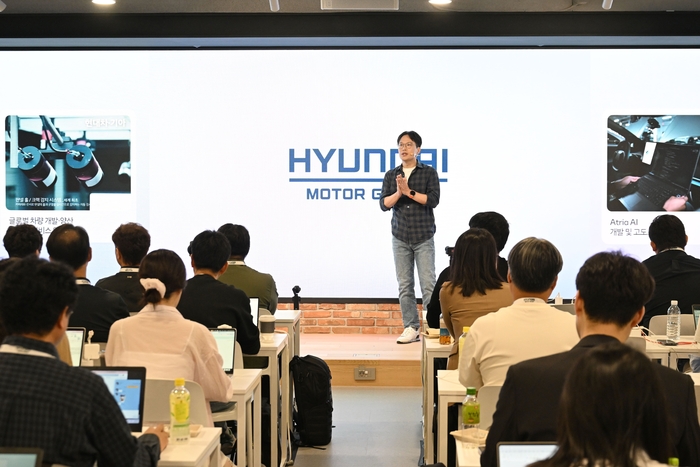
Hyundai Motor Group detailed a two-track autonomous driving commercialization plan at a media day at 42dot headquarters in Seongnam. It will integrate Nvidia’s vehicle AI computing platform and autonomous-driving software into its software-defined vehicle architecture, aiming for Level 2+ features on production cars in the first half of 2028 and Level 2++ in the second half. In parallel, Hyundai-Kia AVP and 42dot will keep refining their jointly developed end-to-end model Atria AI for Level 2++ production vehicles in the second half of 2029, absorbing fleet know-how and real-vehicle data from the Nvidia path into the in-house stack. Hardware plans rest on Nvidia Drive Hyperion 10 sensor unification—ten cameras, one forward radar, and twelve ultrasonic sensors on 2028 cars—with Nvidia Drive Orin X under review as the application processor to support seven to eight or more years of software updates.
In the AI market, a volume OEM is buying calendar time with Nvidia silicon and software while building an owned E2E driving model and a data flywheel tied to more than seven million annual global production units. That puts the contest on learning speed and fleet-scale feedback, not one-shot feature parity, and treats Nvidia as a bridge to production rather than the permanent stack. Per the AI Market Watch index, Hyundai Motor Group coverage rose to 3 matching items in the last 90 days from 0 in the prior window across name-matched pipeline sources, marking a sharp pickup in AV-AI signal from the group.
Builders and investors should watch whether the 2028 Nvidia-equipped fleet actually closes the data loop into Atria AI, and whether year-end Level 4 SDV pilots with Korea’s Ministry of Land in Gwangju plus 42dot’s new vision-language-action work turn the Level 2++ roadmap into a credible path toward higher autonomy. The concrete implication is that AV differentiation is shifting from who ships assisted driving first to who can industrialize dual-track supplier silicon plus proprietary models at OEM scale.