Meta launches Muse, a consumer AI agent that acts on users' behalf across email, payments, and shopping.
The AMW Read
Meta's first full public consumer-agent launch, following weeks of Hatch testing and the Muse Spark/Glimmer model cadence, is a significant agentic-AI player-map update but doesn't resolve an open debate.
Meta launches Muse, a consumer AI agent that acts on users' behalf across email, payments, and shopping.
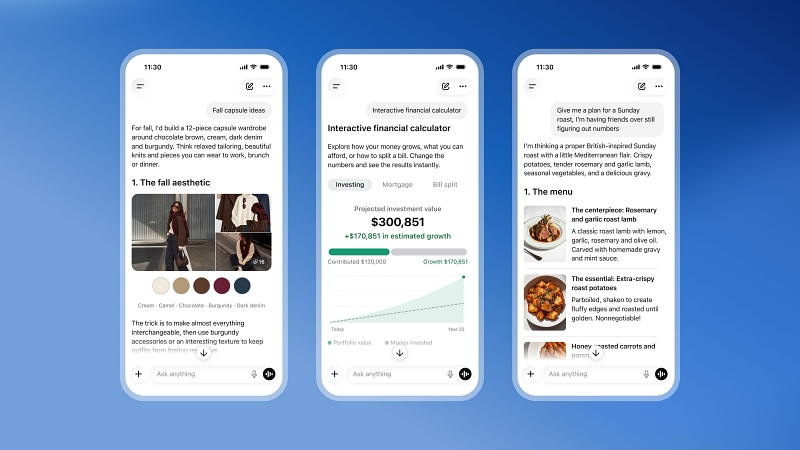
Meta introduced Muse, a personal AI agent for U.S. consumers built on its Muse Spark model, days after the Muse Spark 1.3 release. Muse connects to a user's own apps one at a time — email, calendars, health and fitness apps, smart home controls, dining, shopping, and music — to send emails, book travel, fill out forms, and turn recipe posts into grocery lists. Purchases route through Link by Stripe for checkout, with Shopify's Shop Pay and 1Password integrations coming soon. The agent runs on the web at muse.ai, in iOS and Android apps, and inside WhatsApp chats, with plans to extend to Meta's AI glasses. It's free to start, with paid tiers at $20/month (Power) and $100/month (Maximum), though Meta expects most users to stay free.
Muse arrives less than two weeks after Meta's $18 billion multistate settlement over social media harms, and the trust bar for an agent touching email, payments, and health data is higher than anything the company has shipped before. Meta's answer is architectural: Muse runs inside a dedicated "Muse Secure VM" with its own browser, isolated at the system level from a separate Sentinel agent, and Meta says Muse doesn't share conversations with its ads systems — claims that will need independent security review. The launch follows internal testing of a consumer agent called Hatch and the August release of the open-weight Muse Glimmer model, showing Meta assembling model, distribution, and payment pieces into one product line. It places Meta alongside Google's Gemini Spark and Anthropic's Claude Cowork in the push toward agents that complete tasks rather than just answer questions.
For builders, Muse's browser-based fallback connector — used when a target service has no public API — is a template worth watching, since it sidesteps needing every integration partner to ship an API first. For investors, the tiered pricing and Stripe-routed checkout make Muse a real test of whether consumers will let an agent hold a payment method and act unsupervised; if adoption holds despite the settlement overhang, it strengthens the case that distribution scale matters as much as model benchmarks in winning the consumer agent market.