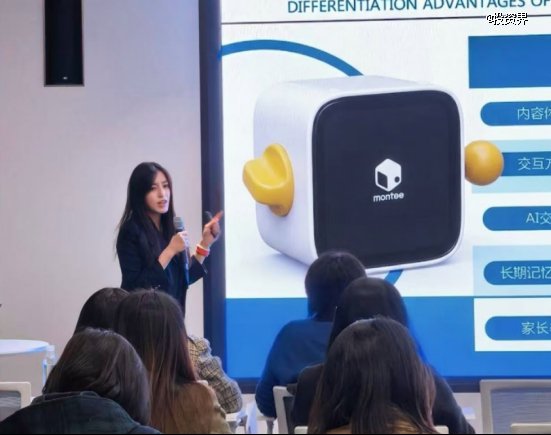
MONTEE AI closes first round funding led by Xuhui Capital
The AMW Read
Incremental funding announcement for a new entrant in the children's edtech AI hardware space; adds to segment's player map but does not shift the substrate.

MONTEE AI closes first round funding led by Xuhui Capital
Shanghai-based MONTEE AI, founded in 2025 by Columbia Business School alumna Gui Xiaohuan, has completed its first funding round led by Xuhui Capital with participation from an industry investor. The company develops a plush-toy-interactive AI story machine that uses NFC-enabled dolls to trigger personalized, LLM-driven audio stories. The founding team hails from Google, ByteDance, and Ivy League schools, leveraging the founder's family's 50-year catalog of over 20,000 copyrighted Chinese children's content. Funds will be used for product R&D, hardware manufacturing, and cross-strait marketing.
Why it matters: MONTEE AI is entering the fast-growing AI hardware toy category, following the success of Toniebox (€5B+ revenue) and Yoto (€900M). Its differentiation lies in moving from one-way playback to interactive dialogue powered by large language models, with long-term memory to track each child's development. The company has secured licenses with Sanrio and Baby Shark, and has piloted in 20 kindergartens across mainland China and Taiwan. This signals a shift from pre-recorded content to dynamic AI storytelling, potentially disrupting children's edutainment segment by combining proprietary content moat with LLM interaction.
Grounded expert take: MONTEE AI's key strategic assets are its family's deep Chinese children's content library and a cross-functional team with experience from top tech firms. The subscription model (hardware + quarterly doll drops + digital content + monthly boxes) aims for recurring revenue. The company plans to launch in late 2026 in both markets, targeting ¥10M+ revenue. International expansion to Southeast Asia, Europe, and North America is on the roadmap. Key risks include high competition from incumbents (e.g., Chinese smart speakers, general-purpose tablets) and the challenge of maintaining engagement beyond initial novelty. The round size is undisclosed, but it is likely a seed or Series A under $10M, typical for early hardware.