Motif Technologies raises $17M Series B for proprietary Korean AI foundation models
The AMW Read
Modest Series B for a new entrant in a non-frontier market; confirms known trajectory of national AI sovereignty pushes without altering competitive dynamics.

Motif Technologies raises $17M Series B for proprietary Korean AI foundation models
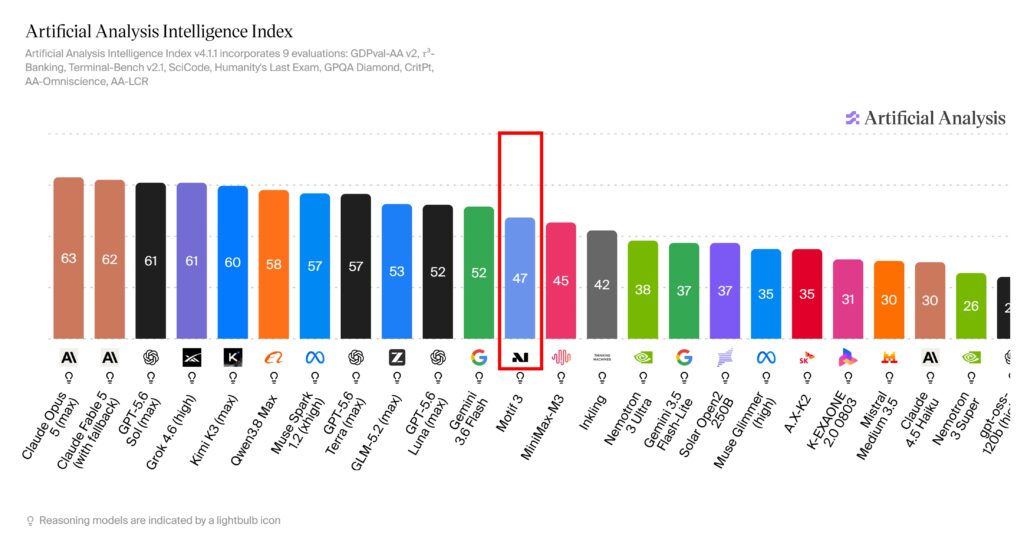
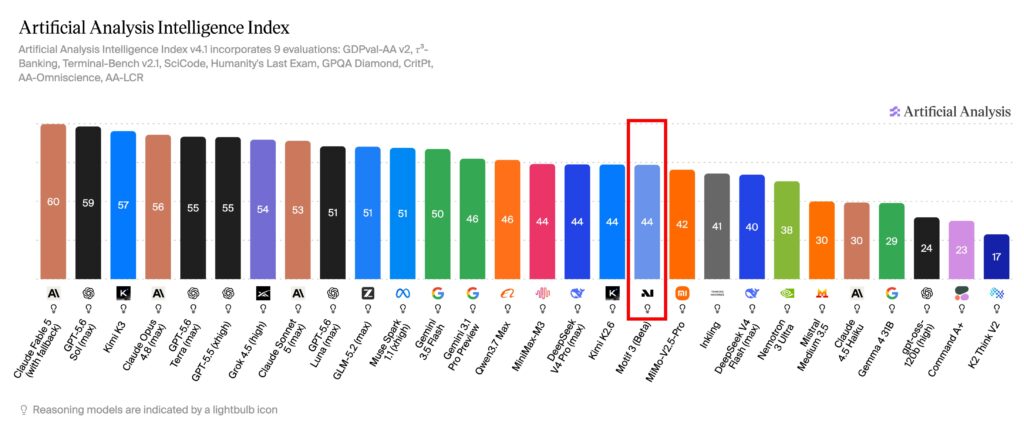
Korean AI startup Motif Technologies has raised 24 billion won (~$17M) in a Series B round. Existing investors Nice Investment Partners and Nautilus Investment participated alongside new backers Dito Investment and Forest Ventures. The company is developing proprietary foundation models with a design philosophy that does not borrow from foreign open-source architectures. It was selected in February for South Korea's Ministry of Science and ICT's 'Independent AI Foundation Model' project as a core team, collaborating with 17 institutions including Seoul National University, KAIST, and Samil PwC to build a 300B-parameter reasoning large language model (LLM), with plans to scale to a 310B vision-language model and a 320B vision-language-action model.
Why it matters: Motif's raise underscores a recurring 'national AI sovereignty' pattern, where smaller markets fund homegrown foundation model efforts to reduce dependence on US and Chinese open-source ecosystems. South Korea is positioning domestic labs as strategic assets, mirroring similar state-backed pushes in Japan and Europe. The company's explicit rejection of foreign model architectures as a design principle is a notable differentiator in a segment where most players fine-tune existing open-weight models. This capital injection is modest by global standards — far below the $500M threshold for Capital Cycle signaling — but meaningful for Korea's concentrated AI ecosystem, where it could consolidate talent and compute resources behind a single independent player.
Expert take: Motif's bet on proprietary architecture is a high-risk, high-differentiation strategy. While most foundation model startups have converged on fine-tuning Llama or Qwen variants, building from scratch requires massive compute and data investment. The government backing and multi-institutional consortium provide credibility, but the 300B-parameter scale is already behind frontier labs. Success depends on whether Motif can carve out specialized enterprise niches in Korean-language workflows where foreign models underperform, and whether its VLA roadmap achieves deployable robotics use cases. For now, this is an incremental but strategically interesting update to the global foundation model landscape — a proof point that the 'independent AI' policy frame remains active outside the US-China duopoly.