Motion raises $2M to deploy factory humanoids on a monthly service model
The AMW Read
Early Benelux humanoid RaaS entrant updates the robotics player map with a rent-not-sell GTM; $2M pre-seed is incremental and sub-segment, not structural.

Motion raises $2M to deploy factory humanoids on a monthly service model
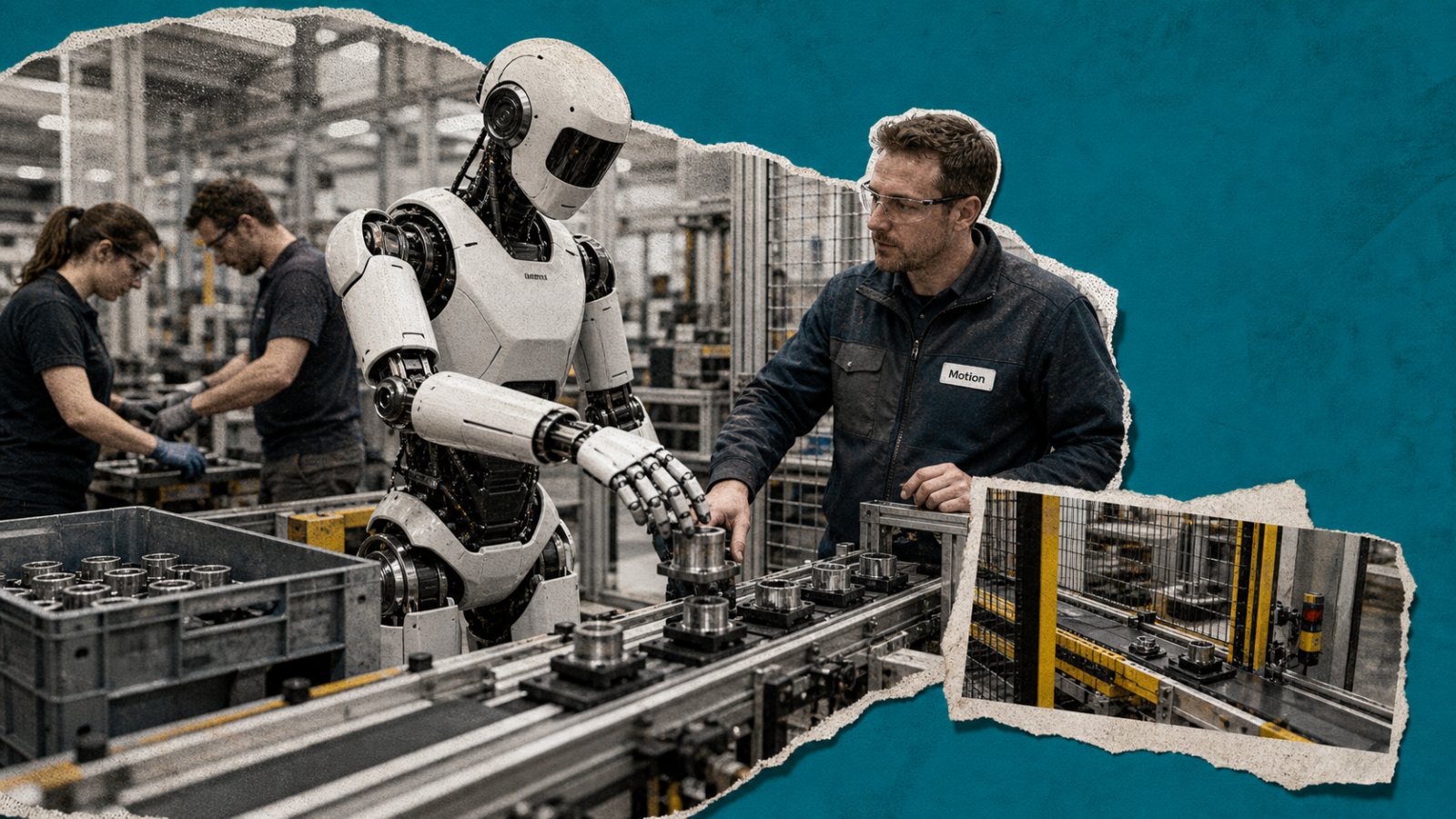
Brussels-based Motion closed a $2 million pre-seed round led by Extantia Capital, with Norrsken Evolve participating, according to Tech.eu coverage dated August 27, 2026. Transportmedia valued the raise at roughly €1.72 million. The capital is earmarked to push five live Belgian pilots toward commercial deployment, grow the team, and expand the robot fleet, with initial go-to-market focus on Benelux industrial, warehousing, and logistics sites. Motion does not sell a branded machine. It charges a recurring fee for a deployed robot plus the operating bundle: hardware selection, task training, IT integration, fleet management, financing, insurance, compliance, and maintenance. Engineers assess a production line, pick wheeled or legged hardware from third-party makers, train the unit for tasks such as loading goods, packaging handling, and placing components on conveyors, then manage the fleet. No public monthly price, contract length, or utilization terms were disclosed.
The raise matters less as another humanoid funding headline and more as an early European bet that factories will buy outcomes and uptime rather than CapEx robots. Capital intensity and multi-vendor coordination usually sit with the buyer; Motion absorbs financing, depreciation, and service coordination in exchange for utilization-driven unit economics. Hardware agnosticism is the strategic claim: if deployments teach which platforms fail under shift work and which integrations stall, the company can swap machines without forcing customers to rebuild commercial arrangements. That learning loop is still unproven. The five pilots remain live trials, not named large-scale production installs, and public metrics on install time, uptime, task success, and renewals are absent.
For builders and investors, the near-term diligence is utilization and repeatable deployment cost, not humanoid form-factor hype. Watch whether Motion can standardize assessment-to-uptime playbooks across manufacturers fast enough that each new site gets cheaper, or whether every factory remains a bespoke integration. Note also name collision risk: a separately tracked productivity firm shares the Motion label in broader indexes, so treat this Brussels robotics entity as distinct when scoring funding history.
#Motion #HumanoidRobots #RoboticsAsAService #FactoryAutomation #PhysicalAI #Benelux