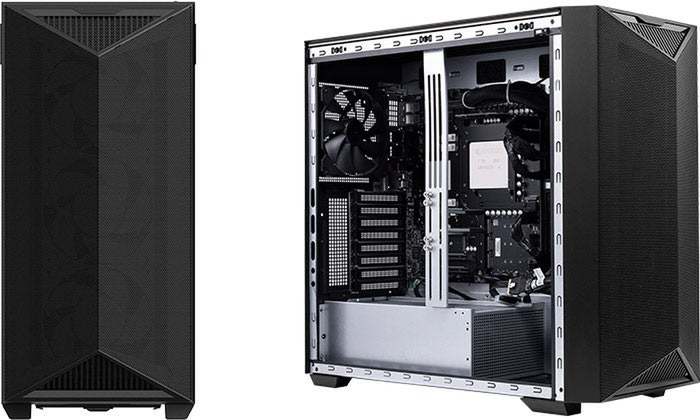
MSI launches XpertStation WS300 AI workstation with NVIDIA GB300 Superchip for on-premise enterprise AI
The AMW Read
MSI joins the existing roster of NVIDIA DGX Station OEM partners with a desk-side Blackwell Ultra workstation, extending a known on-prem enterprise AI hardware pattern rather than introducing new capability.

MSI launches XpertStation WS300 AI workstation with NVIDIA GB300 Superchip for on-premise enterprise AI
Japanese distributor Ask Corporation began selling MSI's XpertStation WS300 on September 2, a tower AI workstation built on the NVIDIA DGX Station platform. The system pairs a 72-core Grace Neoverse V2 CPU with a single Blackwell Ultra GPU in the GB300 Grace Blackwell Ultra Desktop Superchip, delivering up to 748GB of coherent memory (496GB LPDDR5X on the CPU side, 252GB HBM3e on the GPU side) plus NVIDIA ConnectX-8 SuperNIC networking at 400G-class speeds. It also adds PCIe 5.0 x16 expansion, NVMe M.2 storage, an ASPEED AST2600 BMC with IPMI 2.0/Redfish remote management, and optional hardware root-of-trust security.
The launch extends NVIDIA's DGX Station reference design to another PC-industry partner, positioning desk-side hardware as an on-ramp for enterprises that want to run AI development, inference, and agentic workloads without committing to full data-center-scale clusters. MSI's activity around enterprise AI hardware has picked up: the AI Market Watch index logged 13 MSI-related items in the past 90 days versus 2 in the prior 90 (name-matched over ingested sources only, not a full picture of the company's output), consistent with PC OEMs racing to capture enterprise AI budgets before workloads migrate to cloud or dedicated infrastructure.
For enterprise buyers, a single workstation offering roughly 748GB of coherent memory narrows the gap between prototyping and production, letting teams validate models, proofs-of-concept, and physical-AI pipelines locally before committing to larger on-prem or cloud spend. For MSI and rival PC vendors, DGX Station-class products bet that distribution and system-integration relationships — not model or chip IP — capture the enterprise on-ramp as NVIDIA standardizes this reference design across OEMs.