Naver Proposes French-Powered European AI Factory, Signs MOU With France's INA
The AMW Read
Naver extends its known France AI strategy with an unfinanced compute-infrastructure proposal, alongside a concrete but sub-segment INA archive-AI MOU.
Naver Proposes French-Powered European AI Factory, Signs MOU With France's INA
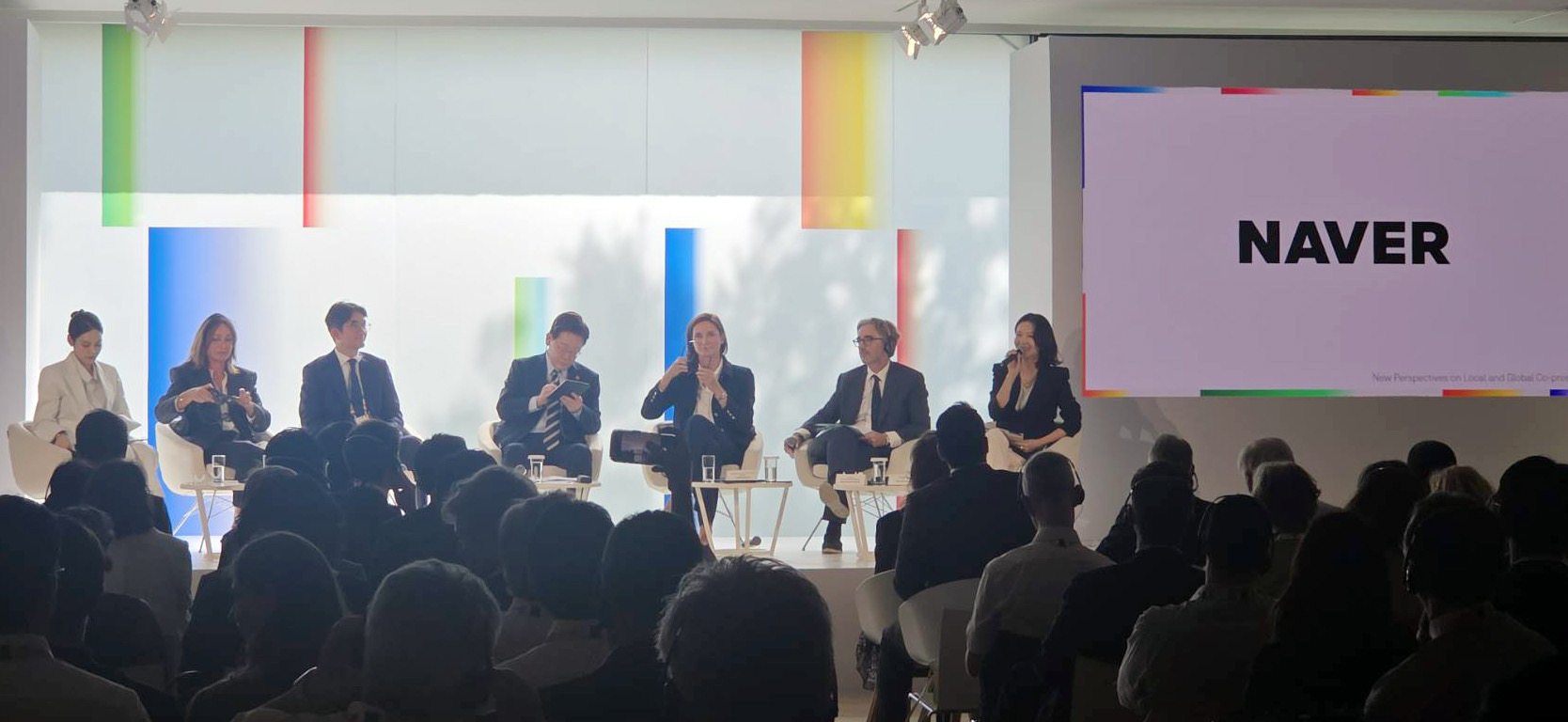
At a Korea-France business roundtable in Paris on September 8, Naver CEO Choi Soo-yeon proposed building a European "AI factory" data center in France, citing the country's nuclear-heavy, stable electricity supply as a fit for Naver's AI infrastructure experience. The proposal follows Naver's September 3 announcement of a 1-gigawatt-plus AI factory with Nvidia and Brookfield. Choi also proposed air-gapped, institution-specific AI models like Naver's existing BOKI (Bank of Korea, financial AI) and Hy-NuRI (Korea Hydro & Nuclear Power, nuclear AI) projects, plus pairing Naver Webtoon's catalog and its Toon Radar anti-piracy tool with French creators; Naver Webtoon has published 70-plus original titles in France with over 2 million readers. Naver also signed an MOU with France's National Audiovisual Institute (INA) to apply its AI to organize INA's archive, and showcased the $100 million IP Adaptation Fund it runs with Webtoon Entertainment to convert webtoon IP into film, animation, and games, at the September 7 Lumière Summit.
The pitch extends a France strategy Naver has run since opening Naver Labs Europe in Grenoble for robotics and multimodal foundation-model research, and since its 2024 investment in Mistral AI on manufacturing-focused sovereign AI. Tying a proposed data center to France's nuclear baseload power reflects a broader pattern of AI infrastructure buildout chasing stable, low-carbon electricity rather than just chip supply, and positions Naver as a non-US, non-Chinese vendor offering sovereign AI infrastructure to European governments and enterprises wary of dependence on American hyperscalers.
For builders and investors, the more concrete near-term signal is the INA archive deal and the IP Adaptation Fund, both live commitments rather than proposals; the AI factory itself remains a pitch with no financing, capacity, or timeline attached, so its materialization depends on French government and utility buy-in that has not yet been secured.