NetApp introduces Novus to address AI factory storage bottlenecks
The AMW Read
Novus incrementally expands an established storage vendor's AI infrastructure offering, with segment-level implications for GPU utilization if its stated performance is demonstrated.

NetApp introduces Novus to address AI factory storage bottlenecks
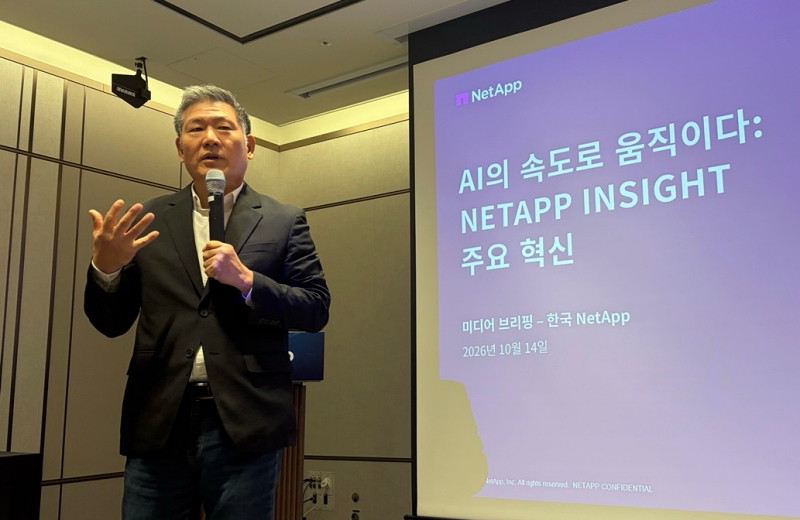
NetApp unveiled Novus, a storage architecture designed to supply data to large GPU deployments, at an October 14 briefing in South Korea. Available to order, the initial configuration combines Novus Data Director metadata software on Supermicro infrastructure with ONTAP data services on AFF A90 systems. NetApp says the architecture is designed for throughput above 100 TB/s and zettabyte-scale capacity within a single namespace. It separates metadata from the data path and uses parallel NFS, or pNFS, to scale metadata handling, bandwidth and capacity independently.
The launch positions enterprise storage as a constraint on AI infrastructure economics: GPU capacity delivers less value when workloads wait for data. Novus targets neocloud and GPU-as-a-Service providers, where concurrent access and tenant isolation must coexist with high throughput. Its approach preserves ONTAP data services while changing how clients locate and access files. The reported capacity and throughput are design claims; the article supplies no customer deployment results or independent benchmarks demonstrating those levels.
For infrastructure builders, the concrete procurement question is whether Novus improves GPU utilization under their own access patterns while retaining tenant isolation and data protection. Buyers should validate concurrent file access, metadata performance and sustained throughput before treating the advertised scale as an operating baseline. NetApp also announced broader metadata discovery through its AI Data Engine and human-supervised autonomous storage operations through NetApp Console, extending its pitch from data delivery to governing and operating distributed AI data.