NTT Data launches AI agent for product planning that generates concepts in 150 seconds
The AMW Read
Incremental product launch by established systems integrator; adds a new vertical agent to the market but does not fundamentally alter competitive dynamics.
NTT Data launches AI agent for product planning that generates concepts in 150 seconds
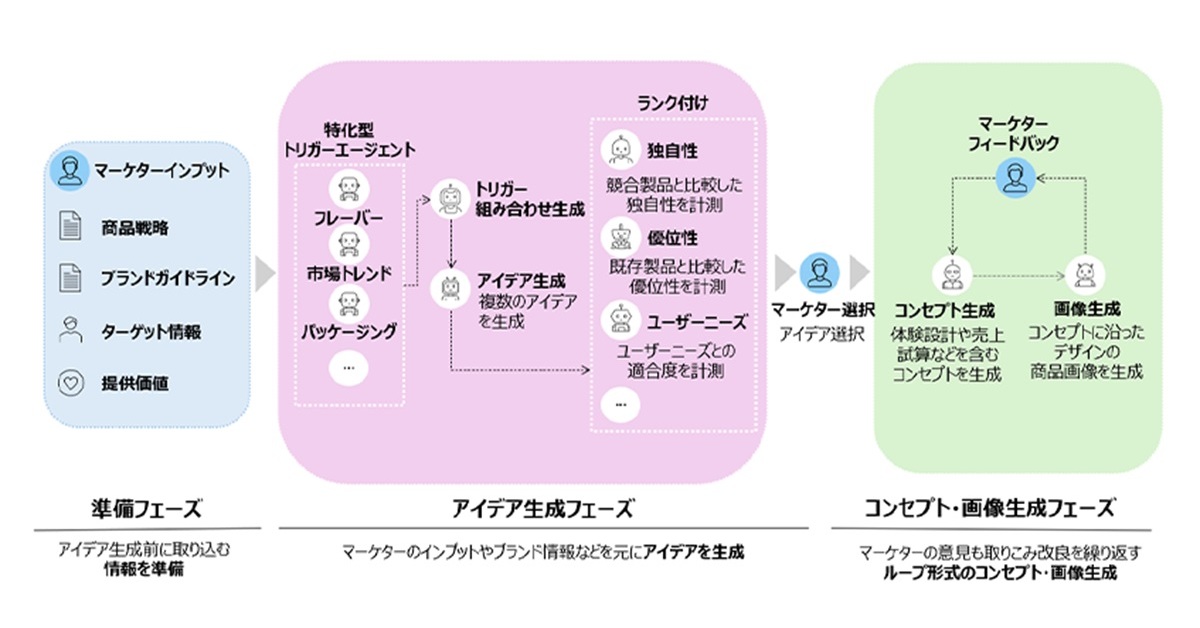
NTT Data announced on April 23, 2026, a new AI agent service targeting the food, beverage, and pharmaceutical industries, with launch planned for July 2026. The agent automates product planning from strategy to concept generation, producing new product concepts in 150 seconds. The service includes market analysis, competitive comparison, and visual assets, and integrates NTT Data’s group AI technologies including RAG and multi-agent orchestration. The process involves three stages: structuring product strategy and brand identity, generating ideas scored by feasibility and customer needs, and creating final concept documents for user refinement.
Why it matters: This launch exemplifies the rapid enterprise adoption of domain-specific AI agents, a recurring pattern where incumbents like NTT Data package generative AI into verticalized services to defend and expand their consulting and systems integration footholds. The product planning automation targets a high-value, time-intensive process traditionally taking 6-9 months, compressing it to minutes. This signals a potential shift in the competitive dynamics of the $X billion product consulting market, where speed of concept generation becomes a new differentiator.
Expert take: The news updates the player map for enterprise AI agents, specifically adding a vertical agent for product planning in regulated industries. While the speed claim is impressive, the real test will be adoption and integration with existing enterprise workflows, especially in pharma where regulatory compliance is paramount. The use of industry-specific knowledge (e.g., brand guidelines, target segments) as part of the agent's input suggests NTT Data is betting on proprietary data and domain expertise as a moat against generic AI tools. This aligns with the pattern of hyperscaler-distribution, where service giants embed AI into existing client relationships.


