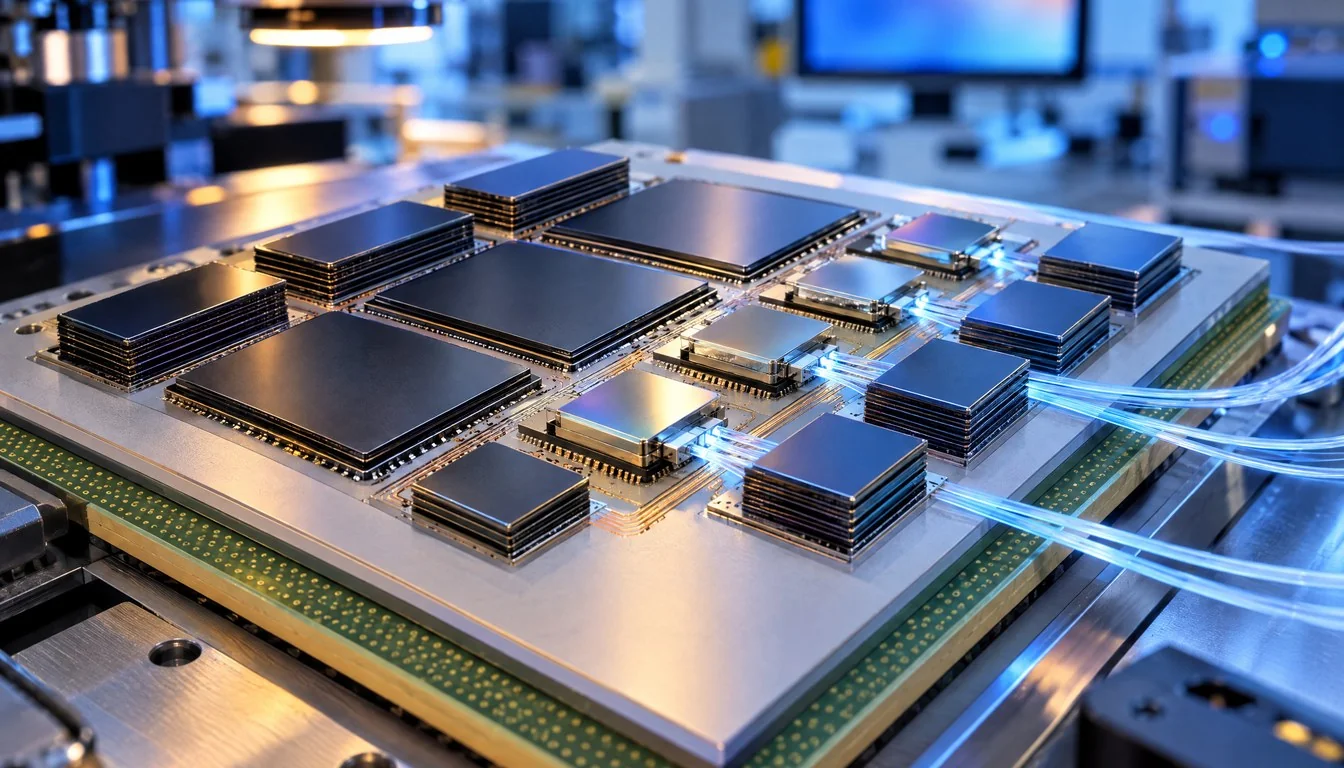
NVIDIA tests optics-on-interposer design for lower-power AI networking
The AMW Read
The prototype updates NVIDIA's networking hardware approach, but undisclosed performance and availability limit its demonstrated impact.

NVIDIA tests optics-on-interposer design for lower-power AI networking
NVIDIA presented a research-stage optics-on-interposer prototype at SEMICON West 2026, according to reporting cited by Shattered. The design places optical engines on the silicon interposer alongside computing chips, removing the organic substrate from the electrical signal path. Dense wavelength-division multiplexing was also reported alongside the prototype. The available reporting does not establish a commercialization timeline, link speeds, engine counts, prices, or production quantities.
The prototype addresses a constraint in AI infrastructure: accelerators need to exchange data across high-bandwidth links without consuming excessive power. Placing optical engines closer to compute dies could shorten electrical connections and increase bandwidth density. That makes the design relevant to NVIDIA's wider networking position, but the source provides no prototype specifications that establish the size of any efficiency gain. The report also extends AI Market Watch's recent coverage of NVIDIA's Vera Rubin rack designs, where networking and facility requirements remain deployment concerns.
For builders and investors, the distinction between a prototype and a deployable product is central. The next evidence to assess would be measured link performance and power consumption, followed by manufacturing and availability details. Until those are disclosed, the design is a potential direction for AI networking rather than a basis for estimating system costs or near-term adoption.