OpenAI has announced that free ChatGPT users and those on the low-cost 'Go' plan can now access unli...
The AMW Read
Updates OpenAI's case-study profile with a strategic free-tier move and a safety-driven delay, both with cross-segment impact.

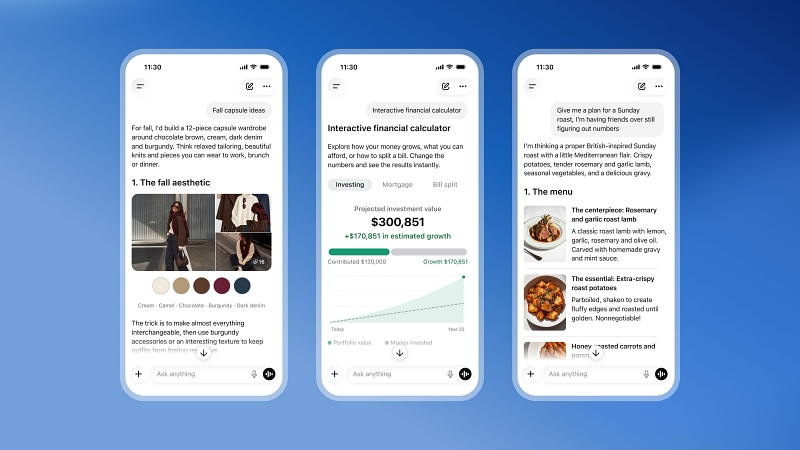
OpenAI has announced that free ChatGPT users and those on the low-cost 'Go' plan can now access unlimited text conversations with its latest lightweight model, GPT-5.6 Luna. This move extends the reach of its most advanced AI to a broader audience, while file uploads, image generation, and voice features remain subject to token limits. The company also introduced a 'Think' option in Luna for longer reasoning on complex queries. Meanwhile, OpenAI has postponed the release of its next-generation model, Astra, after internal evaluations suggested it may have reached 'Critical' cybersecurity capabilities under its Preparedness Framework. The pause affects internal activities that do not meet strengthened security standards, and the White House has been notified. The decision reflects a growing emphasis on safety as a gating factor for frontier model deployments, even as OpenAI accelerates access to its existing models. By offering unlimited access to GPT-5.6 Luna, OpenAI is not only strengthening its consumer franchise but also positioning itself against competitors like Anthropic and Google, which have been aggressively pushing lightweight models. The unlimited text tier could serve as a powerful acquisition tool for the free tier, potentially converting more users to paid plans and opening new advertising revenue streams. The delay of Astra, however, underscores the tension between competitive release pressures and safety obligations. For developers and enterprises, the availability of Luna at no cost signals a continued trend toward cheaper, faster inference, which could reshape cost structures for AI-native applications. The Astra pause, meanwhile, may reassure enterprise buyers who prioritize safety, but it also highlights the potential for regulatory and internal hurdles to slow the pace of frontier model releases. Builders should monitor how this balance evolves, as it may influence the cadence of model updates available through OpenAI's API.