OpenAI teases dedicated Codex hardware macro pad for developers
The AMW Read
Novelty 2: OpenAI entering branded hardware for coding agent is a meaningful extension of its product line beyond software. Significance 2: Impacts the AI coding segment by introducing a physical accessory that deepens ecosystem lock-in and signals maturity of agentic workflows.
OpenAI teases dedicated Codex hardware macro pad for developers
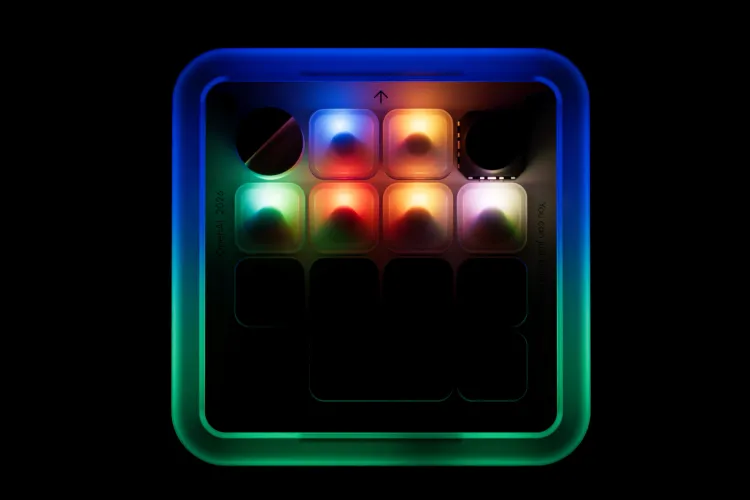
OpenAI has revealed its first dedicated hardware for the Codex AI coding agent: a macro pad developed in partnership with Canadian hardware startup Work Louder. The device, teased via X and shown at the AI Engineer World Fair, resembles Work Louder's Creator Micro 2 — a 13-key pad with joystick and touch sensor. It is designed to execute Codex shortcuts such as code generation, error fixing, and version restoration with a single button press, reducing the need to switch between an IDE and ChatGPT. The product is slated for a July 15 release and is separate from the AI device being developed by former Apple design chief Jony Ive.
Why it matters: This is not a consumer gadget but a productivity peripheral that signals how AI coding tools are reshaping developer workflows. As Codex evolves from a code generator into an agent that handles file management, data analysis, and cross-departmental tasks within OpenAI itself, the macro pad becomes a physical interface for the agentic era. The move fits a recurring pattern of AI companies building or co-branding niche hardware to deepen ecosystem lock-in — similar to Figma's prior collaboration with Work Louder. By optimizing for the existing desktop environment rather than introducing a novel voice-first form factor, OpenAI avoids the fate of failed AI-first devices like Humane's AI Pin and Rabbit R1.
Industry take: OpenAI's hardware strategy now runs on two tracks: practical productivity tools for enterprise developers, and a longer-term consumer play with Jony Ive. The Codex pad validates the thesis that the AI coding agent market is mature enough to warrant physical accessories — a small but telling sign that agentic workflows are becoming standard. It also reinforces OpenAI's distribution moat: bundling proprietary hardware with its agent platform makes switching costs higher for developers. The key question is whether third-party IDE ecosystems and competing agents (e.g., Cursor, Windsurf) will respond with similar hardware partnerships.