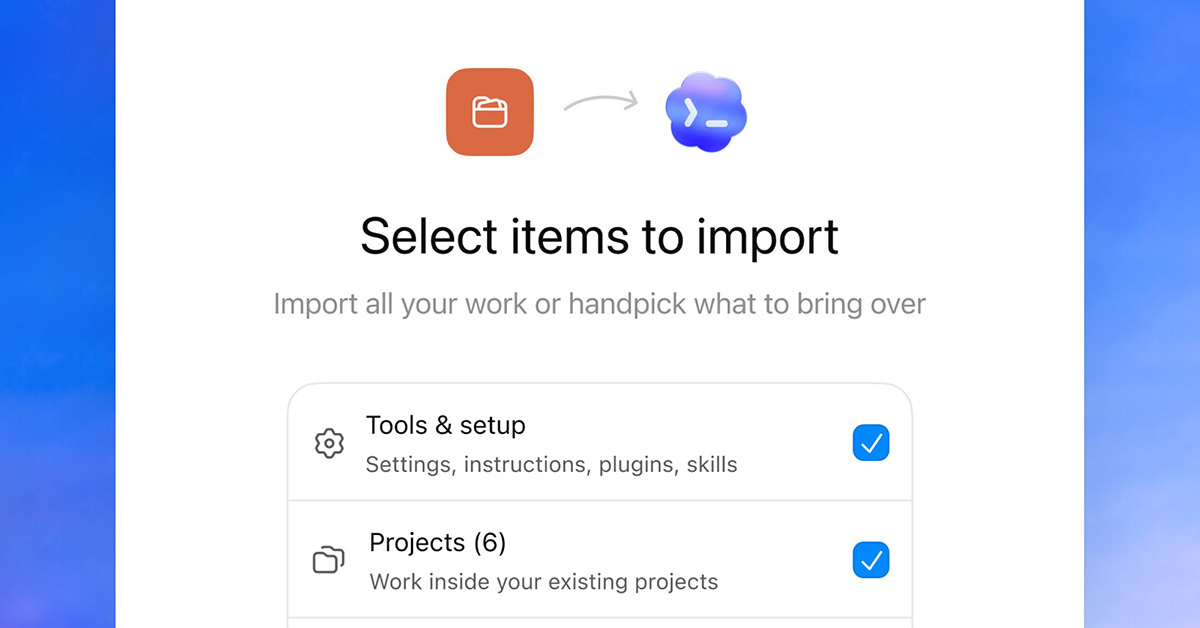
OpenAI has initiated a campaign to migrate business users to its Codex platform, offering new enterp...
The AMW Read
Incremental product promotion from an existing player (novelty 1), but significant at segment level because it tests hyperscaler distribution vs. specialist moats in AI coding (significance 2).

OpenAI has initiated a campaign to migrate business users to its Codex platform, offering new enterprise customers two months of free access. The promotion, reported by ITmedia AI+, aims to drive adoption of OpenAI’s code-generation and developer tools among corporate teams transitioning from other coding assistants. The article frames this as a competitive move within the AI-assisted software development segment, where rivals such as GitHub Copilot, Cursor, and Windsurf have established strong footholds.
Why it matters: This move fits the hyperscaler-distribution pattern (Segment 03’s §5.3), where a foundation-model leader uses its brand, API ecosystem, and free-trial leveraging to capture enterprise developer share. OpenAI’s Codex—the model underpinning its coding capabilities—has historically been bundled with ChatGPT offerings; separating it into a targeted enterprise product with a migration campaign signals intent to compete head-on with specialized AI coding tools. The promotion also updates the player map (§3.2) by showing OpenAI’s attempt to convert users from rival coding assistants rather than relying solely on organic GPT adoption.
Ground truth: The campaign’s effectiveness hinges on whether Codex’s generation quality and agentic workflows can match or exceed specialist tools like Cursor’s context-aware editing or Windsurf’s multi-file reasoning. Enterprise conversion at scale—especially from incumbents like Copilot—remains a Segment 3 open debate (§7.3). If OpenAI captures significant paid seat share within this promo window, it would validate the thesis that foundation-model bundling can dethrone dedicated dev-tool startups. If adoption stalls, it reinforces the pattern that coding-assistant moats are built on UX and integration depth, not model alone.